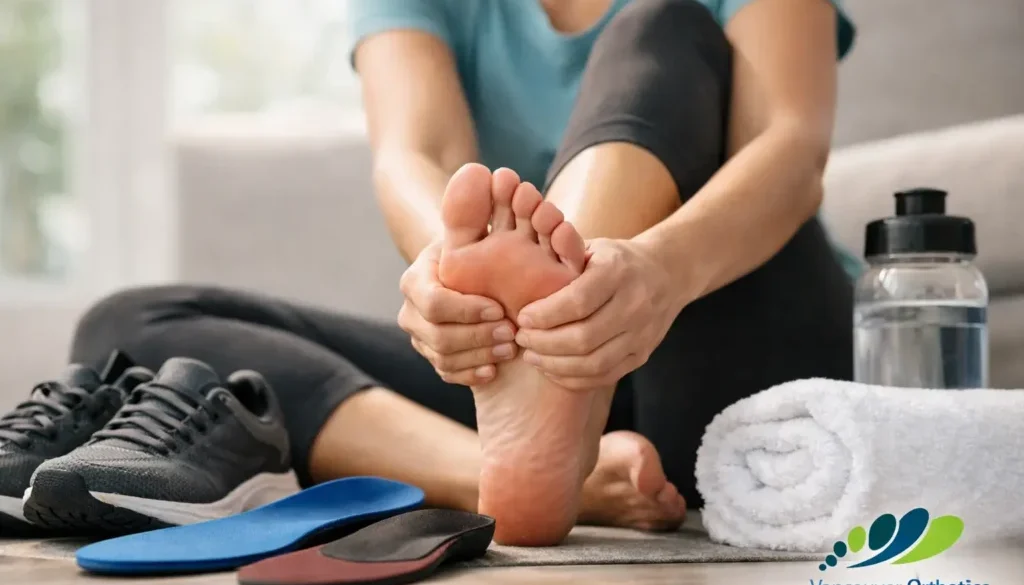
How to Treat Foot Fatigue and Keep Moving
A long shift on your feet, a walk around Stanley Park, or a weekend run can leave your soles aching and your legs feeling unusually heavy. Knowing how to treat foot fatigue starts with separating ordinary tiredness from pain that keeps returning. Feet work hard with every step, and when their support, alignment, or recovery needs are missed, fatigue can begin to affect your ankles, knees, hips, and lower back.
What Foot Fatigue Usually Feels Like
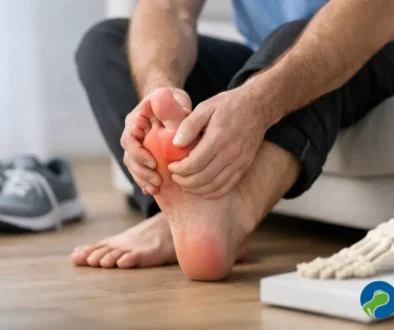
Foot fatigue is more than wanting to sit down after a busy day. It may feel like a dull ache through the arches or forefoot, burning in the balls of the feet, cramping toes, tight calves, or a general heaviness that makes walking feel harder than it should. Some people notice it most in the evening. Others wake with heel pain or stiffness that eases after a few steps, then returns after standing or walking.
The pattern matters. Fatigue after an unusually demanding day may improve with rest and simple recovery. Fatigue that appears every day, returns quickly, or changes the way you walk deserves a closer look. Recurrent symptoms can be linked to poor footwear support, flat feet, high arches, reduced ankle motion, overuse, or pressure being concentrated in one area of the foot.
How to Treat Foot Fatigue at Home
For mild foot fatigue, the goal is to reduce strain while helping the feet recover. A few focused changes are often more useful than simply pushing through discomfort.
Reduce load for a short time
Give your feet a break from the activity that is aggravating them. This does not always mean complete rest. If long runs are causing pain, choose a lower-impact activity for several days. If you stand for work, take brief sitting breaks when possible and change your position regularly rather than locking your knees or leaning onto one side.
After a demanding day, elevate your feet for 10 to 15 minutes. This can help if they feel swollen, hot, or heavy. Cold packs may also be useful after overuse, especially when soreness is more noticeable than stiffness. Use a cloth barrier and keep cold applications brief.
Stretch the calves and soles of the feet
Tight calf muscles can limit ankle movement and increase stress on the heel and arch. Gentle calf stretching is a practical place to start. Keep the heel down, lean forward slowly, and hold a comfortable stretch rather than forcing it. Repeat with the knee straight and then slightly bent to address different parts of the calf.
For the bottom of the foot, roll a ball under the arch with light to moderate pressure. A frozen water bottle can combine gentle rolling with cooling, although it should not feel sharp or painful. If rolling causes tingling, numbness, or worsening pain, stop and seek an assessment.
Choose shoes that match the activity
Worn-out footwear is a common contributor to fatigue. The outer sole can look acceptable while the midsole has lost its ability to cushion and support the foot. Shoes should feel stable at the heel, bend mainly near the toes, and provide enough room for the forefoot. A shoe that is too narrow can increase pressure on the toes and ball of the foot, while a very soft, unsupportive shoe may allow the foot to work harder with every step.
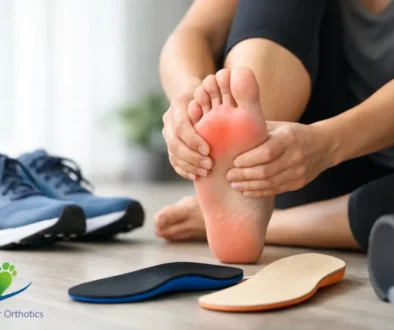
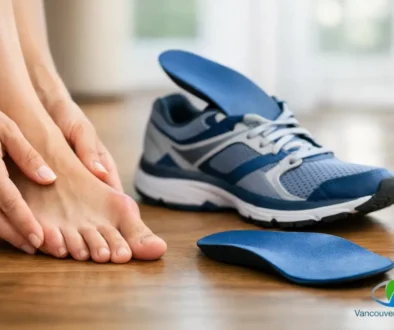
There is no single right shoe for every person. A runner may need a different level of cushioning and stability than a healthcare worker standing for eight hours. The key is whether the shoe supports your foot shape, activity level, and symptoms. Generic insoles can add comfort for some people, but they may not address a meaningful alignment or pressure issue.
Build recovery into standing and walking days
When your job keeps you on concrete floors or you are increasing your daily step count, gradual progression matters. Avoid doubling your walking distance or workout volume overnight. Alternate higher-load days with lighter days, and pay attention to whether symptoms settle by the next morning.
Compression socks may help some people manage leg heaviness during long periods of standing, particularly when paired with supportive footwear and regular movement breaks. They are not a substitute for diagnosing the cause of recurring foot pain, but they can be a helpful part of a broader comfort plan.
When Foot Fatigue May Be a Biomechanical Problem
If fatigue consistently returns in the same spot, it may be a sign that the foot is not distributing load efficiently. Flat feet can allow the arch to drop excessively during walking, placing extra demand on the plantar fascia, ankles, and lower legs. High arches may concentrate pressure under the heel and forefoot. Limited motion in the big toe, a bunion, or tight calves can also change how force travels through the foot.
This is why symptoms can travel. A person may first notice tired arches, then develop heel pain, shin discomfort, Achilles tendon irritation, or knee pain. The problem is not always located where the discomfort is strongest. Looking at how you stand, walk, and load each foot can provide more useful answers than relying on a one-size-fits-all insert.
Morning heel pain, pain under the ball of the foot, persistent arch soreness, or fatigue that interferes with work or exercise are all reasons to arrange a clinical assessment. Sudden severe pain, inability to bear weight, marked swelling, new numbness, or a wound that is not healing should be assessed promptly.
How a Clinical Assessment Can Help Treat Foot Fatigue
At Vancouver Orthotics Clinics by Dr. Michael Horowitz, assessment focuses on the relationship between symptoms, foot function, and lower-limb biomechanics. A practitioner reviews your health history, activity demands, footwear, areas of pain, and how long the symptoms have been present. They also assess standing alignment, joint motion, gait, and pressure patterns that may be contributing to fatigue.
A 3D foot scan adds a detailed measurement of foot shape and arch structure. This information can help determine whether custom orthotics are appropriate. Unlike a retail insole selected from a shelf, a custom orthotic is prescribed to address the way your foot functions and the areas that need better support, pressure redistribution, or control.
Custom orthotics are not necessary for every tired foot. If the main issue is a recently worn-out pair of work shoes or a sudden increase in activity, footwear changes, pacing, and home care may be enough. But when fatigue is recurring, connected with heel pain or flat feet, or limiting your ability to work, walk, or exercise, individualized support can make a meaningful difference.
Preventing Foot Fatigue From Becoming a Daily Problem
Prevention is often about consistency rather than an elaborate routine. Replace footwear before it becomes unstable, rotate shoes if you spend many hours on your feet, and avoid making major training changes all at once. A few minutes of calf mobility and foot recovery after work can be easier to maintain than trying to fix severe symptoms later.
Pay attention to early signals. Needing to remove your shoes halfway through a shift, avoiding walks you used to enjoy, or changing your stride to protect one area are not minor inconveniences to ignore. They are useful clues that your feet may need a better recovery plan or more precise support.
If you live or work in Greater Vancouver, Victoria, or Langford, a practitioner-led assessment can help clarify whether your foot fatigue is temporary overload or part of a broader mechanical issue. Relief often begins with a practical question: what is your foot being asked to do each day, and does it have the support to do it comfortably?