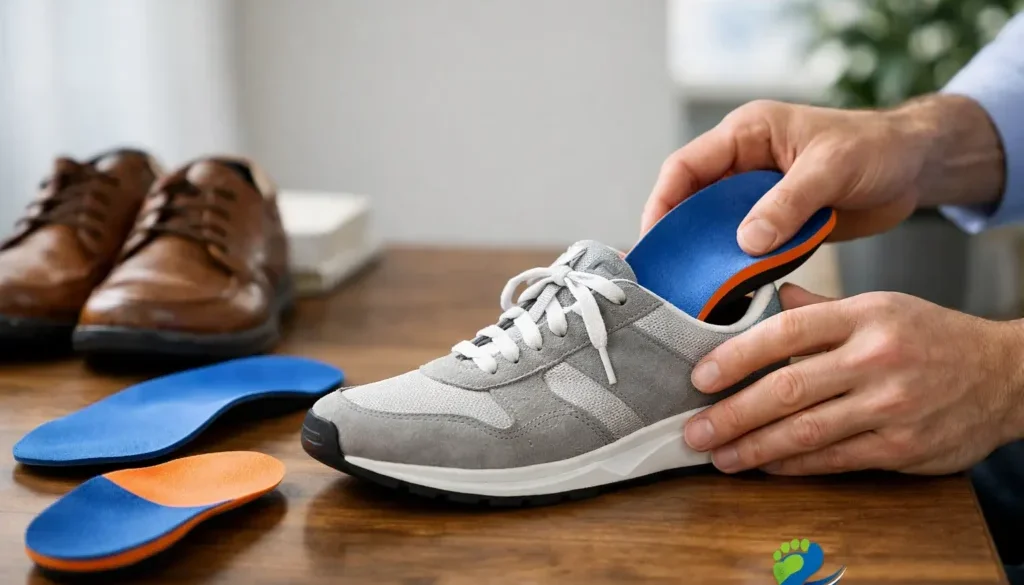
How Orthotics Fit Shoes Without Causing Pain
A well-made orthotic can still feel uncomfortable if it is placed in the wrong shoe. How orthotics fit shoes affects more than comfort: it can influence heel stability, toe pressure, walking mechanics, and whether the support is doing its intended job. If your feet feel more cramped, your heel slips, or new pain develops after adding an orthotic, the issue may be the shoe-orthotic combination rather than the orthotic alone.
For people managing plantar fasciitis, flat feet, bunions, metatarsalgia, shin splints, or recurring knee and back discomfort, proper fit is part of treatment. The goal is not simply to place an insert inside any shoe. It is to create a stable platform that supports your foot while leaving enough room for natural movement.
How Orthotics Fit Shoes: Start With Shoe Volume
Most custom orthotics are designed to replace the shoe’s removable factory insole. Leaving the original insole underneath often raises your foot too high in the shoe. That can create pressure across the top of the foot, reduce heel security, and make the toe box feel tight.
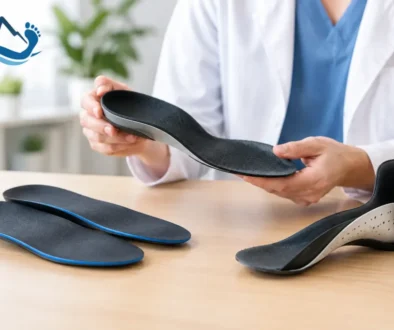
Before inserting an orthotic, remove the existing insole if it comes out easily. Place the orthotic flat against the bottom of the shoe, with the heel seated fully at the back. It should not curl, rock, or bunch at the edges. If it is slightly longer than the shoe’s insole, do not trim a custom device without speaking with the prescribing practitioner first. The length and shape may be clinically relevant to how it supports the foot.
Shoe volume matters. A shoe can be the correct length and width yet still lack enough internal depth for an orthotic. This is especially common with dress shoes, slim casual sneakers, boots with a low instep, and some fashionable running shoes. When there is not enough room, the foot may sit too high, causing rubbing at the heel collar or pressure over the instep.
What a Supportive Orthotic Shoe Looks Like
The best shoe is not necessarily the stiffest or most expensive one. It should have enough room for the orthotic and provide a stable base around it. A useful starting point is a shoe with a removable insole, a firm heel counter, secure laces or adjustable closures, and a toe box that lets your toes rest without compression.
A firm heel counter is the structured area around the back of the shoe. When you press it, it should resist collapsing. This helps hold the heel in position while the orthotic guides foot motion. Laces are also more useful than many people realize. They let you secure the midfoot without tightening the toe box, which can be helpful for people with bunions or forefoot irritation.
Running shoes and walking shoes often accommodate orthotics well because they tend to have more depth and a removable insert. Work shoes, hiking boots, and certain supportive casual shoes can also work very well. The answer depends on your activity and your foot shape. A shoe that fits your orthotic for a walk around Stanley Park may not be the best choice for a long retail shift, a gym workout, or a formal event.
Signs the Shoe Is Too Small for Your Orthotic
Your body usually gives clear feedback when an orthotic is crowded inside a shoe. Watch for toes pressing into the front, numbness or tingling, rubbing on the top of the foot, new blisters, or a heel that lifts with each step. You may also notice that your shoe feels tighter only after the orthotic is inserted.
Pain is not always immediate. Some people compensate by changing how they walk, which can contribute to calf tightness, ankle discomfort, knee pain, hip pain, or low back pain over time. If symptoms worsen consistently after wearing an orthotic, stop assuming that a break-in period is the only explanation. The fit should be reviewed.
Orthotics Should Sit Securely, Not Float or Slide
An orthotic should lie flat and stay in place during normal walking. If it slides forward, lifts at the heel, or shifts sideways, the shoe may be too large, too shallow, or poorly shaped for the device. A loose fit can reduce support and create friction.
Some shoes have a curved or narrow insole base that does not match the orthotic’s shape. Others taper sharply toward the toes. Even if you can force the orthotic into the shoe, that does not mean it is a good match. The device needs to maintain contact with the shoe base and your foot without being distorted.
It is normal to have different shoe needs for different activities. Many patients use their custom orthotics in their primary walking or work shoes first, then discuss additional pairs if they spend substantial time in other footwear. A second pair may be practical for indoor shoes, work boots, athletic shoes, or frequently worn casual footwear.
The Break-In Period: What Is Normal and What Is Not
Custom orthotics can feel different because they change the way force moves through the foot and lower leg. A gradual break-in period allows your tissues and walking pattern to adapt. Start with a limited amount of wear, then increase your time as directed by your practitioner.
Mild awareness of the arch or heel can be expected at first. Sharp pain, numbness, significant rubbing, or worsening symptoms are not signals to push through. Nor is it a good idea to wear a new orthotic all day on the first day if you have been dealing with sensitive heel pain or an overuse injury.
The right schedule depends on the condition being treated, your daily activity, and how long symptoms have been present. Someone returning to walking after plantar fasciitis may need a more gradual progression than someone using an orthotic primarily for mild flat-foot-related fatigue. Your practitioner can give you instructions that match your diagnosis rather than a generic timeline.
Why Retail Insoles and Custom Orthotics Fit Differently
Retail insoles are generally made to fit a broad range of shoe sizes and foot types. They can offer temporary cushioning or modest support, but their shape is not based on your gait, foot structure, pressure pattern, or symptoms. A generic insole may also take up considerable room in a shoe without addressing the reason pain keeps returning.
A custom orthotic is prescribed after a clinical assessment and is intended to work with your individual biomechanics. At Vancouver Orthotic Clinics, the process includes practitioner evaluation, diagnosis, 3D foot scanning, and a custom device designed around the findings. That distinction matters when pain is recurring, affecting work or exercise, or spreading beyond the foot into the ankles, knees, hips, or back.
Even a precisely made device needs the right footwear. Bring the shoes you wear most often to your fitting appointment when possible. This gives the practitioner a chance to check how the orthotic sits inside the shoe and discuss whether your usual footwear is appropriate for your daily demands.
When to Have Your Orthotic and Shoes Reviewed
Book a reassessment if an orthotic that once felt good no longer feels comfortable, if your shoes have worn unevenly, or if your symptoms return. Shoes lose structure with regular use, particularly at the heel and midsole. An orthotic cannot fully compensate for a shoe that has become tilted, compressed, or unstable.
A review is also sensible after a major change in activity, a new injury, pregnancy, weight change, or a switch to different work footwear. Children and teenagers may require follow-up as their feet grow. For adults, changes in walking tolerance, recurring morning heel pain, or discomfort after standing can all be useful clinical clues.
For patients across Greater Vancouver, Greater Victoria, and Langford, a clinician-led assessment can clarify whether the issue is shoe fit, orthotic fit, a change in biomechanics, or a condition that needs a different conservative treatment approach. Bring your orthotics and your most frequently worn shoes to the appointment. A few minutes of fit checking can prevent months of walking in footwear that works against your support.