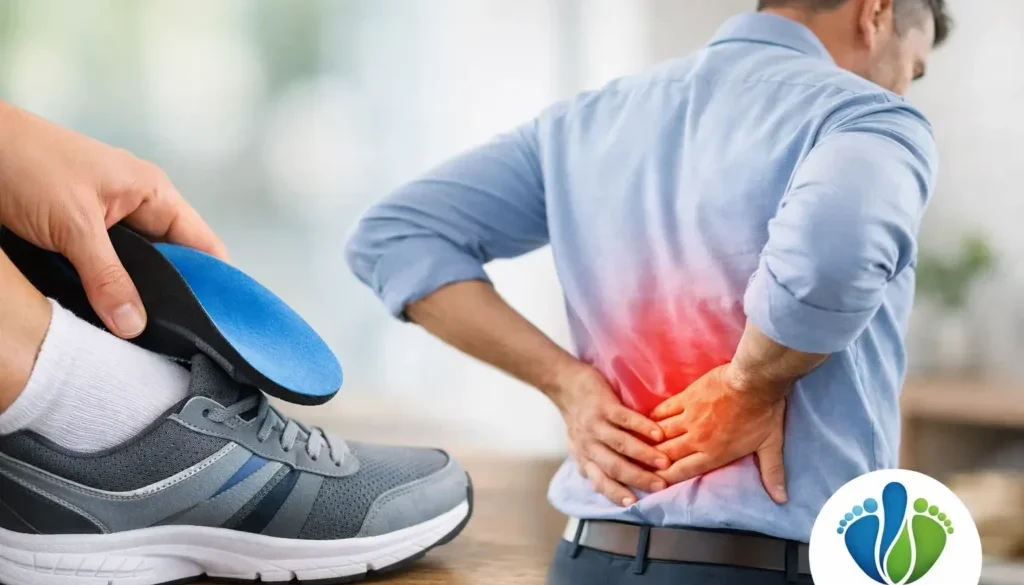
How Orthotics Reduce Back Strain at Every Step
A long shift on concrete, a walk around Stanley Park, or a day moving between meetings can leave your low back feeling tight before you have done anything that seems hard on your back. For some people, the source is not the lumbar spine alone. Orthotics reduce back strain when they address a foot-function problem that is changing how the ankles, knees, hips, and pelvis move with every step.
That does not mean every episode of back pain starts in the feet, or that an insole is the right answer for everyone. Back pain has many possible contributors, including muscle irritation, training changes, prolonged sitting, joint mobility, and prior injury. But when back discomfort occurs alongside flat feet, recurring heel pain, knee pain, ankle discomfort, or shoes that wear down unevenly, an assessment of lower-limb mechanics can provide useful clinical direction.
How Orthotics Reduce Back Strain
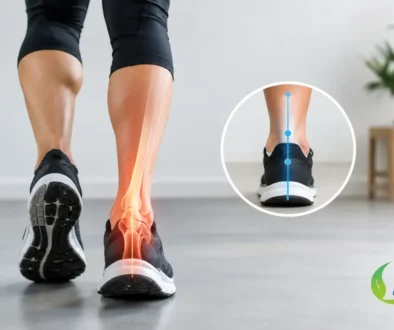
Walking is a chain reaction. When a foot meets the ground, it needs to absorb force, adapt briefly to the surface, and then become stable enough to push off. If the foot rolls inward too far or too quickly, remains overly flexible during push-off, or lacks adequate support for its shape and movement pattern, the lower leg may rotate differently than it should. That motion can continue upward through the knee and hip.
The pelvis and low back then work around that altered movement. Some people develop a sense of fatigue or aching on one side of the low back after standing. Others notice stiffness after walking, running, or working in retail, healthcare, construction, or other roles that require long hours on their feet. A person may also shift weight away from a painful heel, bunion, or forefoot area, creating an uneven gait that adds strain elsewhere.
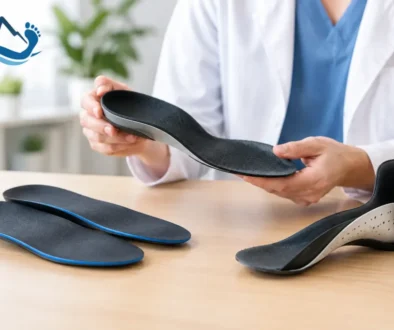
Properly prescribed custom orthotics are designed to improve how the foot is supported and guided inside the shoe. Depending on the clinical findings, they may help manage excessive pronation, improve contact under the arch, reduce pressure on a painful area, or create a more stable platform during walking. The goal is not to force the foot into a perfectly rigid position. It is to support more efficient movement and reduce the repetitive compensation that may be contributing to symptoms higher up the chain.
Signs Your Feet May Be Affecting Your Back
Back pain can be difficult to trace because the trigger is not always felt where the problem begins. Foot mechanics are worth considering when low back symptoms consistently appear with lower-limb concerns. For example, you may have back tightness after standing but feel better when you sit, or notice your back is worse after long walks in unsupportive footwear.
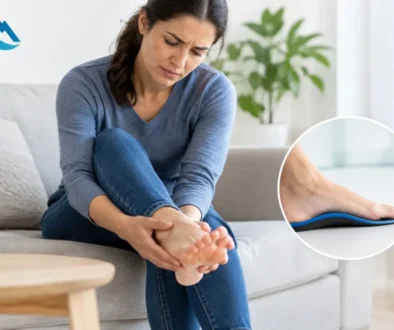
Other clues include recurring plantar fasciitis, morning heel pain, flat feet, shin splints, Achilles tendon discomfort, knee pain, or hip pain. Shoes that collapse toward one side, wear rapidly at the heel, or feel comfortable only for a short time can also be relevant. These signs do not confirm a diagnosis by themselves, but they can help a clinician determine whether gait and foot function deserve closer attention.
Children, active adults, and older adults can all have different reasons for altered mechanics. A growing child may have a flexible foot posture that should be monitored in the context of pain and activity. A runner may be responding to a sudden increase in mileage or a change in terrain. An office worker may have reduced tolerance for walking after spending much of the day seated. Age alone does not determine whether orthotics are useful. Symptoms, examination findings, goals, footwear, and daily demands matter more.
Why Generic Insoles Are Not Always Enough
Over-the-counter insoles can be a reasonable short-term option for mild fatigue or as added cushioning in a roomier shoe. They are widely available and may feel helpful right away. However, a generic insole is not made from an evaluation of your gait, foot shape, joint motion, painful structures, or the way your symptoms change during activity.
That difference matters when back strain is persistent or appears alongside recurring foot, knee, hip, or leg pain. Extra cushioning alone may not control the motion that is driving compensation. Conversely, an overly firm arch support can be uncomfortable if it does not match the foot or fit the shoe properly. More support is not automatically better.
A custom device also needs to work with the footwear you actually wear. The needs of a Vancouver healthcare worker on hospital floors differ from those of a runner training along the Seawall or a person wearing safety footwear all day. Shoe depth, heel height, work demands, and available space all influence the orthotic design. A clinical recommendation should be practical enough to use consistently, not just theoretically ideal.
A Clinical Assessment Connects Symptoms to Mechanics
At Vancouver Orthotics Clinics by Dr. Michael Horowitz, assessment begins with the person, not a pre-made device. The clinical process considers your symptom history, activity level, footwear, previous injuries, and the specific times pain appears. A practitioner then evaluates the feet and lower limbs, observing factors such as standing posture, joint movement, areas of tenderness, and walking mechanics.
The clinic’s five-step process includes practitioner evaluation and 3D foot scanning to capture detailed measurements that contribute to an individualized prescription. The scan is valuable, but it is one part of the process. A scan alone cannot explain whether your low back symptoms are linked to foot mechanics, how your body responds to movement, or what level of correction is appropriate. Those decisions require clinical findings and a conversation about your goals.
If orthotics are recommended, the design may incorporate specific contours, posting, cushioning, or pressure relief based on your presentation. The device is then fitted and reviewed so concerns about comfort, shoe fit, and break-in can be addressed. Many people need a gradual adjustment period, particularly if their feet have been moving without support for years. Mild awareness of a new support can be normal at first; sharp pain, increasing numbness, or a significant worsening of symptoms should prompt a follow-up rather than an attempt to push through it.
Orthotics Work Best as Part of a Plan
Orthotics can change the support under your feet, but they are not meant to replace movement, strength, or sensible training decisions. If back strain is related to prolonged standing, the plan may also include footwear changes, pacing, brief movement breaks, and strengthening guidance from an appropriate healthcare professional. If you are returning to walking or running after pain, gradual progression is usually more useful than trying to make up missed activity in one weekend.
For people with heel pain or plantar fasciitis, reducing painful loading under the foot may make it easier to walk with a more natural gait. For someone with flat-foot-related knee or hip discomfort, better control at the foot may reduce stress traveling upward. Results vary because bodies, work demands, and diagnoses vary. The most realistic expectation is not that orthotics erase every cause of back pain, but that they can reduce a meaningful mechanical contributor when one is present.
It is also worth reassessing rather than assuming an old pair still meets your needs. Orthotics can wear down, feet can change, and a new job, pregnancy, injury, sport, or footwear requirement can alter what you need from support. Recurring symptoms are a reason to review the whole picture.
When to Seek Assessment for Back Strain
Consider a lower-limb and gait assessment when back discomfort repeatedly follows standing, walking, or exercise and occurs with foot, ankle, knee, or hip symptoms. It is particularly helpful if you have already changed footwear, reduced activity, or tried retail insoles without lasting improvement. Patients across Greater Vancouver and Greater Victoria can book a clinical appointment to discuss whether foot mechanics are part of the problem and whether custom orthotics are appropriate.
Back pain that begins after a significant accident, causes severe or rapidly worsening weakness, or is accompanied by bowel or bladder changes needs prompt medical evaluation. Those symptoms are not issues to self-manage with footwear or an orthotic device.
Your feet are the foundation for thousands of steps each day. When they are supported in a way that matches how you move, your back may have fewer reasons to compensate.