
Heel Pain: Causes, Relief, and When to Get Help
That sharp first step out of bed, the ache after a long shift, or the soreness that builds during a walk can make heel pain feel much bigger than a foot problem. When each step hurts, it can affect work, exercise, sleep, and the simple freedom to move through your day comfortably.
Heel discomfort is common, but it is not one single diagnosis. The heel absorbs substantial force with every step, and pain may come from the plantar fascia, Achilles tendon, heel fat pad, joints, nerves, or the way the foot and lower leg move together. A clear assessment helps identify the likely source rather than relying on a generic insole or guessing based on a symptom alone.
Why Heel Pain Happens
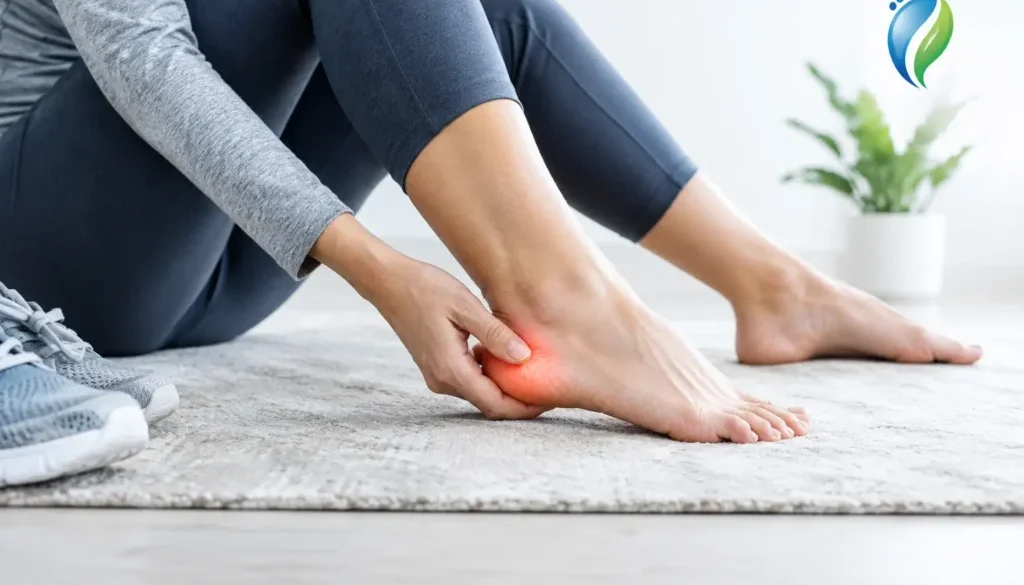
The location and timing of symptoms offer useful clinical clues. Pain under the heel that is worst with the first few steps in the morning, or after getting up from sitting, often involves the plantar fascia. This strong band of connective tissue runs from the heel toward the toes and helps support the arch during walking.
When the plantar fascia is repeatedly overloaded, it can become irritated and painful. Long periods on hard flooring, a sudden increase in running or walking, worn-out footwear, tight calves, and reduced foot support can all contribute. Flat feet may allow the arch to drop and the foot to roll inward more than needed, increasing strain on the fascia. A very high arch can also concentrate pressure under the heel. Foot shape alone is not the full story – how the foot functions while standing and moving matters just as much.
Pain at the back of the heel is different. It may be related to Achilles tendon irritation, especially when symptoms are aggravated by hills, stairs, acceleration, or a recent increase in sport. Pain directly beneath the center of the heel that worsens after extended standing can sometimes reflect reduced cushioning from the heel fat pad. Burning, tingling, or numbness may suggest nerve irritation and deserves a more focused clinical review.
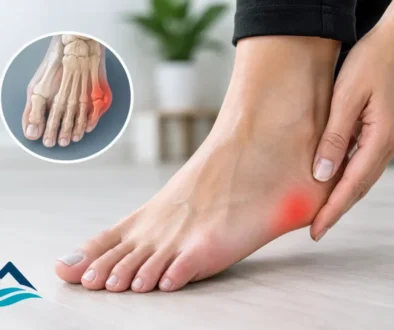
A heel spur may appear on an X-ray, but it is not automatically the reason for pain. Many people have heel spurs without symptoms. The goal is to assess the tissue under stress and the forces creating that stress, rather than treating an image alone.
The Pattern of Heel Pain Matters
Before choosing treatment, consider when your symptoms occur and what changes them. Morning pain that eases after a few minutes of movement is a classic plantar-fascia pattern. Pain that starts later in a shift may point more toward cumulative loading, footwear, or standing mechanics. Pain that increases during a run and lingers the following day may indicate that your current training load is exceeding what the tissue can tolerate.
A clinician will also look beyond the painful spot. Limited ankle motion, calf tightness, hip control, leg alignment, and the way pressure moves through the foot can all influence the heel. This is why recurring heel symptoms may also occur alongside ankle pain, shin splints, knee pain, or low back discomfort.
At Vancouver Orthotic Clinics, Dr. Michael Horowitz & Associates use a structured assessment process that includes clinical history, movement evaluation, and 3D foot scanning when appropriate. The scan provides useful measurements, but it is one part of the decision-making process. Your symptoms, activity demands, footwear, and gait pattern help determine whether orthotic support is likely to be useful.
Practical Steps for Heel Pain Relief
Early care should reduce irritation without making you completely afraid to move. The right approach depends on the cause, severity, and how long symptoms have been present, but a few measures are commonly helpful.
Start by reducing the activity or surface that clearly aggravates symptoms. This does not always mean stopping exercise altogether. A runner may temporarily reduce mileage, avoid hills, or choose lower-impact conditioning. A retail or healthcare worker may benefit from more supportive footwear and short movement breaks during long shifts. The key is to avoid repeatedly pushing into worsening pain.
Supportive shoes can make a meaningful difference. Look for a stable heel counter, a cushioned but not overly soft midsole, and enough room for your foot to sit naturally. Very flat sandals, worn-down athletic shoes, and thin-soled footwear may leave the heel working harder, particularly on concrete or tile. A store-bought insert can offer temporary cushioning for some people, but it may not control the specific motion or pressure pattern contributing to symptoms.
Gentle calf and plantar-fascia mobility work is often useful, particularly when stiffness is part of the problem. Keep it controlled rather than aggressive. Rolling the sole of the foot on a ball or chilled bottle may feel soothing after activity, but it should not be painful. If an exercise consistently produces sharp pain or next-day worsening, it needs to be modified.
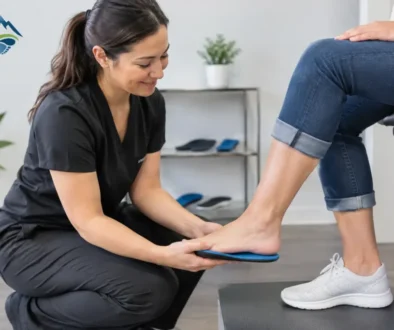
Custom orthotics can help when heel pain is connected to foot mechanics, pressure distribution, or inadequate support. They are not simply soft inserts. A clinician-prescribed device is designed from assessment findings and may help support the arch, improve how force moves through the foot, reduce strain on the plantar fascia, or provide more targeted heel cushioning. The design should match the person wearing it – a warehouse worker, walker, and runner do not necessarily need the same type of support.
For related information, patients may also find the clinic’s educational pages on plantar fasciitis, flat feet, heel spurs, Achilles tendonitis, and custom orthotics useful. These conditions can overlap, but each requires its own assessment.
When Heel Pain Needs Prompt Assessment
Persistent symptoms are worth addressing before they begin changing how you walk. Compensating by limping or shifting weight to the other side can create new discomfort in the ankle, knee, hip, or back.
Arrange a clinical assessment if pain has not improved after a couple of weeks of sensible self-care, keeps returning, limits work or exercise, or makes your first steps consistently difficult. Seek prompt medical attention for severe swelling, redness, fever, a sudden inability to bear weight, pain after a significant injury, or numbness that is progressing. These signs need evaluation beyond routine overuse management.
For children and teens, heel pain should not be treated as an adult condition by default. Growing feet have different causes of pain and benefit from age-appropriate assessment. The same is true for older adults whose balance, circulation, skin integrity, or activity levels may affect the treatment plan.
What to Expect From a Clinical Orthotic Assessment
A good assessment begins with listening. Your clinician will ask where the pain occurs, when it began, what makes it better or worse, what shoes you wear, and how your work, activity, and health history may be contributing. They will examine the foot and lower limb, assess movement and alignment, and may observe you standing or walking.
A 3D foot scan can help capture the shape and contours of the foot for an orthotic prescription. It is not a replacement for a physical examination. The value comes from combining accurate measurements with clinical findings and a device design intended for your specific needs.
If custom orthotics are recommended, ask how they will fit your usual footwear, what adjustment period is expected, and when follow-up is appropriate. Many extended-health plans include orthotic benefits, although documentation requirements and coverage amounts vary. The clinic team can explain the typical paperwork needed for an orthotic claim so there are fewer surprises.
Preventing a Repeat Flare-Up
Once symptoms settle, gradual progression matters. Increase walking distance, running volume, or standing demands in manageable stages instead of making large jumps. Replace shoes when their support has noticeably broken down, and use the footwear that best matches the activity rather than relying on one pair for everything.
Pay attention to early signals: morning tightness, soreness after a shift, or discomfort that appears only after longer walks. Responding at that stage is usually easier than waiting until every first step is painful. If heel symptoms are recurring in Vancouver, Burnaby, Richmond, the North Shore, or Greater Victoria, booking a clinician-led assessment can provide a clearer path forward. New patients are welcome, and a measured plan can help make daily movement feel possible again.