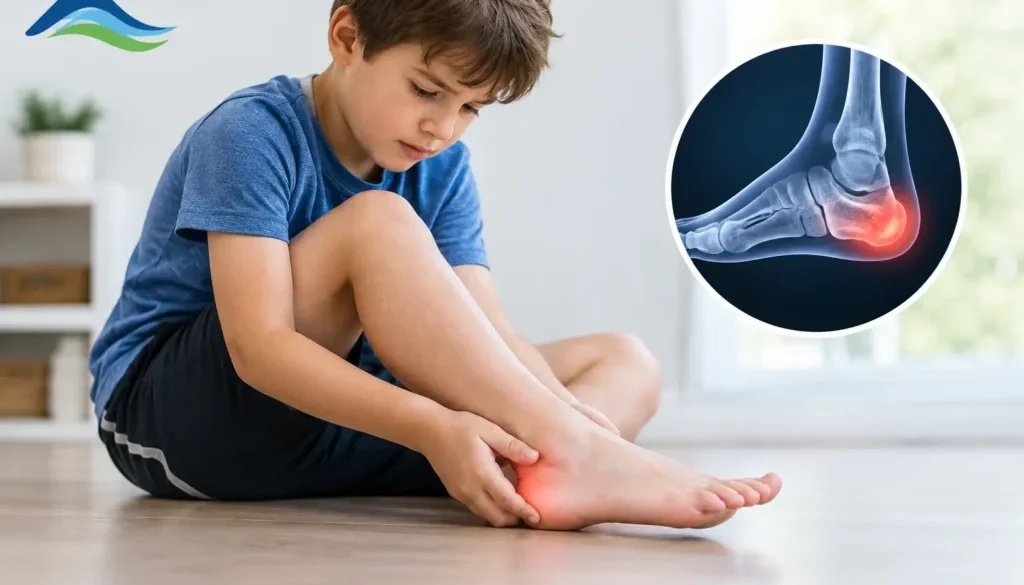
Severe’s Disease: Why Kids Develop Heel Pain
A child who suddenly limps after soccer practice, avoids running at recess, or complains that the back of the heel hurts may be dealing with what many families search as severe’s disease. The clinical name is Sever’s disease, also called calcaneal apophysitis. It is a common source of heel pain in growing children, especially those who run, jump, and play field or court sports.
The reassuring news is that this condition is usually manageable with the right combination of activity adjustments, supportive footwear, and a proper assessment of how the feet and lower limbs are moving. The goal is not simply to get a child through the next practice. It is to reduce repeated stress on the heel while helping them return to activity comfortably and confidently.
What Is Sever’s Disease?
Sever’s disease is irritation at the growth area near the back of the heel bone. In children, this area has not fully matured, making it more sensitive to the pulling forces created by the calf muscles and Achilles tendon. When a child runs, jumps, accelerates, or lands repeatedly, that tension can irritate the heel growth area.
Despite the name, Sever’s disease is not an infection and does not spread from one child to another. It is a growth-related overuse condition. It most often appears in children around ages 8 to 14, when growth spurts and busy sport schedules can overlap.
Children who are highly active are not the only ones affected. A child with flat feet, feet that roll inward excessively, tight calf muscles, or poorly supportive footwear may experience more strain through the heel during ordinary walking and play.
Signs of Severe’s Disease in Children
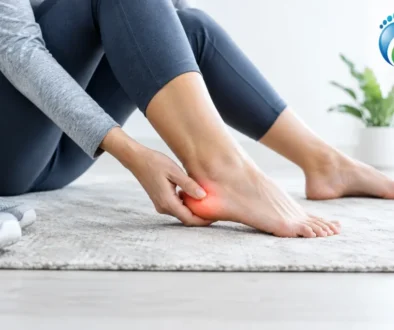
Heel pain from Sever’s disease usually develops gradually, although a child may first notice it after a particularly active day. The pain is commonly felt at the back or lower portion of the heel rather than under the heel.
Parents may notice that their child walks on their toes, limps after sports, or seems reluctant to participate in activities they normally enjoy. Pain often improves with rest, then returns when running and jumping resume. Both heels can be affected, though one side may be more painful.
Other common signs include tenderness when the sides of the heel are gently pressed, stiffness in the calves, and discomfort when going up stairs or walking barefoot on hard floors. A child may describe the problem simply as a sore heel, which is why a clinical assessment can be helpful when pain persists or keeps returning.
Heel pain is not always Sever’s disease. A sudden injury, marked swelling, redness, fever, pain that wakes a child at night, or an inability to bear weight deserves prompt medical attention. These symptoms need to be evaluated rather than assumed to be an overuse problem.
Why Active Kids Develop Heel Pain
The heel absorbs substantial force during running and jumping. When a child’s growth outpaces the flexibility of the calves and Achilles tendon, the pull on the back of the heel can increase. Add multiple practices, games, school activity, and playground time, and the heel may not have enough recovery time.
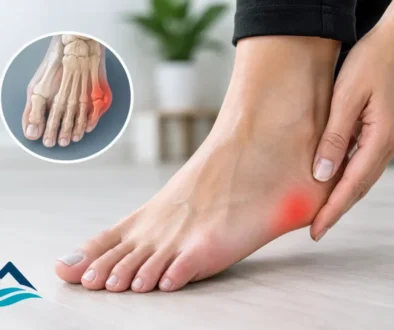
Foot mechanics can also contribute. For example, flat feet or excessive inward rolling of the foot may change how force travels from the ground through the ankle and heel. This does not mean every child with flat feet will develop pain. It means their movement pattern may be one piece of the clinical picture.
Footwear matters as well. Worn-out athletic shoes, minimal heel cushioning, and shoes that do not fit securely can leave the heel working harder. On the other hand, buying the most cushioned shoe available is not always the answer. The best option depends on the child’s foot shape, sport, movement pattern, and symptoms.
How Is Sever’s Disease Assessed?
A useful assessment starts with the child’s story: when the pain began, which activities trigger it, whether there has been a growth spurt, and what shoes they use for school and sports. A practitioner then examines the heel, calf flexibility, ankle movement, walking pattern, and lower-limb alignment.
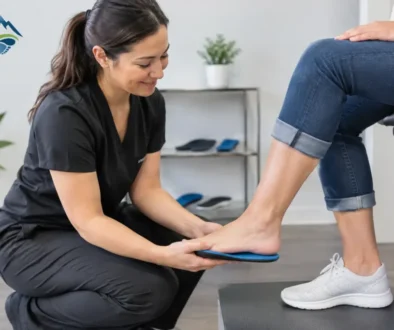
At Vancouver Orthotics Clinics by Dr. Michael Horowitz, this type of assessment can include a detailed evaluation of foot function and 3D foot scanning when orthotic support may be appropriate. The scan is not a diagnosis by itself. It is one measurement that helps the practitioner understand arch shape, pressure patterns, and the support needs of the growing foot.
This matters because two children can report similar heel pain for different reasons. One may have very tight calves after a rapid growth spurt. Another may be training on hard surfaces in shoes that no longer provide support. A third may have a foot posture that repeatedly increases strain at the heel. Treatment should reflect those differences.
Treatment for Sever’s Disease
Treatment is usually conservative and focused on calming heel irritation while maintaining as much comfortable movement as possible. Complete rest from every activity is not always necessary, but pushing through sharp or worsening pain is rarely helpful.
A temporary reduction in running, jumping, and high-impact drills may be needed. Many children can remain involved with their team by modifying practice, choosing lower-impact conditioning, or taking brief breaks during activities. The right balance depends on pain levels and the demands of the sport.
Supportive athletic shoes can make a meaningful difference. In some cases, heel lifts, heel cups, or appropriately prescribed custom orthotics can reduce strain by improving cushioning and supporting foot alignment. Custom orthotics are not needed for every child with Sever’s disease, but they may be considered when foot mechanics, recurring symptoms, or activity demands are contributing factors.
Calf stretching and mobility work are often part of a care plan. These should be gentle and consistent rather than forced. If a stretch reproduces significant heel pain, it should be adjusted. Recovery also benefits from sensible scheduling. A child playing several sports at once may need more rest days than they currently have.
For short-term symptom relief, families may also use simple measures recommended by their healthcare provider, such as cooling the heel after activity. The priority is to address why the heel is being overloaded, not only to cover up the discomfort.
How Long Does Recovery Take?
Recovery varies. Some children feel noticeably better within a few weeks once activity and support are adjusted. Others have symptoms that come and go for several months, particularly during a growth spurt or busy sports season.
The condition can recur because the growth area remains vulnerable until it matures. That does not mean a child must stop being active for years. It means families should respond early when symptoms return and avoid the cycle of pain, brief rest, and an immediate return to the same training load.
Preventing Heel Pain From Returning
Prevention is less about eliminating sports and more about managing load. Children benefit from well-fitting athletic shoes that match their activity, gradual increases in training intensity, regular calf mobility, and enough recovery between demanding sessions.
Parents should also keep an eye on rapid growth. A child who suddenly seems tighter through the calves, complains about heel soreness, or outgrows shoes quickly may need a closer look at their footwear and activity schedule. Replacing shoes when the tread or cushioning is worn down is practical prevention, not an unnecessary expense.
If heel pain repeatedly interferes with school, sports, walking, or family activities, a clinician-led assessment can provide clarity. For families in Greater Vancouver, Greater Victoria, and Langford, booking an appointment can help identify whether Sever’s disease, foot mechanics, or another source of heel pain is limiting a child’s movement.
Children should be able to play, train, and grow without learning to ignore pain. A timely assessment and a realistic plan can help protect that confidence, one comfortable step at a time.