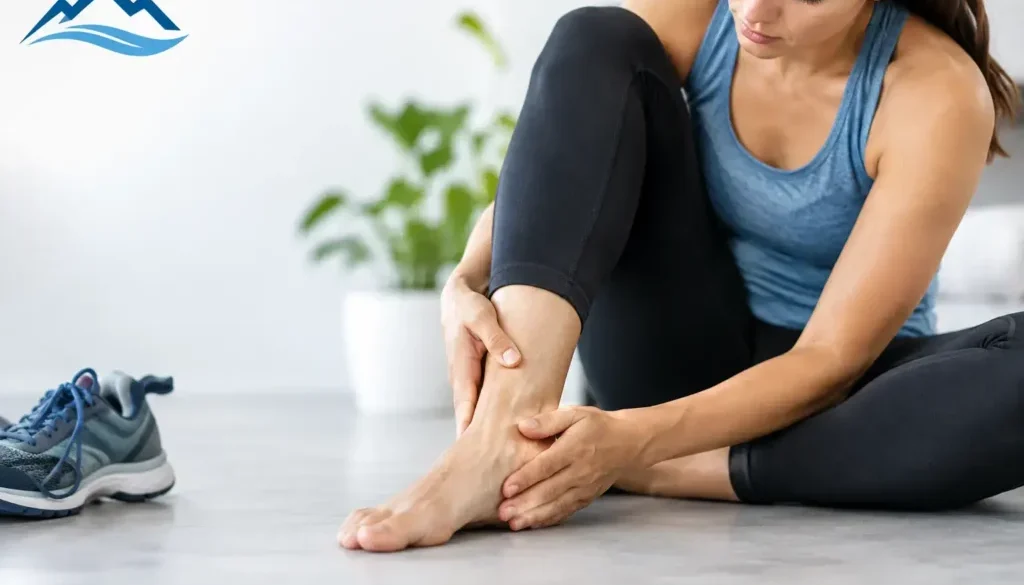
Why Ankle Pain Keeps Returning After Activity
A walk around Stanley Park, a long retail shift, or a return to running can leave you with ankle pain that feels minor at first but keeps showing up the next day. When the same discomfort returns with walking, standing, stairs, or exercise, the issue is not always limited to the ankle itself. Foot function, lower-leg strength, footwear, and the way your body absorbs force can all contribute.
The ankle is a small joint with a demanding job. It must provide mobility on uneven ground while remaining stable through every step, squat, push-off, and landing. A thorough clinical assessment can help identify whether your symptoms are linked to a recent injury, overuse, poor support, or a longer-standing biomechanical pattern.
What ankle pain can feel like
Ankle symptoms do not always look the same. Some people notice a sharp pain on the outside of the ankle after rolling it. Others describe an ache at the front of the joint when walking downhill, stiffness after sitting, or soreness that builds during a shift on concrete floors. Pain may also occur above the ankle, near the Achilles tendon, or along the inside of the ankle and arch.
Swelling, tenderness, clicking, a feeling that the ankle may give way, or reduced range of motion can offer useful clues. So can timing. Pain that begins after a specific twist is different from discomfort that gradually develops after increasing mileage, changing jobs, or switching footwear.
Recurring symptoms deserve attention even when you can still get through the day. Many people compensate without realizing it, shifting weight to the other side or shortening their stride. Over time, that can place extra demand on the knee, hip, lower back, or opposite foot.
Common reasons ankle pain returns
A previous sprain is one common reason for repeat discomfort. After a rolled ankle, the ligaments and the body’s ability to sense joint position may not fully recover without appropriate rehabilitation. The ankle can then feel less reliable on curbs, trails, stairs, or quick changes of direction. This is often called ankle instability.
Overuse is another frequent cause. Runners, walkers, hikers, and people who stand for long hours may exceed what the tissues can currently tolerate. A sudden increase in steps, hills, court sports, or work hours can irritate tendons and surrounding structures, especially when recovery is limited.
Foot mechanics can matter as well. Feet that roll inward excessively may increase load along the inside of the ankle and lower leg. Very rigid feet may transfer impact less effectively. Flat feet, high arches, limited big-toe movement, and tight calves can each change how force travels through the ankle during walking.
Footwear is part of the picture, but it is rarely the whole answer. A shoe that is worn down, too flexible for your needs, too narrow, or poorly matched to an activity can aggravate symptoms. At the same time, even a supportive shoe cannot fully correct an underlying movement pattern, reduced strength, or unresolved injury.
The connection between the foot and ankle
The ankle does not work in isolation. As your heel contacts the ground, the foot must adapt to the surface, then become stable enough to push off. If the arch drops too far or too quickly, the lower leg may rotate inward. If the foot stays unusually rigid, the ankle may have to absorb more force elsewhere.
This is why a clinician may assess your standing posture, gait, footwear, range of motion, and areas of tenderness rather than focusing only on where you feel pain. The goal is to understand the source of repeated stress and build a treatment plan that fits your daily demands.
When to seek a clinical assessment
A prompt assessment is sensible if ankle pain is worsening, repeatedly limits activity, or fails to improve with reduced loading. It is also worth booking if you have ongoing swelling, bruising, numbness, marked weakness, difficulty bearing weight, or a recurring sense that the ankle is unstable.
Sudden severe pain, an obvious change in joint shape, inability to take several steps, or a cold, pale, or blue foot requires urgent medical attention. These symptoms should not be managed by simply waiting for them to settle.
For persistent but non-urgent concerns, an assessment can clarify what is driving the problem. At Vancouver Orthotic Clinics, Dr. Michael Horowitz & Associates and the clinical team examine lower-limb mechanics as part of a structured five-step process. This may include a practitioner evaluation, 3D foot scanning, and a discussion of activity, work demands, footwear, and previous injuries.
That information helps determine whether custom orthotics, targeted support, activity modification, or referral for additional care is appropriate. Not every ankle problem needs orthotics, and orthotics are not a replacement for rehabilitation when strength, mobility, or balance needs attention. They can, however, be useful when foot mechanics are contributing to repeated strain.
How custom orthotics may help ankle pain
Custom orthotics are designed from your individual foot shape and clinical findings. Their role is not to immobilize the foot. A well-prescribed device aims to improve how the foot is supported and guided during walking or standing, helping reduce excessive stress on sensitive tissues.
For someone whose ankle pain is related to pronounced inward rolling, an orthotic may help control the timing and amount of motion. For a person with a rigid foot or poor shock absorption, cushioning and load distribution may be more relevant. The design should reflect the diagnosis, footwear, activity level, and comfort needs rather than relying on a one-size-fits-all template.
It also takes time to judge response. Some people notice a difference quickly, while others need a gradual break-in period and changes to activity volume. Follow-up matters because comfort, fit, and symptom response can guide adjustments. If ankle pain is paired with heel pain, plantar fasciitis, Achilles tendon discomfort, or shin splints, those related issues should be considered together rather than treated as separate inconveniences.
What you can do while waiting for care
Avoid the temptation to push through pain that changes your gait. Reduce or modify the activity that reliably aggravates symptoms, but keep gentle movement within a comfortable range when possible. For example, a runner may temporarily choose flatter, shorter routes, while a healthcare worker may benefit from alternating standing positions and checking whether worn footwear is contributing.
Cold therapy may ease soreness after activity for some people, particularly when swelling is present. Elevation can also be useful after a long day. These measures may calm symptoms, but they do not identify why the problem keeps returning.
Simple balance and calf-strength work is often helpful when recommended for your situation. Standing near a counter for support, controlled heel raises, and gentle ankle range-of-motion exercises can be appropriate for some people, but recent injuries and significant pain should be assessed before beginning a new exercise routine. The right exercise depends on whether the ankle needs more mobility, strength, stability, or protection from load.
Pay attention to patterns for one or two weeks. Note where the pain occurs, what triggers it, whether it is worse in the morning or after activity, and which shoes you were wearing. These details make a clinical appointment more productive and can reveal trends you might otherwise miss.
A practical next step for recurring symptoms
If your ankle pain keeps interrupting work, walking, or exercise, it is reasonable to seek answers before compensation becomes a habit. Patients across Greater Vancouver, including Burnaby, Richmond, North Vancouver, and downtown Vancouver, often come in after trying rest or generic insoles without understanding why symptoms return.
A clinician-led assessment can connect the dots between your ankle, foot mechanics, footwear, and daily activity. New patients are welcome to book online and ask questions about assessment options, custom orthotics, and extended-health benefit claims. The most helpful next step is not guessing which product to buy, but finding out what your ankle is being asked to manage with every step.