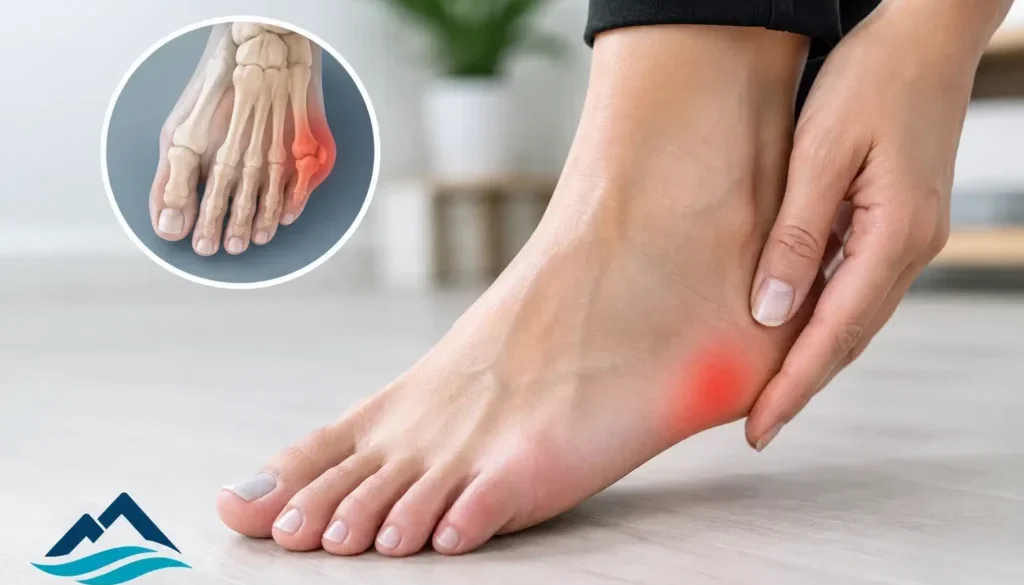
Bunionettes: Why the Outside of Your Foot Hurts
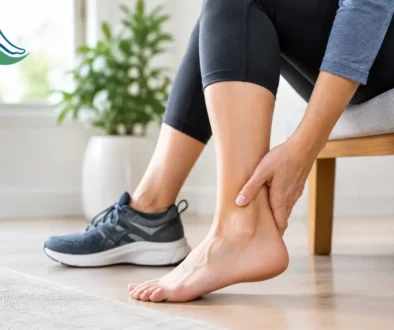
A sore, red bump at the base of your smallest toe can turn an ordinary walk, work shift, or run along the seawall into a painful experience. Bunionettes are a common source of pain on the outside of the forefoot, particularly when shoes press against the area. The bump may seem minor at first, but recurring friction and changes in foot mechanics can make it increasingly difficult to find comfortable footwear or stay active.
What Are Bunionettes?
A bunionette, sometimes called a tailor’s bunion, is a bony prominence on the outside of the foot at the base of the fifth toe. It develops around the fifth metatarsophalangeal joint, where the long bone of the outer foot meets the little toe.
It is similar to a bunion, which occurs at the base of the big toe, but the location and loading pattern are different. With a bunionette, the fifth metatarsal may sit farther outward than expected, the little toe may angle inward, or both may occur together. This changes how pressure travels across the front of the foot.
Not every visible bump is painful, and not every painful outer foot is caused by a bunionette. A clinical assessment matters because irritation of the joint, a callus, a stress-related injury, nerve irritation, or metatarsalgia can create similar symptoms. The right plan starts with identifying what is actually being loaded and why.
Common Bunionette Symptoms
Bunionette discomfort often builds gradually. You may notice it after wearing narrower footwear, standing for long periods, increasing your walking routine, or returning to sport. The outer edge of the shoe may rub directly against the bump, making pressure the main problem.
Common signs include:
- A firm bump on the outside of the foot below the little toe
- Redness, swelling, or tenderness over the joint
- Pain when walking, pushing off, or wearing fitted shoes
- A callus or thickened skin along the outer forefoot
Some people only feel pain in certain shoes. Others develop aching under the ball of the foot because they unconsciously shift weight away from the sore outer edge. That compensation can affect the toes, arch, ankle, knee, hip, or lower back over time, especially in people who spend much of the day on their feet.
Why Bunionettes Develop
Foot structure plays a major role. Some people naturally have a wider forefoot, a more prominent fifth metatarsal, or a joint alignment that places the little toe under added pressure. Family history can be relevant because foot shape and mechanics often run in families.
Footwear can aggravate the issue, but it is rarely the whole explanation. A narrow toe box, stiff upper material, or footwear that tapers sharply at the front can repeatedly compress the joint. High-impact activities, long standing shifts, and frequent lateral cutting movements may also expose an existing structural tendency.
Biomechanics matter too. Flat feet, excessive inward rolling of the foot, limited motion through the ankle, and uneven loading through the forefoot can all change how force moves toward the fifth metatarsal. This is why simply padding the bump may help temporarily but may not address the reason the area keeps becoming irritated.
How a Clinical Assessment Helps
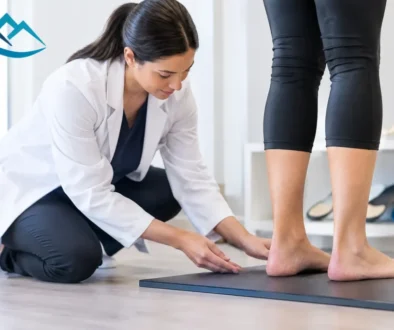
At Vancouver Orthotics Clinics, an assessment looks beyond the bump itself. A practitioner will discuss when symptoms occur, review footwear and activity demands, and examine the position and movement of the feet, ankles, knees, and lower limbs. Walking patterns and pressure distribution offer useful clues that cannot be seen by looking at the painful spot alone.
A 3D foot scan can provide a detailed picture of foot shape and arch profile. Combined with hands-on assessment, it helps determine whether support needs to accommodate a prominent outer forefoot, reduce excess motion, or improve how force is shared across the foot. This is especially useful when bunionette pain appears alongside flat feet, recurring heel pain, or pain under the ball of the foot.
The clinic’s five-step process is designed to move from assessment and diagnosis to an individualized orthotic recommendation, fitting, and follow-up guidance. Not everyone with a bunionette needs the same approach. The appropriate level of support depends on symptoms, foot mechanics, footwear requirements, and daily activity.
Conservative Treatment for Bunionette Pain
The goal of conservative care is to reduce direct irritation, improve load distribution, and help you return to comfortable movement. Results depend on how irritated the joint is, how consistently aggravating footwear can be avoided, and whether underlying mechanics are contributing to the problem.
Footwear is often the first practical adjustment. Look for enough width and depth through the toe area so the shoe does not push against the outer joint. The most supportive option is not always the stiffest or widest-looking shoe. It needs to fit your foot shape, your activity, and the type of work or exercise you do. A shoe with a roomy forefoot may feel helpful in a store but still lack the stability needed for long standing or walking.
Protective pads or sleeves can reduce rubbing in some cases. They are useful when friction is the primary issue, but they should not create extra crowding inside the shoe. If adding a pad makes the shoe tighter, it may worsen pressure rather than relieve it.
Custom orthotics may be recommended when assessment shows that foot mechanics are contributing to repeated overload. Unlike a generic insole, a custom device is prescribed around your foot shape, movement pattern, symptoms, and footwear needs. It can help redistribute pressure across the forefoot, support the arch where appropriate, and reduce the forces that repeatedly load the outside of the foot.
There are trade-offs. An orthotic needs enough structure to influence mechanics, but it must also fit comfortably into the footwear you actually wear. A device for a running shoe may be different from one intended for work boots or casual footwear. Your practitioner can help clarify which pair of shoes should be prioritized if you cannot accommodate an orthotic in every pair.
Activity modification can be helpful during a flare-up. This does not necessarily mean stopping all exercise. It may mean temporarily choosing lower-impact activity, shortening walks, avoiding shoes that trigger rubbing, or reducing movements that repeatedly load the forefoot. If running is important to you, a gradual return based on symptoms is usually more practical than trying to push through increasing pain.
For related foot mechanics concerns, our educational resources on bunions, flat feet, metatarsalgia, and plantar fasciitis can help you recognize patterns that may be connected to forefoot pain.
When Outer Foot Pain Needs Prompt Attention
Book an assessment if pain persists despite changing footwear, if the bump is becoming more irritated, or if walking is changing because you are avoiding pressure on the area. A professional evaluation is also sensible if pain began suddenly after an injury, occurs at rest, or is accompanied by marked swelling, warmth, or skin changes.
Children, teens, and adults can all develop outer forefoot pain, but the cause may differ by age and activity level. A young athlete with sudden lateral foot pain needs a different assessment than an adult who has gradually developed a prominent joint after years of standing work.
Everyday Habits That Reduce Pressure
Small changes can protect an irritated bunionette between appointments. Rotate footwear rather than relying on one pair every day, check that the outer side of the shoe is not visibly worn or bulging, and avoid assuming that a larger size will solve a width problem. A longer shoe can allow the foot to slide forward, while a wider toe area may be what is actually needed.
Pay attention to patterns. If discomfort starts after a particular shift, route, workout, or pair of shoes, that detail is clinically useful. Bringing frequently worn footwear to an appointment can help a practitioner see where the pressure is occurring and recommend a realistic adjustment.
Outer foot pain does not have to become the reason you stop walking, working comfortably, or exercising. A clear assessment can separate a bunionette from other causes of forefoot pain and give you a practical path toward better support, better shoe fit, and more comfortable daily movement.