
How to Manage Achilles Pain After Walking
A walk around the Seawall, through a shopping center, or up a few hills should not leave the back of your ankle throbbing by evening. If you are trying to manage Achilles pain after walking, the first goal is to calm the irritated tissue without completely abandoning movement. The second is to identify why the tendon is taking more load than it can comfortably handle.
The Achilles tendon connects the calf muscles to the heel bone. It absorbs force with every step, particularly when you push off the ground, climb stairs, walk uphill, or wear shoes with little support. Pain can develop gradually after a recent increase in walking, but it can also reflect longstanding foot mechanics, calf tightness, or footwear that no longer supports your stride.
Why Achilles Pain Starts After Walking
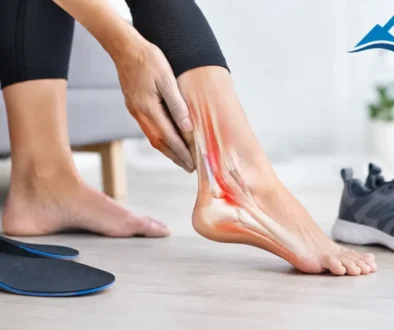
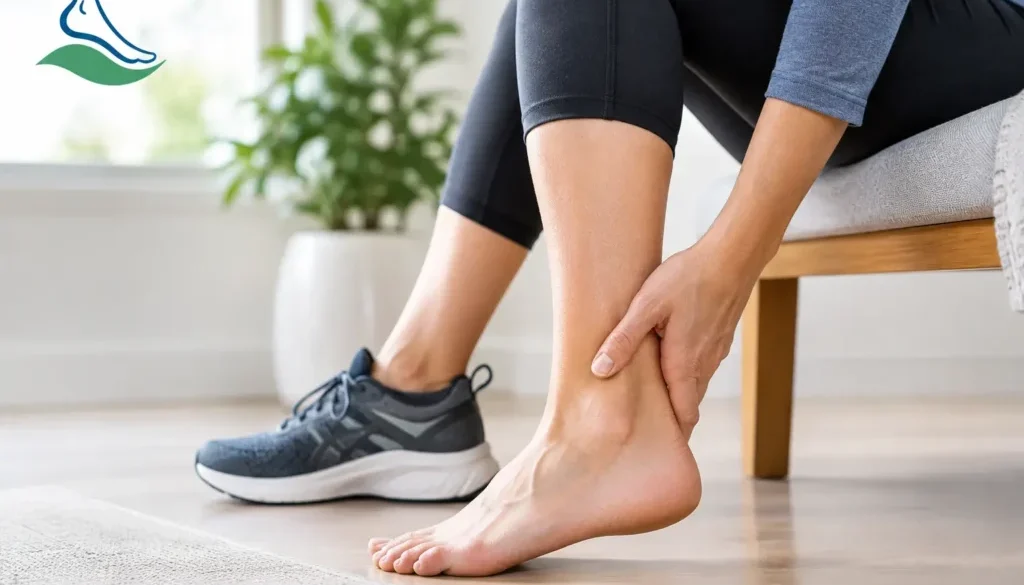
Achilles discomfort is commonly felt two to six centimeters above the heel, although some people feel it directly where the tendon attaches to the back of the heel. It may begin as stiffness during the first few steps in the morning, settle as you move, then return after a longer walk. Others notice a dull ache, warmth, tenderness, or swelling after activity.
A recent change in walking volume is a frequent trigger. That might mean starting a fitness routine, taking a walking vacation, returning to activity after time off, or simply spending more hours on your feet at work. Hills, uneven trails, fast walking, and stairs all increase demand on the calf and Achilles.
Foot mechanics matter as well. Flat feet or a foot that rolls inward excessively can change the way force travels through the ankle during push-off. High arches, limited ankle flexibility, and a tight calf can also shift extra stress to the tendon. Worn-out walking shoes, very flat sandals, or a sudden change to minimalist footwear may be enough to expose an underlying problem.
What to Do in the First 48 Hours
Do not try to walk through sharp or escalating Achilles pain. Reducing the aggravating activity early often prevents a minor flare-up from becoming a longer interruption to your routine. This does not necessarily mean complete rest. Gentle, comfortable movement is usually preferable to repeatedly provoking symptoms.
For the next day or two, shorten your walks, choose level ground, and avoid hills, stairs, and speed walking. If pain rises while walking or lingers more intensely afterward, you have likely exceeded the tendon’s current tolerance. Use that response to guide a smaller, more manageable amount of activity.
Cold can help some people with soreness after activity. Apply a wrapped cold pack for 10 to 15 minutes at a time, rather than placing ice directly on the skin. Elevating the foot after a long day may also reduce a sense of swelling or throbbing.
Supportive footwear is especially useful during this stage. Choose a stable walking shoe with a secure heel counter and enough cushioning for your usual surfaces. Avoid spending long periods barefoot on hard floors if that increases symptoms. A small temporary heel lift can reduce the pull on the tendon for some people, but it should be used thoughtfully and ideally with clinical guidance, since changing heel height also changes mechanics elsewhere in the lower limb.
How to Manage Achilles Pain After Walking Without Losing Fitness
The right approach is load management, not a race to resume your previous mileage. Tendons respond to progressive loading, but they can become more painful when activity is increased too quickly. A practical rule is to keep activity within a tolerable range and check how the tendon feels later that day and the following morning.
If your morning stiffness is clearly worse after a walk, reduce either the distance, pace, hills, or frequency next time. Change one variable at a time so you can see what your tendon tolerates. For example, a flat 20-minute walk every other day may be more appropriate than a long weekend walk followed by several painful days.
Low-impact exercise can maintain conditioning while walking is scaled back. Depending on comfort, cycling with light resistance, swimming, or water walking may be reasonable options. The best choice depends on whether it causes Achilles pain during or after the activity.
Gentle mobility and calf loading
When the tendon is irritable, aggressive stretching can make it feel worse, especially if pain is at the heel attachment. Begin with gentle ankle motion instead: while seated, slowly point and flex the foot through a comfortable range. Avoid forcing the heel into a deep stretch.
As pain settles, controlled calf strengthening is often more useful than stretching alone. A clinician may recommend holding a supported calf raise position, then progressing to slow heel raises as tolerance improves. The exact exercise and range matter. Pain located at the heel attachment needs a different approach from pain higher up in the tendon, which is why a diagnosis is helpful before following a generic online exercise plan.
Look Beyond the Achilles Tendon
A painful Achilles is often the area that complains, not the only area involved. Limited ankle motion, weak calf endurance, hip control, and foot posture can all influence the load placed on the tendon. This is where an assessment can offer more direction than repeatedly changing shoes or resting whenever symptoms return.
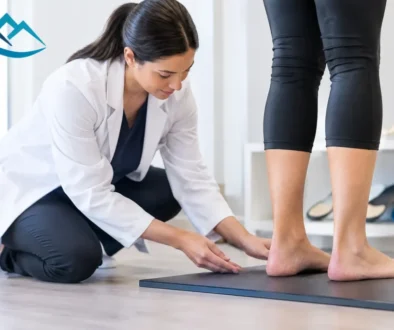
At Vancouver Orthotic Clinics, Dr. Michael Horowitz & Associates assess how the foot, ankle, and lower limb function together. A practitioner-led evaluation can include gait observations, joint and muscle assessment, and 3D foot scanning when custom orthotics are appropriate. The purpose is not to place every sore Achilles in an orthotic. It is to determine whether mechanics such as excessive pronation, poor arch control, or uneven pressure are contributing to the strain.
Custom orthotics may help reduce repetitive stress for people whose foot mechanics are a meaningful factor in their pain. They work best as part of a plan that includes suitable footwear, a gradual return to walking, and progressive strengthening. A retail insole can feel comfortable, but it may not address the specific alignment or loading pattern found during an examination.
If you also have heel pain under the foot, recurring plantar fasciitis, shin pain, ankle discomfort, or knee pain, mention it during your visit. These symptoms can be connected through the same walking mechanics. A complete assessment helps avoid treating each painful area as an unrelated problem.
When Achilles Pain Needs Prompt Assessment
Most gradual Achilles pain responds well to sensible load changes and conservative care, but certain symptoms should not be ignored. Seek prompt medical assessment if you felt or heard a pop in the back of the ankle, cannot push off normally, have sudden major swelling or bruising, or have difficulty standing on your toes on the affected side.
Also arrange an assessment if pain persists beyond one to two weeks despite reducing aggravating activity, keeps returning whenever you resume walking, or is progressively worsening. Redness, marked warmth, fever, numbness, or calf swelling should be evaluated promptly, as these symptoms may point to something other than a routine overuse problem.
Pain near the Achilles can sometimes be confused with bursitis, arthritis, nerve irritation, or a problem coming from the calf. A clear clinical diagnosis helps ensure that the treatment matches the source of pain.
Build Back to Comfortable Walking
Once daily walking is no longer causing a meaningful next-day flare-up, increase gradually. Add a small amount of time or distance, keep the route level at first, and give the tendon time to adapt before adding hills. Consistency usually matters more than a single ambitious walk.
Pay attention to the pattern, not only the pain level in the moment. A tendon that is mildly aware during a walk but settles quickly may tolerate that activity. A tendon that becomes increasingly painful, changes your gait, or produces greater stiffness the next morning needs less load.
If Achilles pain has begun to limit the walks, work shifts, or errands that keep you active, an in-person biomechanical assessment can provide a more precise starting point. The goal is not simply to get through the next walk, but to make everyday movement feel dependable again.