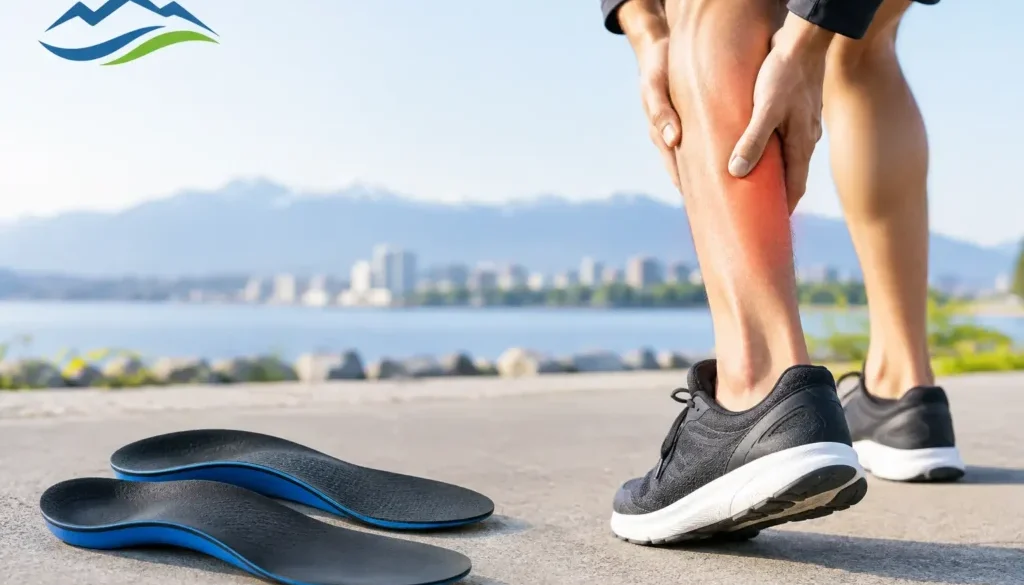
Can Shin Splints Orthotics Ease Running Pain?
A dull ache along the inside edge of the shin can turn a favorite run, a long retail shift, or even a walk around the neighborhood into something you brace for. Shin splints orthotics can be part of a conservative treatment plan when poor foot mechanics are contributing to repeated stress on the lower leg. They are not a quick fix for every case, but the right support can make a meaningful difference when it is paired with an accurate assessment, activity changes, and a gradual return to loading.
Shin splints are common in runners, walkers, court-sport athletes, and people who stand for long hours. They are also common after a sudden increase in training, such as preparing for a race, starting a new fitness routine, or returning to activity after time away. The key question is not simply, “Do I need orthotics?” It is, “Why is my shin being overloaded?”
What Shin Splints Usually Feel Like
The term shin splints commonly describes medial tibial stress syndrome, or pain and tenderness along the inner border of the shinbone. The discomfort may begin as a mild ache at the start of a walk or run, ease as you warm up, and return afterward. As irritation progresses, pain may last longer, become sharper, or affect normal daily activity.
The lower leg absorbs force with every step. If the foot rolls inward too much, the arch drops excessively, or one leg is moving differently from the other, muscles and connective tissues along the shin may have to work harder to control that motion. Flat feet, highly flexible feet, limited ankle motion, worn-out footwear, and rapid changes in mileage can all add to the load.
Pain in the shin should not automatically be assumed to be shin splints. A very localized tender spot, pain at rest, swelling, numbness, or pain that becomes severe may point to a different concern. A clinician should assess persistent or worsening symptoms before you try to train through them.
How Shin Splints Orthotics Can Help
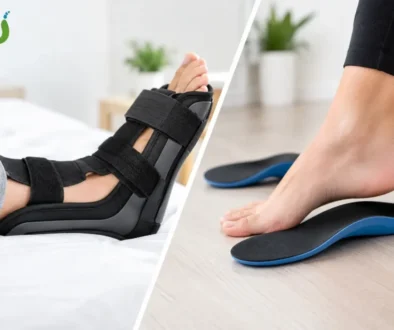
Orthotics work by changing how forces move through the foot and lower limb. For someone whose arch collapses significantly with each step, an appropriately designed custom orthotic may help control excessive pronation and reduce the rotational stress that travels upward toward the shin. For another person, the goal may be to improve cushioning, redistribute pressure, or support a foot that becomes fatigued late in a shift or long run.
This is why generic insoles do not always solve the problem. A retail insert can feel comfortable in the store but may not address the specific movement pattern that is repeatedly loading the lower leg. It may also be too soft, too rigid, too narrow, or poorly matched to the shape of the shoe.
Custom orthotics are not meant to immobilize your feet. The aim is to provide targeted support while allowing functional movement. The design depends on your diagnosis, footwear, activity, body mechanics, and the symptoms you are experiencing. A runner may need a different approach than a healthcare worker who spends 10 hours on hard floors.
Orthotics work best when biomechanics are part of the problem
If your shin pain followed a dramatic jump in training volume but your foot mechanics are otherwise stable, temporary load reduction may be the main treatment. If pain repeatedly returns whenever you run, walk hills, or stand for long periods, an underlying alignment or support issue is more likely to be involved.
In practice, many people have a combination of factors. Their training increased too quickly, their shoes are nearing the end of their usable life, and their feet are pronating more than their lower legs can comfortably tolerate. Orthotics can address one important piece of that picture.
A Clinical Assessment Finds What an Insole Cannot
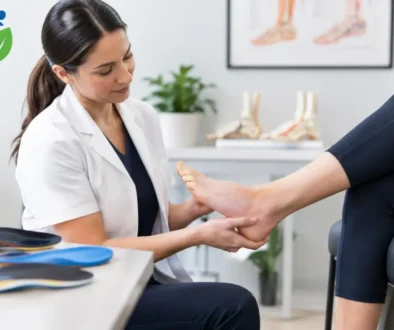
A useful orthotic recommendation begins with more than looking at the arch. At Vancouver Orthotics Clinics by Dr. Michael Horowitz, assessment is practitioner-led and considers your symptom history, activity demands, standing posture, walking mechanics, footwear, range of motion, and areas of tenderness.
A 3D foot scan records the shape and contours of the feet, while the clinical examination helps determine how they function under load. Both matter. A foot can appear to have a normal arch while standing still but collapse significantly during walking or running. Conversely, a low arch does not always cause pain and does not automatically mean that orthotics are necessary.
The clinic’s five-step process is designed to move from assessment and diagnosis to a prescription based on measurable findings. This approach matters because shin pain can be influenced by the ankle, calf, knee, hip, and even how your shoes interact with your feet. A device that is right for one person may be unhelpful for another.
What to Do While Your Shin Settles Down
Orthotics are most effective when the irritated tissue is given a realistic chance to recover. That does not always mean stopping all activity, but it usually means reducing the activity that clearly triggers pain. If running hurts, lower-impact options may be more comfortable for a short period while you rebuild tolerance.
Avoid the cycle of resting until symptoms disappear, then immediately returning to the same mileage or intensity. Gradual progression is more reliable. If pain is mild and does not worsen during activity or linger afterward, you may be able to build back slowly. If it becomes sharp, changes your gait, or is more painful the next day, the load was likely too high.
Supportive shoes also matter. Running shoes and work shoes lose their ability to cushion and stabilize over time, even if they still look acceptable from the outside. Bring the shoes you wear most often to your assessment when possible. Their wear pattern can provide useful clues about how your feet are loading.
Calf tightness and reduced ankle mobility can contribute to shin overload as well. Gentle calf mobility and strengthening may be recommended based on your examination. The goal is not to force a stretch through pain, but to restore capacity and control as symptoms allow.
Choosing Between Custom Orthotics and Store-Bought Insoles
Store-bought insoles can be reasonable for short-term comfort, mild fatigue, or trying a small amount of extra cushioning. They are accessible and may help if your symptoms are minor and recent. However, they are made for a broad range of feet and cannot account for your exact arch shape, side-to-side differences, or walking mechanics.
Custom orthotics are more appropriate when shin splints keep returning, pain is limiting work or exercise, you have known flat-foot mechanics or alignment concerns, or you have already tried changing shoes and reducing activity without lasting improvement. They are prescribed to fit both your feet and the footwear you actually use.
There is a trade-off: custom devices require an assessment and an adjustment period. Some people notice a change quickly, while others need a short period to adapt as their body gets used to moving with better support. Clear wear instructions and follow-up guidance help make that transition more comfortable.
When Shin Pain Needs Prompt Attention
Do not wait on an assessment if pain is severe, is focused in one small spot on the bone, occurs at rest or at night, or is accompanied by noticeable swelling. Seek prompt medical attention if you cannot bear weight normally, develop numbness or weakness, or your leg looks unusually red or warm. These symptoms are not typical “push through it” training discomfort.
For recurring shin pain that is less urgent but continues to affect your routine, a clinical biomechanics assessment can provide a practical starting point. Patients in Vancouver, Burnaby, Richmond, the North Shore, and Greater Victoria often seek care after realizing that the same lower-leg pain returns every time their activity level increases.
Your shin is asking for a change, not a tougher attitude. With the right diagnosis, better load management, and orthotic support when it fits the cause, getting back to walking, working, and training can feel far more manageable.