A Guide to Leg Length Differences and Pain
A few millimeters can change how your body manages a full day of walking, standing, climbing stairs, or running. This guide to leg length differences explains why an apparent unevenness may contribute to recurring foot, knee, hip, or low back pain – and why the right response starts with a clinical assessment rather than an over-the-counter heel lift.
What is a leg length difference?
A leg length difference means one leg appears or measures longer than the other. The difference may be structural, meaning there is a measurable difference in the length of the thighbone or shinbone. It may also be functional, meaning the bones themselves may be similar in length but posture, joint motion, muscle tension, foot mechanics, or pelvic position makes one side function differently.
These two patterns can feel similar in everyday life, but they are not managed in exactly the same way. A structural difference may call for carefully measured accommodation. A functional difference may improve when the underlying movement pattern is addressed, such as excessive foot pronation, restricted ankle motion, or uneven loading through the pelvis and lower limb.
A leg length difference is not automatically a problem. Many people have small differences and no pain at all. What matters is how your body adapts. A minor difference can become more noticeable when you spend long shifts on hard floors, increase your running mileage, recover from an injury, or wear footwear with poor support.
Signs an uneven leg length may be affecting you
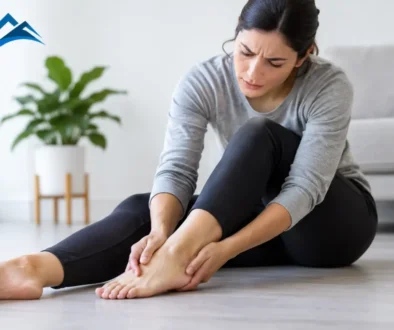
Pain is rarely the same for every person. Some people notice one-sided low back tightness after standing at work. Others describe a hip that feels tired, a knee that repeatedly aches on one side, or a foot that develops heel pain sooner than the other.
Common signs include a sense that one pant leg sits differently, uneven shoe wear, a recurring limp, one foot turning out more than the other, or a feeling that you always load one side when walking. You may also notice that one knee tracks inward, one hip drops during a step, or one shoulder seems lower in photos. These observations can be useful clues, but they do not confirm the cause on their own.
Children may show changes in gait, uneven wear on footwear, or reluctance with activity. Adults may first notice symptoms after a change in work demands, a new fitness program, or a period of reduced activity. In either case, persistent pain deserves more than a guess based on looking in a mirror.
Why leg length differences can cause pain
Walking is a series of controlled transfers of weight from one side to the other. When one side consistently reaches the ground differently, the body may compensate at the foot, ankle, knee, hip, pelvis, or spine. That compensation is not always harmful, but repeated loading can irritate tissues over time.
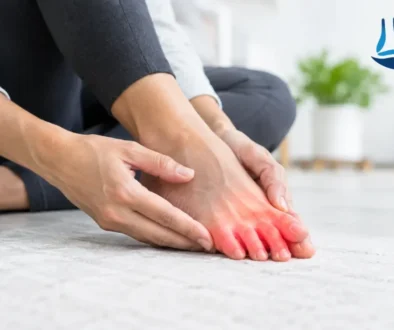
For example, a foot on the functionally longer side may roll inward more as the body tries to adapt. On the other side, a person may rise slightly through the heel, shift the pelvis, or bend the knee differently. This can add strain to the plantar fascia, Achilles tendon, shin muscles, knee structures, hip muscles, and low back.
The relationship is not always straightforward. Heel pain does not prove a leg length difference, and a difference does not explain every episode of back pain. Flat feet, high arches, footwear, training errors, joint mobility, prior injuries, and work surfaces all influence the picture. A good assessment looks at the full chain rather than assigning every symptom to a single measurement.
How a clinical assessment works
The most useful guide to leg length differences is one that separates observation from diagnosis. Estimating leg length by comparing shoe soles or placing a random insert under one heel can lead to overcorrection and new symptoms.
A practitioner-led assessment typically begins with your history. When did the pain start? Is it worse after standing, running, or first thing in the morning? Have you had an injury, a recent change in activity, or pain in more than one area? These details help identify patterns that a static measurement alone can miss.
The physical examination then considers posture, pelvic level, joint movement, walking pattern, muscle function, and how each foot contacts the ground. Direct measurements may be used where appropriate, while a functional evaluation examines how you actually move. A 3D foot scan can add objective information about arch shape, pressure-related loading tendencies, and foot alignment that may be contributing to the imbalance.
At Vancouver Orthotics Clinics by Dr. Michael Horowitz, this information is considered through a structured clinical process rather than relying on a generic insole. The goal is to determine whether foot support, a measured lift, changes to footwear, targeted movement guidance, or a combination is most appropriate for your symptoms.
When a heel lift or custom orthotic may help
A heel lift is not a universal answer. If a measured structural difference is contributing to symptoms, a lift may help level loading and reduce the compensation occurring higher up the leg. The amount matters. Adding too much height too quickly can make the body feel worse, especially if it has adapted to a difference for years.
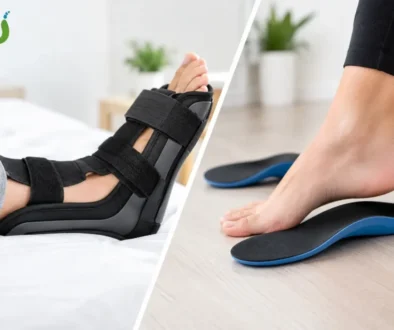
Custom orthotics may be considered when foot mechanics are a key part of the problem. An orthotic can support or guide the foot in a way that reduces excessive motion, improves force distribution, and gives the lower limb a more stable foundation. In some cases, an accommodation for leg length can be incorporated into the plan. In others, foot control alone changes the functional pattern enough that a lift is unnecessary.
There are trade-offs. A device that feels comfortable while sitting may not work well during a long walk. A lift that helps one activity may feel different in a work shoe with a shallow heel counter. Your practitioner should consider the shoes you wear most often, whether you run or walk for exercise, and the demands of your job.
What you can do before your appointment
Avoid making major corrections on your own. Stacking multiple insoles, adding thick pads to one shoe, or wearing only one elevated shoe can alter your gait abruptly. If you already use an insert, bring it to your appointment so it can be evaluated alongside your footwear and symptoms.
It is helpful to track when pain occurs and what seems to trigger it. Note whether it is worse during the first steps in the morning, after a retail shift, on hills, or after a particular distance. Bring your most frequently worn shoes, especially if the outsole is visibly worn more on one side.
Choose stable, supportive footwear while you wait for assessment. Replace shoes that are significantly worn down or tilted. If pain increases sharply, you cannot comfortably bear weight, you have sudden swelling, numbness, weakness, fever, or a new change in walking ability, seek prompt medical care.
Questions patients often ask
Is a small difference normal?
Small differences are common. The key question is whether the difference is contributing to pain, altered movement, or reduced activity. Symptoms, function, and clinical findings should guide care rather than a number alone.
Can leg length differences cause plantar fasciitis?
They can be one contributing factor. Uneven loading may place extra demand on the foot and plantar fascia, but plantar fasciitis also relates to arch mechanics, calf tightness, footwear, standing time, and activity changes. A complete assessment helps identify the factors that are most relevant for you.
Will orthotics fix the difference permanently?
Orthotics do not change bone length. They are intended to improve support, alignment, and load management while you stand, walk, and exercise. Functional contributors may also require attention to mobility, strength, footwear, and activity progression.
The most helpful next step is not to chase a perfectly level body on your own. It is to understand how your feet and legs are moving, identify what is driving your symptoms, and use a measured plan that lets you return to the activities and workdays that matter to you.