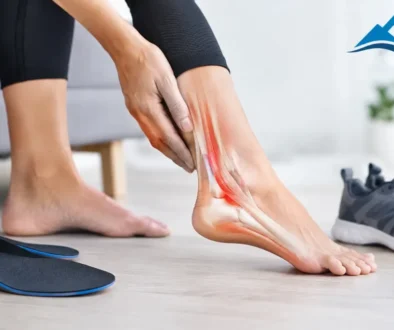


Does Foot Pain Cause Limping? Signs to Take Seriously
A limp is often the body’s quick workaround for pain. If every step hurts at the heel, ball of the foot, arch, toes, or ankle, you may shift weight to the other side, shorten your stride, or avoid pushing off the painful foot. So, does foot pain cause limping? Very often, yes – particularly when pain is persistent, sharp, or gets worse with standing and walking.
The concern is not simply that walking looks uneven. A limp changes how forces move through your feet, ankles, knees, hips, and low back. What begins as morning heel pain or a sore forefoot after a long shift can become a pattern that affects daily mobility, exercise, and comfort on both sides of the body.
Does Foot Pain Cause Limping? Why Your Gait Changes
Walking is a coordinated sequence. Your heel contacts the ground, your foot rolls forward, your body moves over that foot, and your toes help push you into the next step. Pain can interrupt any part of that sequence.
When the heel hurts, many people land more gently or avoid heel contact altogether. With pain under the ball of the foot, they may shift weight outward or take shorter steps. A painful bunion can make toe-off uncomfortable, while ankle pain may limit how far the ankle bends. These changes are often automatic. You are not choosing to walk differently so much as your nervous system is trying to protect a painful area.
A temporary limp after a minor bump or an unusually demanding hike may settle as the tissue recovers. But a limp that lasts for days, returns regularly, or appears during normal activities deserves attention. Continued compensation can place extra load on the opposite foot and leg.
Common Foot Problems That Can Lead to a Limp
Different conditions create different walking patterns. The exact cause matters because the right support for heel pain is not always the right support for forefoot pain or a stiff ankle.
Plantar fasciitis and heel pain
Plantar fasciitis commonly causes sharp pain under the heel, especially with the first steps after getting out of bed or standing after sitting. Some people limp for the first few minutes, then feel somewhat better as they move. If pain returns after a walk, work shift, or workout, the pattern may be related to repeated strain rather than a single incident.
Foot mechanics can contribute. Limited support through the arch, tight calves, long periods on hard floors, and sudden increases in activity can all raise stress on the plantar fascia. See our plantar fasciitis and heel pain resources for more detail on common symptoms and conservative treatment options.
Flat feet and arch strain
Flat feet do not always cause symptoms. For some people, however, the arch drops significantly during walking and the foot rolls inward more than the surrounding joints tolerate comfortably. This may contribute to arch fatigue, heel discomfort, inner ankle pain, shin pain, or knee discomfort.
A person with painful flat feet may turn the foot outward or spend less time standing on that side. That can look like a limp, even if the pain is mild. The key question is whether the foot is functioning efficiently and comfortably for that person’s work, activity level, and body mechanics.
Metatarsalgia, toe pain, and bunions
Metatarsalgia refers to pain in the ball of the foot. It can make the push-off phase of walking particularly uncomfortable. People may walk on the outside edge of the foot, lift the heel earlier, or take smaller steps to avoid pressure beneath the forefoot.
Bunions can also affect gait when pressure at the big-toe joint becomes painful or the toe has less room to move. Since the big toe plays a meaningful role in propulsion, even a modest loss of comfortable movement can change the way a person walks.
Achilles tendon and ankle pain
The Achilles tendon helps transfer force from the calf to the foot. Irritation in this area can make uphill walking, stairs, running, and pushing off difficult. Ankle pain may lead to a guarded, stiff-legged gait or a shorter stride because the body does not want to move over the painful joint.
A recent twist, visible swelling, or difficulty putting weight through the foot should be assessed promptly. Not every ankle problem is an overuse issue, and a careful history and physical examination help clarify what may be happening.
How Limping Can Affect Knees, Hips, and Low Back
A limp is a load-management strategy, but it can create new demands elsewhere. If you repeatedly spend less time on one foot, the other leg may absorb more force. If you lean your trunk to avoid pain, the hip and low back muscles may work harder to stabilize you.
This does not mean every limp will cause knee, hip, or back pain. Bodies vary, and a short-term gait change may resolve without broader symptoms. The risk rises when the painful pattern continues for weeks, when you work long hours on your feet, or when you keep training through pain.
For example, a retail worker in Downtown Vancouver may notice heel pain after standing on concrete all day, then begin favoring one side on the walk home. A runner in Victoria may compensate for forefoot pain during training and later feel discomfort at the outside of the knee. In both situations, treating only the secondary sore area may miss the foot-function issue that began the chain.
When Foot Pain and Limping Need a Clinical Assessment
Pain does not need to be severe before it is worth evaluating. A clinical assessment can be especially useful when limping persists beyond a few days, pain keeps returning, or you have started avoiding normal walking, exercise, or work tasks.
Seek timely assessment if you cannot comfortably bear weight, have marked swelling or bruising, experience numbness or burning, notice a wound or skin color change, or develop sudden pain without a clear explanation. Children who consistently limp should also be evaluated rather than assuming they will simply outgrow it.
During an assessment, a practitioner looks beyond the spot that hurts. They may review your activity history, footwear, previous injuries, standing demands, joint motion, muscle flexibility, and walking pattern. At Vancouver Orthotics Clinics by Dr. Michael Horowitz, the process can include a practitioner evaluation and 3D foot scan to help identify how the foot is loading and moving under real-life demands.
That information helps distinguish between a problem that may respond to changes in activity, stretching, and footwear from one where custom orthotics or other conservative support may be appropriate. A 3D scan alone is not a diagnosis. Its value is in combining measurable foot information with a clinical examination and your symptoms.
What Can Help You Walk More Comfortably
The most useful plan depends on the diagnosis, the location of pain, and how long symptoms have been present. Reducing aggravating activity for a short period can help calm an irritated area, but complete rest is not always necessary or practical. A clinician can help you find an activity level that protects the painful tissue without making you less mobile than needed.
Supportive, properly fitting footwear can make a meaningful difference, especially if your current shoes are worn down, narrow through the toes, or lack the structure your feet need. For some people, over-the-counter insoles may provide short-term cushioning. For recurring pain, significant biomechanical findings, or symptoms that involve more than one area, custom orthotics may offer more targeted support and pressure redistribution.
Exercises may also be part of care. Calf flexibility, foot strength, balance, and hip control can influence walking mechanics. The correct exercise should match the condition. Aggressively stretching a painful area without a diagnosis is not always helpful, particularly if a recent injury is involved.
If extended health benefits are part of your decision, ask what documentation your plan requires before your appointment. Coverage varies by provider and plan, and clinic staff can explain the information commonly needed for orthotic claims.
A limp is useful information from your body, not something to ignore or simply push through. If foot pain is changing the way you walk, an early assessment can help identify the cause, reduce unnecessary compensation, and give you a clearer path back to comfortable movement.