
What Happens in the Orthotic Assessment Process?
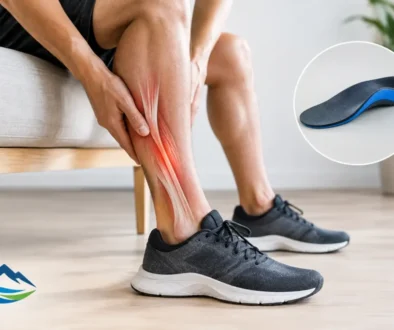
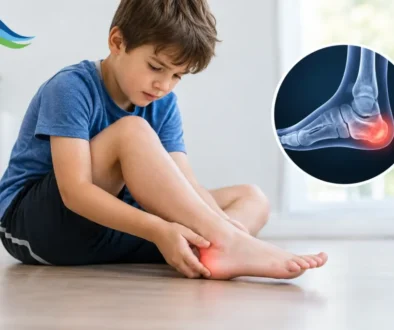
Morning heel pain that eases after a few steps. Knees that ache after a shift on your feet. A runner’s shin pain that keeps returning after rest. The orthotic assessment process is designed to look beyond the sore area and identify whether the way your feet move, load, and support your body may be contributing to the problem.
A custom orthotic is not simply an insole chosen by shoe size or arch height. It is a clinical treatment device prescribed after an assessment of your symptoms, movement, foot structure, footwear, and day-to-day demands. For many people in Greater Vancouver and Greater Victoria, that distinction matters when pain has become a recurring part of work, walking, exercise, or standing.
Why an Orthotic Assessment Looks Beyond Your Feet
Your feet are the foundation for every step, but discomfort is not always felt there. When foot mechanics are not well controlled, the strain can travel upward through the ankles, shins, knees, hips, and lower back. Flat feet, high arches, limited joint motion, previous injuries, and worn-out footwear can each affect how force moves through the lower body.
That does not mean every case of knee, hip, or back pain begins in the feet. Pain can have several contributing factors, and a responsible assessment should not assume one cause before examining the full picture. The goal is to determine whether an orthotic is likely to help, what it needs to address, and whether other conservative care should be part of the plan.
At Vancouver Orthotics Clinics by Dr. Michael Horowitz, assessments are performed by Doctors of Chiropractic and a physiotherapist who evaluate lower-limb biomechanics in the context of the patient’s actual symptoms and routine. A retail insole may provide temporary cushioning for some people. A clinician-prescribed custom orthotic is considered when individualized support, alignment control, pressure redistribution, or movement guidance is needed.
The 5-Step Orthotic Assessment Process
The assessment is structured, but it is not rushed or one-size-fits-all. Someone with first-step heel pain needs a different discussion than a warehouse employee with forefoot pressure or a recreational runner with recurring Achilles tendon irritation.
1. Symptom History and Goal Setting
The appointment begins with a conversation about what you are feeling, where it occurs, and when it is most noticeable. Your practitioner may ask whether pain is worse with the first steps of the day, after long periods of standing, during a run, or after sitting at a desk. They will also review past injuries, activity level, work demands, current footwear, and what you have already tried.
This history helps distinguish patterns commonly seen with plantar fasciitis, metatarsalgia, shin splints, Achilles tendonitis, bunion irritation, or strain related to flat feet. It also establishes a practical goal. For one patient, that may be getting through an eight-hour retail shift more comfortably. For another, it may be returning to regular walks on the North Shore or training without recurring heel pain.
2. Clinical Examination of Foot and Lower-Limb Function
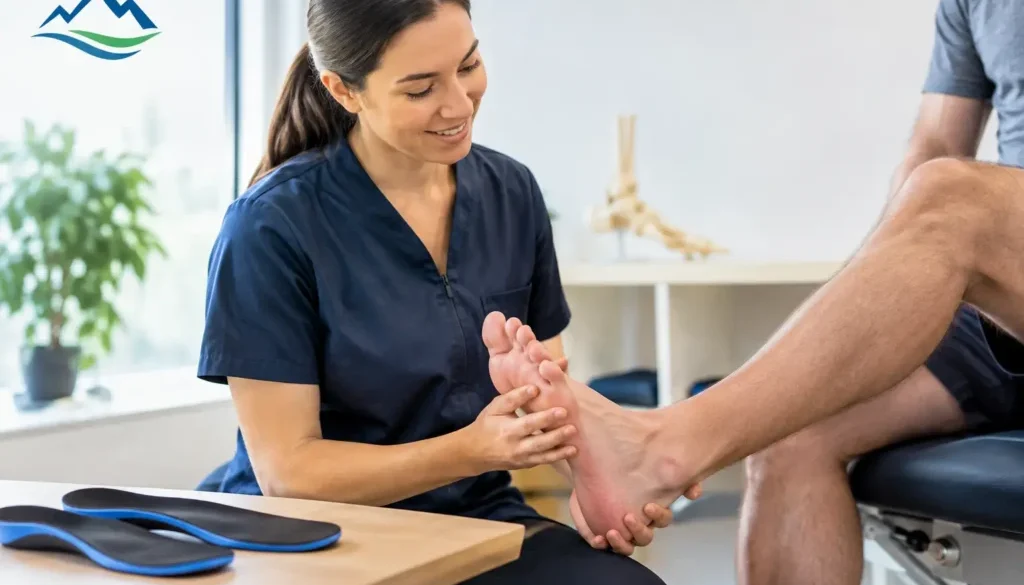
Next, the practitioner examines the feet and lower limbs. This can include observing arch position, joint movement, muscle flexibility, areas of tenderness, toe alignment, heel position, and side-to-side differences. They may assess how the foot responds under load and whether restricted or excessive motion is affecting the ankle, knee, or hip.
The findings are considered alongside your symptoms. For example, a low arch alone is not automatically a problem, and a high arch does not always require an orthotic. What matters is how the structure functions during weight-bearing and whether it is associated with pain, instability, fatigue, or repeated overload.
3. Gait and Movement Analysis
Walking is one of the most useful parts of an orthotic assessment because it shows what happens when the body is in motion. Your practitioner observes your gait, including how your foot contacts the ground, how the arch moves, how the ankle tracks, and how your knee and hip respond through each step.
Depending on your concern, the assessment may also consider squatting, balance, standing posture, or sport-specific movement. A person who walks on concrete all day has different loading demands than someone who runs hills, plays court sports, or spends long hours seated before exercising in the evening.
This is where a symptom-led evaluation becomes valuable. Excessive motion is not always harmful, and limited motion is not always the issue. The clinical question is whether a movement pattern is creating more stress than your tissues can comfortably handle.
4. 3D Foot Scanning and Orthotic Prescription
When custom orthotics are appropriate, a 3D foot scan captures detailed measurements of your feet in a supported position. The scan gives the practitioner a precise digital model to use alongside the examination findings. It does not replace clinical judgment. It supports a prescription based on both foot shape and function.
The prescription may account for arch support, heel control, cushioning, pressure relief, posting, and accommodation for sensitive areas. Material selection also matters. A firmer device may offer more control for certain movement patterns, while a more cushioned design may be preferable when pressure sensitivity or impact discomfort is the main concern. The right choice depends on the condition, footwear, activity, and tolerance.
Bring the shoes you wear most often if possible. Work boots, running shoes, casual sneakers, and dress shoes do not all have the same space or support requirements. An orthotic should fit the shoes you realistically use, not a pair that stays in the closet.
5. Fitting, Wear-In Guidance, and Follow-Up
Once your custom orthotics are ready, you return for fitting and instruction. The practitioner checks the fit in your footwear and explains how to begin wearing them. Most patients benefit from a gradual wear-in period rather than immediately using a new device all day or on a long run.
Some awareness of the orthotics during the adjustment period can be expected, especially when the device changes how pressure is distributed or how the foot is supported. Sharp pain, worsening symptoms, numbness, or persistent discomfort should be reported so the fit and prescription can be reviewed. Follow-up care is part of the process because bodies, shoes, activity levels, and symptoms can change.
What You Can Do Before Your Appointment
A little preparation can make the appointment more useful. Bring your most frequently worn shoes and, if relevant, your current insoles or older orthotics. Make a note of when symptoms started, what tends to aggravate them, and what provides relief. If you participate in a particular activity, describe the surface, distance, frequency, and point at which symptoms begin.
It also helps to be clear about your priorities. Are you trying to reduce pain at work, walk longer distances, stay active with your children, or return to a fitness routine? Treatment decisions are more meaningful when they support a specific, realistic goal.
Orthotics Are One Part of Conservative Care
Custom orthotics can reduce strain and improve support, but they are not a substitute for every aspect of recovery. Depending on the diagnosis, your practitioner may discuss footwear changes, activity modification, stretching, strengthening, or other conservative treatment options. A device works best when it is matched to the source of stress and used consistently in appropriate shoes.
For example, plantar fasciitis may improve when orthotic support is combined with load management and calf flexibility work. An active person with shin splints may need to consider training volume and running surfaces as well as foot control. Someone with forefoot pain may need pressure relief, but shoe width and cushioning can be equally relevant.
If you have extended health benefits, ask about the documentation required before your appointment. Plans vary, and many claims require a prescription and receipt from an eligible practitioner. Understanding those requirements early can make the claims process more straightforward.
Recurring pain deserves more than a guess based on a store-bought insert. A thoughtful assessment can clarify what your feet are doing, how that relates to your symptoms, and whether custom orthotics are a practical next step toward more comfortable movement.