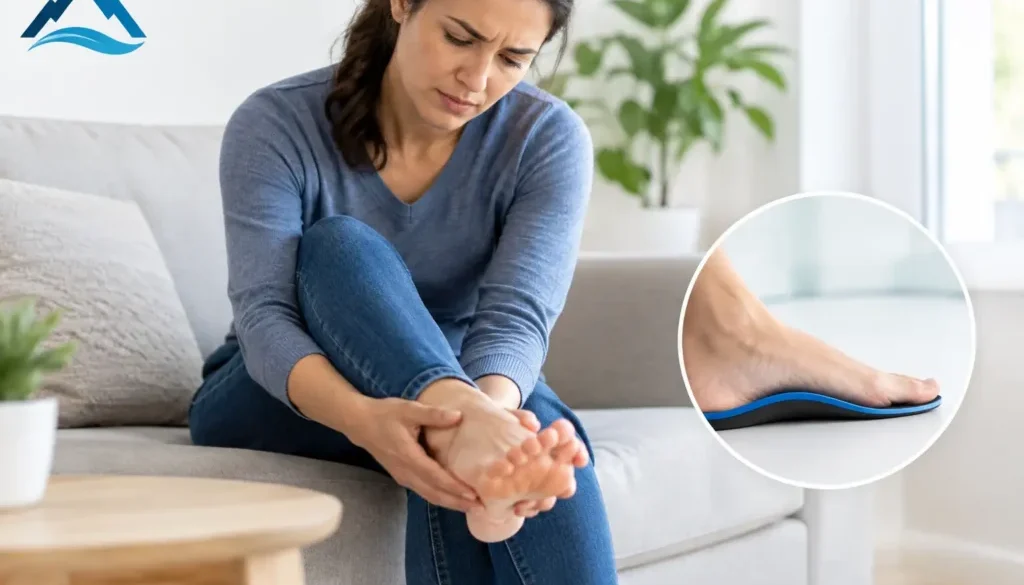
Why Feet Hurt: Common Causes and Next Steps
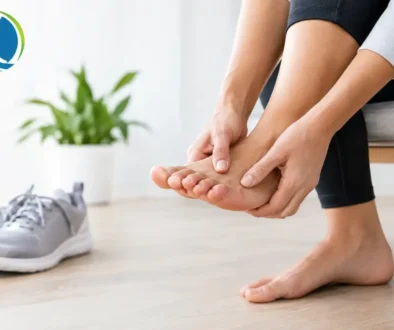
The first few steps out of bed can tell you a lot about why feet hurt. Sharp heel pain in the morning, aching arches after a work shift, or soreness under the ball of the foot after a walk are not simply signs that you need to “push through.” They can be clues that the tissues, joints, or mechanics of your feet are under more stress than they can comfortably manage.
Foot pain is common because the feet absorb a remarkable amount of force every day. Each foot has dozens of bones, joints, muscles, ligaments, and tendons working together to support your weight and move you forward. When one part is overloaded or not moving well, pain may show up in the foot itself or farther up the body, including the ankles, shins, knees, hips, or low back.
Why Feet Hurt: The Most Common Patterns
The location and timing of pain often provide useful diagnostic information. Heel pain that is worse with first steps in the morning may point toward plantar fasciitis. Pain along the back of the heel or lower calf may involve the Achilles tendon. Burning or tenderness beneath the ball of the foot can be associated with metatarsalgia, while a tired, aching arch may occur when the foot rolls inward excessively during walking.
That said, symptoms can overlap. A person with flat feet may have heel pain, ankle fatigue, shin discomfort, or knee pain, depending on how their body compensates. A runner with a high arch may experience pressure under the forefoot or outside of the foot. The goal is not to guess based on one symptom alone, but to understand how the foot functions during standing, walking, work, and exercise.
Overuse and sudden changes in activity
Many cases start with a change in load. You may have increased your walking distance, returned to running, started a job that requires long periods on your feet, or spent a weekend doing more yard work than usual. The tissue does not necessarily fail because the activity is bad. More often, the load increased faster than the foot was ready to tolerate.
This is especially common for retail workers, healthcare workers, warehouse staff, and active adults across Greater Vancouver who spend much of the day standing on hard surfaces. Even supportive footwear can have limits when your feet are working for eight or ten hours at a time.
Footwear that does not match your needs
Shoes can contribute to pain when they are worn out, too narrow, too flexible, or poorly matched to your foot shape and activity. A shoe that feels comfortable for a short trip may not provide enough stability for a full shift. Minimal cushioning may be appropriate for some people, while others need more shock absorption or a firmer base to control excessive motion.
There is no single “best” shoe for every foot. The right choice depends on your arch shape, gait, workload, and the condition being managed. Footwear can be part of the solution, but it may not address the underlying mechanics causing repeated strain.
Flat feet, high arches, and alignment changes
Foot structure is not automatically a problem. Many people have flat feet or high arches without pain. Trouble tends to develop when the foot’s movement pattern creates more stress than surrounding tissues can handle.
With a flatter foot, the arch may lower and the ankle may roll inward more than needed during walking. This can place extra demand on the plantar fascia, posterior lower-leg muscles, knees, and hips. With a higher arch, the foot may be less effective at spreading impact forces, concentrating pressure at the heel or forefoot. Bunions, toe alignment changes, and reduced joint motion can also change how pressure moves through the foot.
Plantar fasciitis and persistent heel pain
Plantar fasciitis is one of the most frequent reasons for heel pain. The plantar fascia is a strong band of tissue along the bottom of the foot that helps support the arch. Repeated pulling or loading can irritate it, producing tenderness near the inside bottom of the heel.
Morning pain is a familiar pattern, but it is not the only one. Some people feel pain after sitting, while others notice it only after a long walk or near the end of the day. Recovery often requires more than rest alone. Managing load, improving foot support, and addressing the movement pattern that keeps irritating the tissue are usually more productive than simply waiting for the pain to disappear.
When Foot Pain May Start Above the Foot
Feet do not work in isolation. Limited ankle motion, calf tightness, weakness through the hips, or a change in walking mechanics can all alter the forces reaching the foot. Conversely, poor foot control can contribute to symptoms higher up the chain.
For example, a foot that collapses inward excessively may rotate the lower leg and change knee tracking. This does not mean every knee or hip problem begins in the feet. It means the feet should be considered as part of a full biomechanical picture, particularly when symptoms return despite changing shoes, stretching, or taking time away from activity.
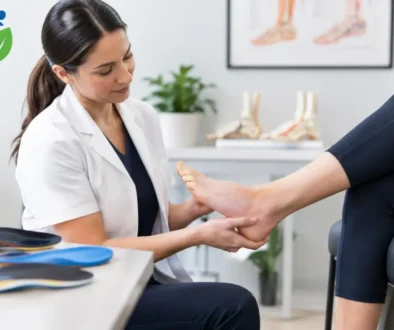
A clinical assessment can help distinguish between a local foot issue and a broader lower-limb movement problem. At Vancouver Orthotic Clinics by Dr. Michael Horowitz, this assessment includes practitioner evaluation, gait and foot-function review, and 3D foot scanning when custom orthotics are indicated. The scan is not a diagnosis on its own. It is one measurable part of understanding how your foot is shaped, loaded, and supported.
What Can Help When Your Feet Hurt
The most effective approach depends on the diagnosis, but early action can reduce the chance that a short-term irritation becomes a recurring limitation. If activity triggered the pain, reduce the aggravating load temporarily rather than stopping all movement indefinitely. A shorter walk, lower-impact workout, or more frequent sitting breaks may allow irritated tissues to settle while you stay active.
Gentle calf and foot mobility work can help when tightness is contributing to strain. Supportive shoes with enough room for the toes may reduce pressure, especially if a bunion or forefoot pain is involved. Replacing shoes that have lost their structure can also make a meaningful difference.
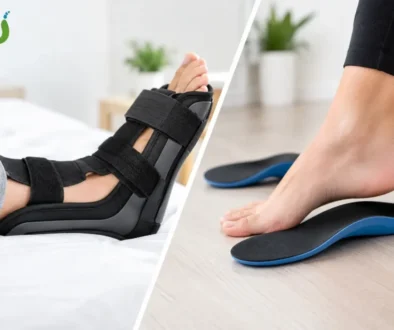
For recurring symptoms, generic insoles can sometimes provide short-term comfort. Their limitation is that they are made for an average foot and cannot account for your exact arch contour, pressure areas, or gait pattern. Custom orthotics are prescribed after an assessment and designed to improve support, redistribute pressure, and guide foot motion according to the individual’s needs. They are not meant to make the foot passive. A well-designed orthotic can help reduce excessive strain so that daily walking, work, and rehabilitation are more comfortable.
When to Book a Clinical Assessment
Not every sore foot needs an appointment immediately. A mild ache after an unfamiliar activity may improve with a few days of modified activity and better recovery. Persistent, recurring, or worsening pain deserves a closer look, especially when it affects your ability to work, walk, exercise, or sleep.
Seek prompt medical attention if foot pain follows a significant injury, you cannot bear weight, there is marked swelling or deformity, or the foot becomes numb, unusually cold, or changes color. These symptoms require timely evaluation.
For ongoing mechanical pain, a practitioner-led assessment can identify whether plantar fasciitis, Achilles tendon irritation, flat-foot mechanics, forefoot overload, ankle instability, or another condition is likely involved. This is particularly useful when you have tried new shoes or store-bought insoles without lasting relief.
A Practical Next Step for Recurring Pain
If you are wondering why feet hurt every week, pay attention to patterns: where pain starts, what time of day it appears, which shoes you were wearing, and whether a change in activity preceded it. Those details make an assessment more precise and help guide a plan that fits your actual routine.
You do not need to accept foot pain as the cost of staying active, working on your feet, or getting older. A clear diagnosis and a practical plan can help you move with more confidence, one comfortable step at a time.