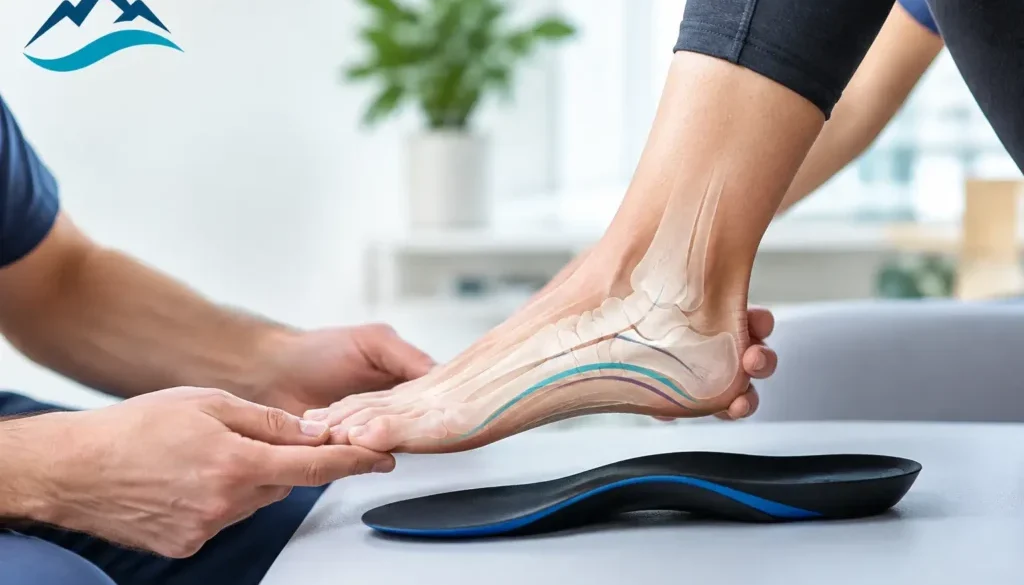
Foot Biomechanics Patient Guide for Everyday Pain
Your feet may be the first place pain shows up, but they are not always the only place the problem is felt. A sore heel when you get out of bed, aching arches after a shift, recurring shin pain during runs, or knee discomfort on stairs can all be connected to how your feet move and support your body. This foot biomechanics patient guide explains what clinicians look for, why movement patterns matter, and when an assessment may be a practical next step.
What foot biomechanics means
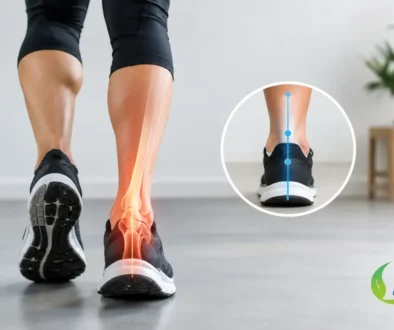
Foot biomechanics is the study of how the feet, ankles, legs, and joints move together while standing, walking, running, and changing direction. Each foot has dozens of joints, muscles, ligaments, and tendons working in coordination. A small change in one area can affect the forces moving through the rest of the lower body.
For example, a foot that rolls inward more than its tissues can comfortably manage may place added strain on the arch, heel, ankle, shin, knee, or hip. A foot that stays unusually rigid can have a different issue: it may not absorb impact effectively, sending more force upward with every step.
Neither pattern automatically means something is wrong. Many people have flat-looking arches, high arches, or feet that turn slightly in or out without pain. The clinical question is whether your movement pattern, symptoms, activity level, footwear, and daily demands are combining to overload a specific area.
Why pain does not always stay in the foot
Your feet are your foundation during weight-bearing activity. If that foundation is not providing stable, comfortable support, the body often adapts farther up the chain.
Someone with plantar fasciitis may notice sharp heel pain with their first steps in the morning. Another person may have no heel pain at all but develops Achilles tendon irritation, shin splints, ankle discomfort, or pain around the front of the knee. A retail worker standing on concrete and a runner increasing mileage can have similar biomechanical contributors, even though their daily routines look very different.
This does not mean every case of knee, hip, or low back pain starts in the feet. Pain has many possible causes. It does mean that a foot and lower-limb assessment can be useful when symptoms recur, are activity-related, or have not improved with general changes such as rest and different shoes.
Common signs that an assessment may help
Symptoms often provide more useful information than the appearance of your feet. Consider a clinical assessment if you are dealing with persistent pain that affects work, walking, exercise, or your ability to stay active.
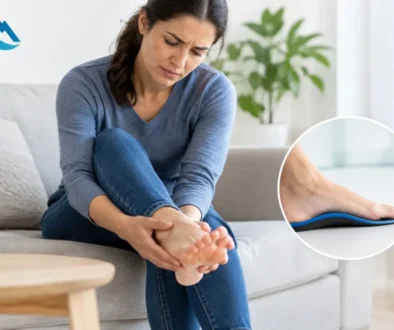
Patterns worth discussing include morning heel pain, aching arches, pain under the ball of the foot, repeated ankle rolling, tight or sore calves, pain along the Achilles tendon, shin pain with activity, or discomfort in the knees, hips, or low back that seems worse after time on your feet.
Pay attention to timing as well. Pain that starts after a long shift may point to endurance and support demands. Pain that appears only during faster running may involve load, training progression, footwear, and movement control. Pain that is worse barefoot but eases in supportive shoes can also be clinically relevant.
Sudden inability to bear weight, major swelling, a visibly changed foot or ankle shape, numbness that persists, an open wound, fever, or intense pain after an injury should be assessed promptly by an appropriate medical provider.
How a foot biomechanics assessment works
A useful assessment is more than stepping on a retail pressure mat or choosing an insole based on shoe size. At Vancouver Orthotic Clinics by Dr. Michael Horowitz, clinicians use a structured five-step process to connect your symptoms with measurable foot function and practical treatment recommendations.
1. Your symptom and activity history
The appointment begins with the details that give pain context: where it hurts, when it began, what makes it worse or better, previous injuries, work demands, exercise habits, footwear, and health history. A runner training for a race needs a different plan than someone whose feet hurt during eight-hour healthcare shifts.
2. Foot, ankle, and lower-limb examination
The clinician examines areas of tenderness, joint movement, muscle flexibility, alignment, and how the foot responds under load. This helps distinguish a general support concern from a more specific problem involving the plantar fascia, Achilles tendon, forefoot, or another structure.
3. Walking and movement observation
Watching you walk can reveal how your foot contacts the ground, how the ankle moves, whether the knee tracks consistently, and whether one side behaves differently from the other. The goal is not to force everyone into one “perfect” walking style. It is to identify movement patterns that may be contributing to tissue stress.
4. 3D foot scanning and measurements
A 3D scan captures the contours and dimensions of your feet in detail. Combined with the clinical exam, it gives the practitioner a more complete basis for designing custom orthotics. Scanning alone is not a diagnosis. Its value comes from being interpreted alongside your symptoms, examination findings, and functional needs.
5. Treatment planning and follow-up
If custom orthotics are appropriate, they are prescribed for your specific foot shape, movement pattern, footwear, and daily activity. You will also receive guidance on breaking them in, using them in suitable shoes, and what changes to expect. Follow-up matters because comfort, shoe fit, and symptom response can guide adjustments.
What custom orthotics can and cannot do
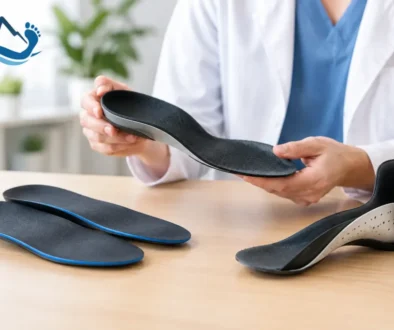
Custom orthotics are designed to improve support, distribute pressure, and influence how forces move through the foot and lower limb. Depending on the assessment, an orthotic may support the arch, cushion a sensitive area, improve heel stability, or accommodate a painful forefoot.
They are not a one-size-fits-all answer. Some patients also need changes to activity volume, stretching or strengthening, footwear adjustments, or a temporary reduction in aggravating activities. If pain is caused primarily by a recent training jump, for example, an orthotic may help manage load but cannot replace a sensible return to activity.
Comfort is also part of good treatment. A device that is theoretically supportive but cannot be worn consistently in your work or walking shoes is unlikely to be useful. Bring or describe the shoes you wear most often so recommendations reflect real life, not just the exam room.
Footwear and daily habits still matter
Even well-designed orthotics work within the space and structure of your shoes. Shoes that are excessively worn, unstable at the heel, too narrow through the toes, or too shallow for an orthotic can limit comfort and support.
For people who stand for long periods in Downtown Vancouver, Richmond, Burnaby, or other busy Lower Mainland workplaces, rotating between supportive pairs can be helpful. Runners may need to consider how a shoe’s fit and cushioning work with their training surface and mileage. There is no single best shoe category for every foot, so recommendations should be tied to your symptoms and activity.
Gradual change tends to be more successful than doing everything at once. If you have been inactive because of pain, increase walking or exercise in manageable steps. If new orthotics are recommended, follow the break-in guidance rather than wearing them all day immediately unless your clinician advises otherwise.
A practical next step for recurring pain
If your symptoms keep returning, do not assume discomfort is simply the price of work, walking, or staying active. A clinician-led assessment can clarify whether foot mechanics are contributing and whether custom orthotics, footwear changes, or a broader conservative plan makes sense.
You may also find the clinic’s condition resources on plantar fasciitis, flat feet, Achilles tendonitis, metatarsalgia, shin splints, and knee pain useful when comparing your symptoms. If you have extended health benefits, ask the clinic what documentation is typically needed for an orthotic claim before your appointment.
Pain-free movement is not always immediate, and the right plan depends on the person in front of the clinician. Still, understanding how your feet function is a practical place to start when every step has become harder than it should be.