Top Signs of Gait Imbalance You Shouldn’t Ignore
A gait imbalance rarely starts with a dramatic fall. More often, it shows up in small compensations: one shoe wears out faster, a knee aches after a walk around the Seawall, or you avoid putting full weight on one foot when getting out of bed. Recognizing the top signs of gait imbalance can help you address a movement problem before it becomes a daily limitation.
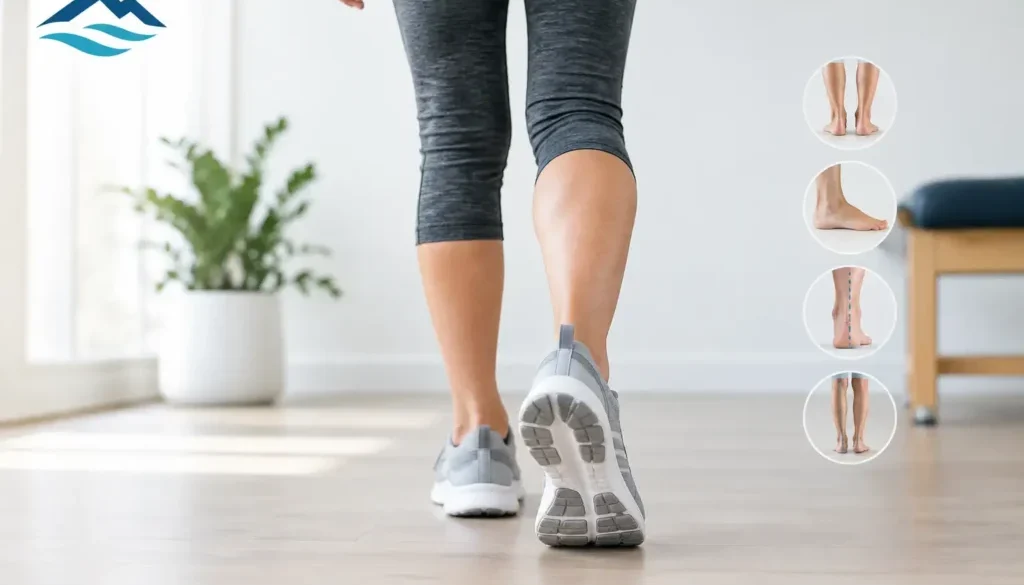
Gait is the pattern your body uses to walk. It depends on the coordinated work of your feet, ankles, knees, hips, core, and nervous system. When one part is not moving, supporting, or aligning well, another area often has to compensate. The result may be foot pain, fatigue, recurring lower-limb discomfort, or a walk that simply feels uneven.
What Gait Imbalance Can Look Like
A gait imbalance does not always mean you visibly limp. Some people walk normally for short distances but develop symptoms after standing at work, exercising, or running errands. Others notice their imbalance only when they are tired, moving downhill, carrying groceries, or walking on uneven ground.
The following signs are worth paying attention to, particularly if they recur, worsen, or affect your confidence when walking.
1. You Limp, Favor One Side, or Shorten Your Stride
A limp is one of the clearest signs that your body is trying to reduce pressure or motion somewhere. You may spend less time on one foot, take a shorter step with one leg, or shift your trunk to the opposite side as you walk. Pain in the heel, forefoot, ankle, knee, hip, or low back can all lead to this protective pattern.
Even if the limp comes and goes, it can place extra load on the other leg. For example, someone with morning heel pain may unconsciously push off the outside of the foot to avoid pressure through the heel. Over time, that change can contribute to ankle, knee, or hip discomfort.
2. Your Shoes Wear Down Unevenly
Look at a pair of shoes you wear regularly. Uneven wear on the heel, outer edge, or forefoot can offer useful clues about how your foot contacts the ground. A shoe that breaks down more quickly on one side does not diagnose a condition by itself, but it may reflect repeated loading patterns that deserve an assessment.
Excessive wear along the inside edge can occur when the foot rolls inward more than expected. Wear on the outer edge may occur when weight stays toward the outside of the foot. Foot structure, activity level, footwear, and past injuries all matter, which is why a clinician should consider the full picture rather than relying on shoe wear alone.
3. You Feel Unsteady When Turning, Climbing Stairs, or Walking Outdoors
Walking in a straight line on a smooth floor may feel fine, while turns, curbs, stairs, and uneven trails feel less secure. This can indicate reduced foot and ankle control, limited joint motion, muscle weakness, or a change in how your body senses position and balance.
You might notice yourself reaching for a railing sooner than before or watching the ground closely to avoid missteps. Those habits are understandable, but they are also useful information to share during an assessment. A detailed gait evaluation looks beyond whether you can walk and considers how confidently and efficiently you move.
4. Foot, Ankle, or Heel Pain Changes the Way You Walk
Pain is one of the most common drivers of gait compensation. Plantar fasciitis, Achilles tendon irritation, metatarsalgia, bunion-related pressure, flat-foot mechanics, and ankle pain can all alter the way you load the foot. Sometimes the painful area is obvious. In other cases, the first symptom is discomfort higher up the chain, such as shin splints, knee pain, hip pain, or low back pain.
A practical question is this: do you walk differently when symptoms flare? If you avoid rolling through the foot, push off with the other leg, or change your pace to stay comfortable, your gait may be affected. Treating only the area that hurts may not be enough if the underlying foot mechanics continue to drive the problem.
5. One Leg or Foot Feels More Tired Than the Other
Fatigue that consistently appears on one side is easy to dismiss, especially after a long shift or workout. But a foot that cramps, a calf that tightens, or a hip that feels overworked can be compensating for poor support or inefficient movement.
This is common for people who stand for much of the day, including retail, healthcare, hospitality, and warehouse workers. It can also affect runners and walkers who increase distance or intensity before their footwear and foot mechanics are ready for the added demand. Fatigue is not always a sign of imbalance, but recurring one-sided fatigue is worth investigating.
6. You Notice Frequent Tripping, Toe Dragging, or Scuffing
Occasional trips happen to everyone. Repeatedly catching your toes on rugs, stairs, or uneven pavement is different, particularly if it is new. Limited ankle motion, weakness, pain avoidance, poor balance, or difficulty clearing the foot during the swing phase of walking can all contribute.
This sign deserves prompt attention if it develops suddenly, occurs with numbness or weakness, or is accompanied by changes in speech, vision, severe headache, dizziness, or facial drooping. Seek urgent medical care for sudden or concerning neurologic symptoms rather than waiting for a routine foot assessment.
7. Your Knees, Hips, or Back Hurt After Walking or Standing
The feet are your foundation. If they collapse inward, remain rigid, or fail to absorb force effectively, the knees and hips may rotate or load differently with every step. That does not mean all knee, hip, or back pain begins in the feet. It does mean foot function should be considered when pain is connected to standing, walking, exercise, or repeated impact.
For some people, improved footwear and activity adjustments are enough. For others, a custom orthotic may help support foot position and distribute pressure more effectively. The appropriate option depends on the diagnosis, the person’s footwear, their work and activity demands, and how their body responds during a clinical exam.
Why a Clinical Gait Assessment Is Different
A gait concern is not always visible in a quick glance or solved with a generic insole. A useful assessment connects symptoms with measurable findings. At Vancouver Orthotics Clinics by Dr. Michael Horowitz, the process includes practitioner evaluation, a review of relevant symptoms and movement patterns, 3D foot scanning, and recommendations based on your individual biomechanics.
The goal is not to force every foot into the same position. Feet vary, and so do the needs of a runner, an office worker, a person recovering from an overuse injury, or someone who spends eight hours on a hard floor. A clinician may look at arch function, foot alignment, joint movement, areas of pressure, footwear condition, and how symptoms change with activity.
When custom orthotics are recommended, they are designed to address the mechanics identified during the assessment. They can help guide foot motion, improve support, reduce strain on irritated tissues, and make walking or standing more comfortable. They work best as part of a practical plan that may also include footwear guidance, activity modification, and targeted recovery strategies.
When to Book an Assessment
Consider booking a clinical assessment if you have persistent limping, recurring foot or lower-limb pain, frequent instability, uneven shoe wear combined with symptoms, or a noticeable change in your walking pattern. It is also reasonable to seek help when discomfort is stopping you from walking, exercising, working comfortably, or keeping up with daily routines.
Patients across Greater Vancouver and Greater Victoria often wait because the symptoms seem manageable on a good day. Yet early assessment can clarify whether the issue is related to foot mechanics, an overuse pattern, inadequate support, or something that should be referred for further medical evaluation. New patients are welcome, and extended-health benefit requirements can be reviewed before you move ahead with orthotic care.
Your walk should not require constant negotiation with pain or uncertainty. If your body is making repeated adjustments to get from one step to the next, a careful assessment can provide a clearer path toward steadier, more comfortable movement.