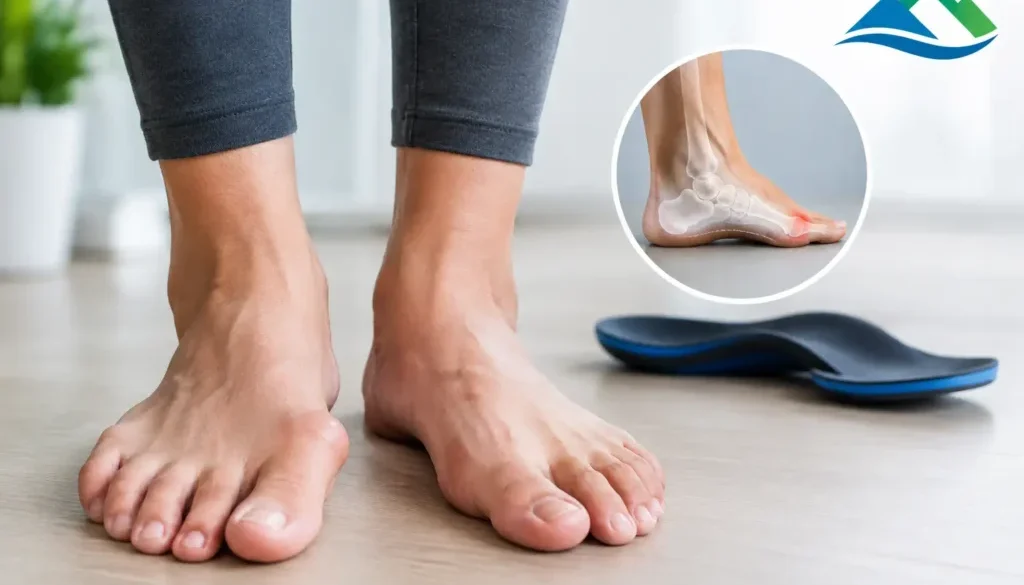
Why Bunions and Flatfeet Often Occur Together
A bunion may start as a bump beside the big toe, but the problem is not always limited to that joint. When bunions and flatfeet occur together, the way the foot rolls, bears weight, and pushes off can place ongoing stress on the big-toe joint. For someone who walks Vancouver seawalls, stands through a retail shift, or notices aching feet after a day at the office, that combination can make everyday footwear feel increasingly uncomfortable.
Flat feet do not automatically cause bunions, and a bunion can develop in someone with a normal-looking arch. Still, the two commonly overlap because both can be influenced by foot mechanics, inherited foot shape, footwear pressure, and the demands placed on the lower limbs. A clinical assessment helps identify which factors are relevant for you and what conservative care may realistically improve.
How Bunions and Flatfeet Affect Foot Mechanics
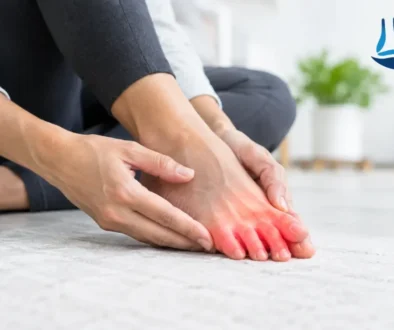
A bunion, also called hallux valgus, develops when the big toe gradually shifts toward the second toe while the joint at its base becomes more prominent. The bump may be tender, red, swollen, or irritated by shoe pressure. Some people have little pain at first, while others notice pain during walking, exercise, or prolonged standing.
Flat feet describe a low or reduced arch, particularly when standing. In many cases, the arch is visible when the foot is off the ground but lowers as weight is applied. This can be a normal variation. It becomes more clinically relevant when the foot rolls inward excessively, a movement often called pronation, or when it contributes to recurring foot, ankle, leg, knee, hip, or low-back symptoms.
As a foot rolls inward, the big toe may have less stable support during push-off. Over time, that altered loading can encourage the toe to drift and can add strain around the first metatarsophalangeal joint. At the same time, pain from a bunion may cause someone to shift weight away from the big toe, changing their gait further. It can become a cycle: reduced foot stability affects the joint, and joint discomfort changes how the person walks.
This does not mean every low arch needs treatment or that an orthotic will reverse a bunion. The practical goal is to improve how forces are managed through the foot and lower limb, reduce pressure on sensitive areas, and make walking and standing more comfortable.
Signs the Combination May Be Causing Problems
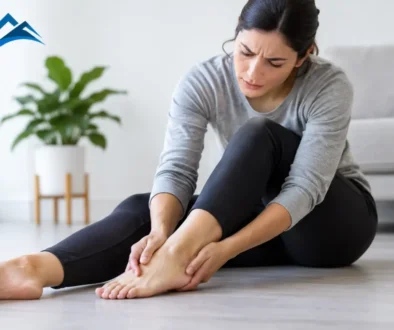
The visible bump is only one clue. Symptoms may be felt in several places, especially after activity or time on hard floors. A person may notice bunion pain in narrow shoes, fatigue through the arch, aching along the inside of the ankle, callus buildup under the forefoot, or pain beneath the second toe from compensating for a sore big-toe joint.
Some people also describe shoes wearing unevenly, frequent ankle rolling, or a feeling that their feet collapse inward late in the day. Runners and walkers may notice that one foot turns out more than the other. For children and teens, a low arch can be painless and flexible, but assessment is worthwhile when there is pain, limping, reduced activity, or a noticeable change in foot position.
Bunion discomfort is not always proportional to the size of the bump. A smaller bunion can be very painful if footwear rubs the area or if the joint is under repeated pressure. Conversely, a larger bunion may be manageable when the foot is well supported and the shoe has enough room through the toe box.
Why Footwear Helps, but May Not Be Enough
Footwear is an important starting point. Shoes with a wider, deeper toe box can reduce direct pressure on the bunion. A stable heel counter and a sole that does not twist easily may also help limit excessive motion for some flat-footed walkers. The best choice depends on the person, their activity, and the shape of the foot.
However, a wide shoe alone does not change how the foot loads from heel strike through toe-off. Generic store-bought inserts can feel comfortable and may be useful for mild symptoms, but they are not designed around a specific bunion position, arch shape, gait pattern, or side-to-side difference. A high arch support can also be uncomfortable if it is poorly matched to the foot or placed too aggressively.
If shoes feel tight over the bunion, choosing a larger size is not always the answer. Extra length can allow the foot to slide, while the forefoot may still be too narrow. Width, depth, upper material, lacing, and the shape of the toe box all matter. For work shoes, walking shoes, and athletic footwear, it is often useful to bring the pairs you wear most often to an appointment.
A Clinical Assessment Looks Beyond the Bump
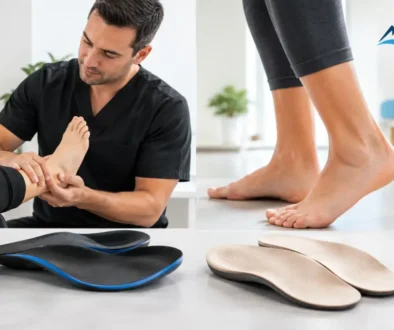
At Vancouver Orthotic Clinics by Dr. Michael Horowitz, an assessment is designed to look beyond a single sore spot. A practitioner reviews your symptoms, activity demands, footwear, health history, standing alignment, joint motion, and walking pattern. The clinic’s 5-step process includes a 3D foot scan to capture detailed information about foot shape and support needs.
This matters because two people with bunions and flatfeet may need different recommendations. One may have a flexible low arch and pain only during long walks. Another may have a rigid foot, limited big-toe motion, forefoot overload, and knee pain after standing at work. The first person may benefit primarily from footwear changes and targeted support. The second may need a more structured custom orthotic design and a plan to reduce stress across several areas.
A custom orthotic is not simply an arch support. When clinically appropriate, it can be prescribed to support foot position, redistribute pressure away from tender areas, and guide motion more effectively during walking. Features may be chosen to accommodate the bunion area, support the midfoot, or reduce overload under the forefoot. The design should reflect the assessment findings rather than a one-size-fits-all template.
Conservative Care for Flat Feet and Bunion Symptoms
Most people begin with practical, non-invasive measures. The right mix depends on pain severity, foot flexibility, work demands, and whether symptoms are isolated to the foot or affecting the ankle, knee, hip, or back.
A plan may include better-fitting footwear, a custom orthotic when indicated, activity adjustments during flare-ups, and specific mobility or strengthening guidance. Calf tightness, limited ankle motion, and weakness in the muscles that help control the foot can all influence pronation and push-off. In some cases, short-term cushioning or a change in training volume is more useful than forcing through pain.
Toe spacers or pads may reduce rubbing for certain people, but they do not suit every foot or every shoe. Likewise, stretching can be helpful when there is calf or big-toe stiffness, yet stretching alone will not correct every mechanical contributor. The most useful approach is one that matches the source of loading and is comfortable enough to use consistently.
For recurring symptoms, it helps to track when pain appears. Is it worse first thing in the morning, after standing, on hills, during a run, or only in a particular shoe? That information gives the practitioner useful clues. The clinic’s education on flat feet, bunions, plantar fasciitis, and lower-limb pain can also help patients recognize when a foot issue may be contributing to symptoms farther up the body.
When to Book an Assessment
Book a clinical assessment if bunion pain is limiting walking, if your feet fatigue or ache most days, or if you are changing your gait to avoid pressure on the big toe. It is also sensible to be assessed when a low arch is accompanied by ankle, shin, knee, hip, or back discomfort, or when over-the-counter inserts have not provided lasting relief.
Seek timely medical attention for sudden severe pain, marked warmth or swelling, an injury, numbness, skin breakdown, or a rapid change in foot shape. These symptoms need appropriate evaluation rather than self-treatment.
You do not need to wait until the bump is large or daily activity becomes difficult. Early support can make it easier to stay active, find footwear that works, and reduce the repeated forces that aggravate the joint. A measured assessment gives you a clearer starting point: not just a way to cushion the bump, but a plan for helping your feet carry you more comfortably through the activities that matter to you.