
How to Relieve Morning Heel Stiffness at Home
The first few steps out of bed should not make you brace for pain. If you are trying to relieve morning heel stiffness, the key is to calm the tissues before they take your full body weight – then address the support or movement pattern that may be allowing the problem to return.
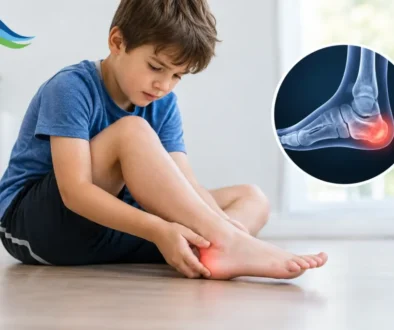
Morning heel stiffness is often associated with plantar fasciitis, a common source of heel pain involving irritation of the plantar fascia. This strong band of tissue runs along the bottom of the foot, connecting the heel to the toes. It can become sensitive when repeated loading exceeds what the tissue can comfortably tolerate. Long standing shifts, a sudden increase in walking or running, flat-foot mechanics, tight calves, and worn-out footwear can all contribute.
The good news is that many people can make the first steps of the day more manageable with a consistent routine. If heel pain is recurrent, worsening, or changing how you walk, a clinician-led assessment can help identify the underlying mechanical factors.
Why heel stiffness is worse in the morning
During sleep, the foot is naturally relaxed and usually points slightly downward. The plantar fascia and calf-Achilles complex can shorten in that position. When you stand up, those tissues are quickly stretched and loaded at the same time. That is why the first 10 to 20 steps can feel sharp, tight, or bruised under the heel.
The pain may ease as you move around, but that does not always mean the issue has resolved. Activity can temporarily warm the tissue and reduce the sensation of stiffness. By the next morning, the same cycle may repeat if the contributing load, footwear, or foot mechanics have not changed.
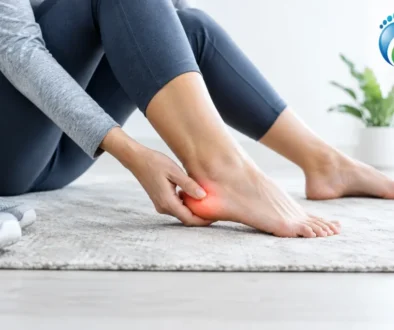
Pain centered near the inside-bottom edge of the heel is a common plantar fasciitis pattern. Still, heel pain has several possible causes. Tenderness at the back of the heel, numbness or tingling, a recent injury, or pain that remains intense at rest should be assessed rather than treated as a routine stiffness problem.
How to relieve morning heel stiffness before standing
A short routine while you are still in bed can make a meaningful difference. The goal is not to force a deep stretch. It is to gradually prepare the foot and lower leg for weight bearing.
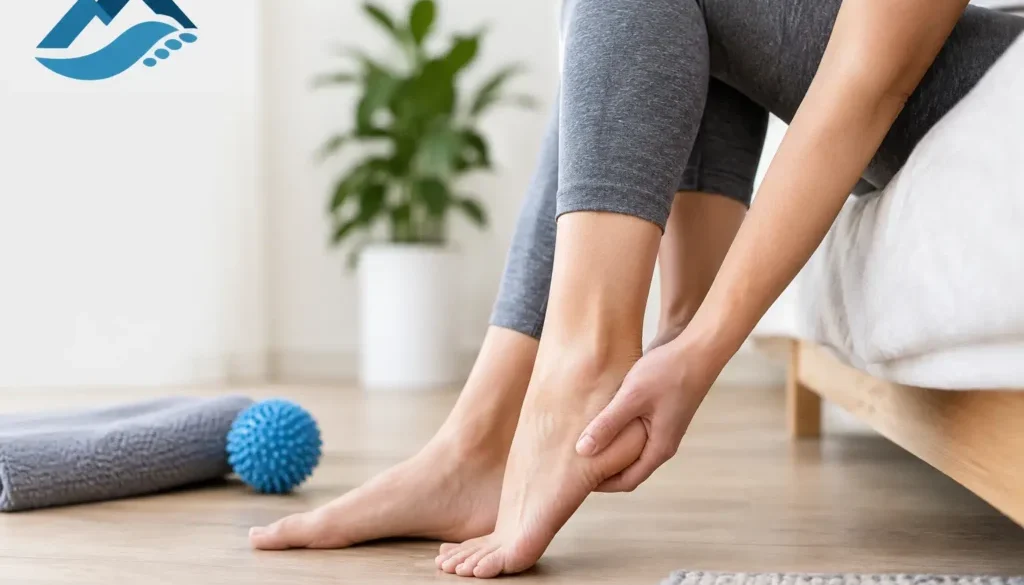
Start by gently pointing and flexing your ankle 10 to 15 times. Then pull your toes back toward your shin with your hand until you feel a mild stretch through the arch, holding for about 10 seconds. Repeat this two or three times on each foot. If the stretch creates sharp pain, reduce the intensity.
Next, sit at the edge of the bed and roll the sole of your foot over a small ball or a chilled water bottle for one to two minutes. A ball provides gentle massage; a cold bottle may feel more comfortable after a busy day on your feet. Neither approach should leave the area more painful or numb.
Before taking your first steps, put on supportive footwear. Walking barefoot across hard floors can place a sudden demand on a sensitive heel. A stable house shoe or sandal with a supportive sole may be useful, especially on tile, laminate, or concrete surfaces.
Stretch the calf, but do not overstretch the heel
Calf tightness can increase pulling through the heel and plantar fascia. A simple wall stretch is often helpful after you have started moving. Place one foot behind the other, keep the back heel down, and lean forward until you feel a mild stretch in the calf. Hold for 20 to 30 seconds and repeat two or three times.
Bend the back knee slightly for a second variation. This shifts the stretch lower into the calf and may be useful when stiffness is concentrated around the Achilles area. Keep the movement controlled. Aggressive stretching can irritate already sensitive tissue, particularly if you push through sharp pain.
If you spend much of the day standing in retail, healthcare, construction, or hospitality, brief calf movement breaks can be more effective than one long stretching session. A few ankle pumps, calf raises within a comfortable range, or a short walk can reduce the buildup of stiffness without overloading the heel.
Check the support under your feet
Heel pain is not always caused by footwear alone, but footwear often affects how much strain the foot must manage. Shoes that are compressed, unstable, excessively flexible, or unevenly worn can reduce support through the arch and heel. This is particularly noticeable in older running shoes, casual slip-ons, and work shoes used for long shifts.
Look for a stable heel counter, a sole that does not twist easily, enough room at the toes, and cushioning that has not flattened. The right level of cushioning depends on the person. Very soft shoes can feel comfortable initially but may not provide enough control for someone whose foot rolls inward excessively. Firmer footwear may feel more stable but can be less comfortable on hard surfaces. The best choice balances comfort, stability, and the demands of your day.
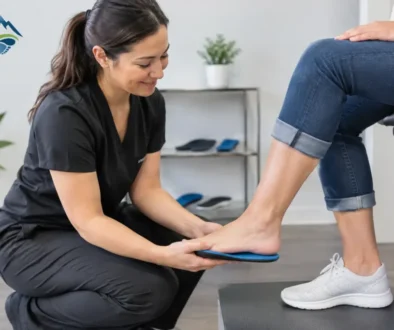
Over-the-counter insoles can provide short-term cushioning or arch support for some people. However, they are not designed around your individual foot shape, pressure pattern, or lower-limb alignment. If symptoms return despite supportive shoes and activity changes, a clinical assessment can determine whether a custom orthotic is appropriate.
Manage activity without stopping all movement
When every step hurts, it is tempting to avoid activity completely. Rest can be useful after a flare-up, but prolonged inactivity may leave the foot and calf more stiff. In many cases, a better approach is to temporarily reduce the activity that clearly provokes pain while keeping comfortable movement in your day.
For example, a runner may replace a few runs with cycling or swimming while symptoms settle. Someone who walks extensively at work may benefit from shorter breaks, more supportive work shoes, and avoiding extra long walks on hard pavement for a short period. The appropriate adjustment depends on your baseline activity, pain level, and how the heel responds the following morning.
A useful rule is to watch the 24-hour response. Mild discomfort that settles quickly may be acceptable. Pain that is more intense the next morning, causes limping, or steadily expands into the arch or ankle suggests that the current load is too high.
When recurring heel pain needs a clinical assessment
If morning stiffness persists for more than a couple of weeks, repeatedly returns, or limits work, walking, or exercise, it is worth identifying why. A practitioner can assess heel tenderness, foot posture, ankle motion, gait, calf flexibility, footwear wear patterns, and the alignment of the lower limb.
At Vancouver Orthotics Clinics by Dr. Michael Horowitz, the assessment process includes a practitioner evaluation and 3D foot scanning to examine how your feet function under load. This helps distinguish a generic need for more cushioning from a biomechanical issue that may require more targeted support. Custom orthotics may help improve foot function, reduce strain on sensitive structures, and support a gradual return to comfortable activity when clinically indicated.
You may also find it helpful to review condition-specific education on plantar fasciitis, heel spurs, Achilles tendonitis, flat feet, and proper orthotic care. These topics can overlap, and an accurate diagnosis matters more than choosing a product based on a symptom alone.
Seek timely assessment if you cannot bear weight comfortably, have marked swelling, redness, warmth, numbness, fever, pain after a significant injury, or heel pain that wakes you at night. Those symptoms need individualized attention.
Build a routine your heels can tolerate
The most effective way to relieve morning heel stiffness is usually not one dramatic treatment. It is a steady combination of gentle pre-step mobility, supportive footwear, sensible activity adjustments, and an assessment when the pain keeps returning. Keep the routine simple enough to follow on busy mornings, and pay attention to how your heel feels the next day – that response is often your clearest guide to what it needs.