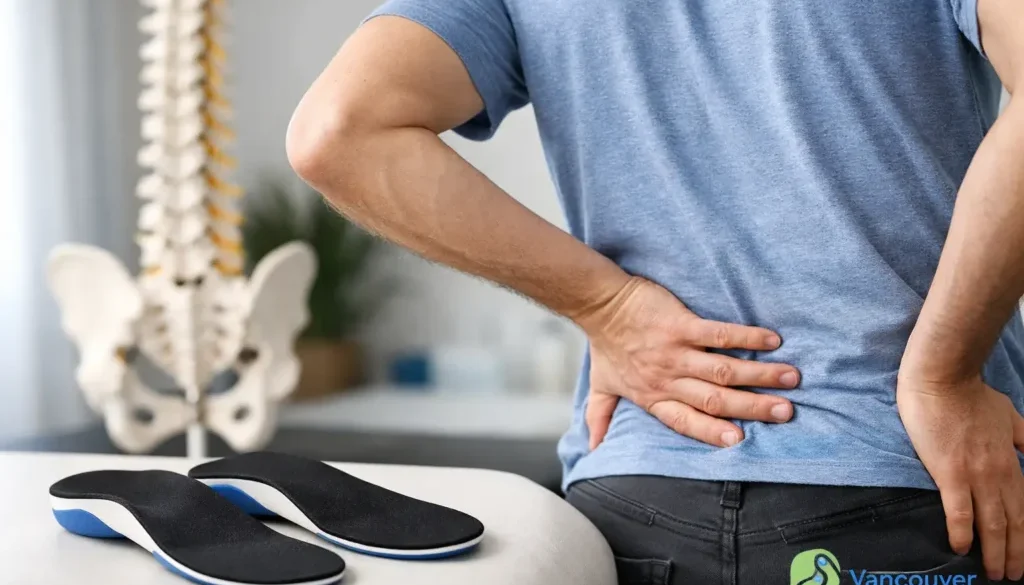
When Orthotics for Low Back Pain Can Help
A low back that aches after a full retail shift, a long walk around the Seawall, or an afternoon at a desk may not start in the back at all. For some people, orthotics for low back pain can be part of a practical treatment plan because the way the feet contact the ground affects alignment through the ankles, knees, hips, and pelvis.
That does not mean every episode of back pain is a footwear problem. Low back pain can have many contributing factors, including muscle strain, training changes, prolonged sitting, joint irritation, and movement habits. The useful question is whether poor foot mechanics are adding stress to your system – and whether improving support at the feet could reduce that stress.
How foot mechanics can affect the low back
Every step begins at the foot. When the foot rolls inward excessively, stays overly rigid, or does not provide a stable base during walking, the lower leg may rotate differently. That rotation can continue upward, influencing knee position, hip motion, and how the pelvis moves with each stride.
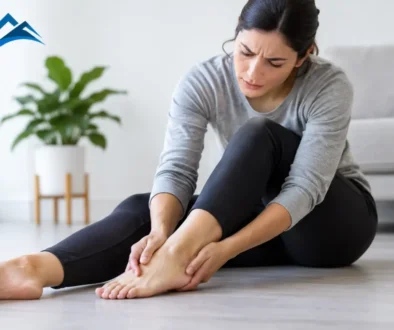
For example, a person with flat feet may notice their ankles collapsing inward while standing or walking. The hips may then work harder to control leg position. Over thousands of steps, especially on hard floors or pavement, this can contribute to fatigue and discomfort through the hips and low back.
The opposite pattern can also matter. A high-arched, rigid foot may absorb less impact and place pressure in fewer areas of the foot. Someone may compensate by changing their stride, avoiding a painful spot, or tightening muscles higher up the leg. There is no single “back pain foot type,” which is why an individual assessment is more useful than choosing an insert based on a label at a retail store.
When orthotics for low back pain may be worth considering
Orthotics are most relevant when back symptoms occur alongside signs that the feet or lower limbs are not functioning comfortably. You may notice back discomfort that builds during standing or walking, improves when you wear a supportive pair of shoes, or appears with recurring heel, arch, ankle, knee, or hip pain.
Other clues include uneven shoe wear, frequent fatigue in the feet and legs, a visible inward ankle roll, or pain that returns whenever activity increases. Runners, walkers, health care workers, hospitality staff, and people who work on concrete or hard flooring often notice these patterns because their bodies repeat the same loading cycle for hours.
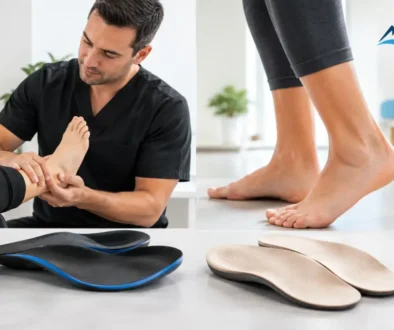
A custom orthotic is designed to support the foot in a way that suits its shape, motion, pressure distribution, and the person’s daily demands. It may help create a more stable platform for walking and standing. In some cases, reducing unwanted motion or redistributing pressure at the foot can reduce the compensations that are contributing to discomfort higher up.
Still, orthotics are not a standalone answer for every low back complaint. If the main driver is a recent lifting strain, poor workstation setup, or reduced hip and trunk strength, foot support may play only a supporting role. A clinician should look at the broader picture rather than promising that an insole will solve every type of back pain.
What a clinical orthotic assessment should examine
A proper assessment goes beyond stepping on a pressure mat or selecting an arch height. At Vancouver Orthotics Clinics by Dr. Michael Horowitz, the goal is to identify whether foot function is meaningfully connected to the symptoms you feel.
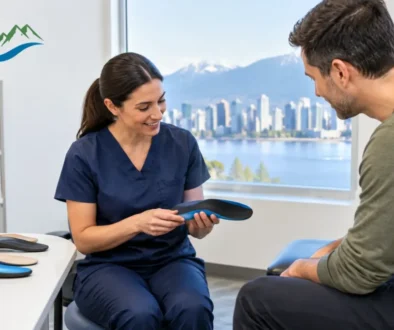
The clinical process considers your health history, the location and pattern of pain, previous injuries, footwear, work demands, and activities such as walking, running, or gym training. A practitioner also examines foot and lower-limb alignment, range of motion, gait, and areas of tenderness or overload.
Three-dimensional foot scanning provides detailed measurements of the foot’s contours and structure. This information can help guide the design of a custom device, but it is only one part of the process. The scan does not replace the clinical examination. A useful orthotic prescription combines measurable foot data with what the practitioner observes during movement and what you need the orthotic to do in real life.
For someone who stands at work, cushioning and load distribution may be central concerns. For a runner with recurring shin, hip, and back symptoms, control during repetitive motion may be more relevant. For another person, the priority may be fitting support comfortably into everyday footwear. The right approach depends on the person, the symptoms, and the shoes they actually wear.
Your footwear still matters
Custom orthotics work inside shoes, so the shoe itself needs to provide an appropriate base. A worn-out heel counter, a very narrow toe area, or a shoe that bends and twists too easily can limit how well an orthotic performs.
Bring commonly worn shoes to your appointment when possible. This helps the practitioner assess wear patterns and determine whether the orthotic can fit and function as intended. It also prevents a common frustration: receiving a well-made orthotic that is not being worn consistently because it does not suit the footwear used for work or daily walking.
What it feels like to adjust to custom orthotics
Most people need an adjustment period. The feet, calves, and hips have adapted to a particular movement pattern, sometimes for years. Changing support can feel different at first, even when the orthotic is appropriate.
Your clinician may recommend gradually increasing wear time rather than using the orthotics all day on day one. Mild awareness of support can be normal early on, but sharp pain, numbness, rubbing, or worsening symptoms should be discussed promptly. Orthotic care should include follow-up guidance and adjustments when needed, not simply a device handed over at the end of one visit.
It is also reasonable to expect progress over weeks rather than days. The aim is often improved comfort during standing and walking, less fatigue, and fewer symptom flare-ups as your body adapts. If low back pain is influenced by several factors, results may be best when orthotic support is paired with activity modification, mobility work, strengthening, and ergonomic changes recommended by the appropriate clinician.
When low back pain needs prompt medical attention
Foot mechanics are one possible contributor to mechanical low back pain, but certain symptoms require prompt medical evaluation. Seek urgent care for new loss of bladder or bowel control, numbness in the groin area, marked or worsening leg weakness, severe pain after significant trauma, fever with back pain, or unexplained weight loss.
You should also seek a medical assessment when pain is persistent, severe, spreading down the leg, or disrupting sleep. An orthotic assessment can be valuable when movement and loading patterns appear relevant, but it should not delay evaluation of symptoms that may have another cause.
A practical next step for recurring back discomfort
If your low back pain tends to appear with long periods on your feet, walking, running, or alongside foot, knee, or hip symptoms, a biomechanics assessment can provide clarity. It can help distinguish between a problem that may benefit from custom support and one that needs a different treatment focus.
For patients in Greater Vancouver, Greater Victoria, and Langford, booking with a practitioner-led orthotic clinic is a practical way to have the feet and lower limbs assessed in context. Bring your everyday footwear, describe when the pain starts, and mention any recurring heel pain, flat feet, shin splints, or leg fatigue. Clear answers often begin with looking at the whole chain from the ground up.