Orthotics for Standing All Day That Actually Help
A full shift can turn a small foot problem into an all-day problem. By lunch, the bottom of the foot may burn. By the drive home, heel pain, aching knees, tight calves, or low back fatigue can make standing feel harder than it should. Orthotics for standing all day can help when those symptoms are connected to how your feet absorb force, support your body weight, and guide movement with every step.
The key is matching the support to the reason you hurt. A soft retail insole may feel comfortable for a few days, but it cannot always address flat-foot mechanics, uneven loading, recurring plantar fasciitis, or a foot that rolls inward too far while you walk and stand. For people who spend hours on concrete, tile, hospital floors, retail floors, or job sites, that distinction matters.
Why Standing All Day Can Cause Pain
Standing is not passive for the feet. Your foot muscles, tendons, joints, and ligaments are constantly making small adjustments to keep you balanced. Add hard flooring, worn work shoes, long commutes, or repeated walking between tasks, and the tissues in the foot and lower leg can become overloaded.
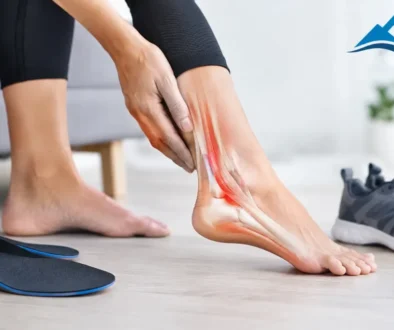
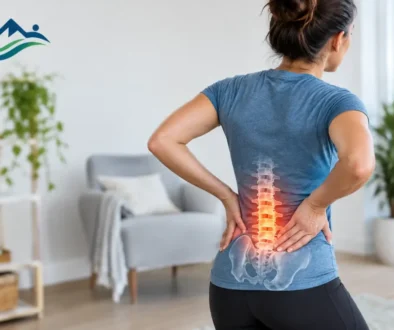
The most common complaint is heel pain that is sharp with the first steps in the morning or after a break. That pattern can be consistent with plantar fasciitis. Other people notice pain through the ball of the foot, aching along the inside of the ankle, tightness in the Achilles tendon, or shin pain. Because the feet are the foundation for the rest of the body, poor foot mechanics can also contribute to knee, hip, and low back discomfort.
Flat feet are one possible factor, but they are not the only one. High arches can concentrate pressure under the heel and forefoot. A stiff big toe, a bunion, limited ankle motion, an old ankle injury, or one leg loading differently than the other can change the way your body handles a shift on its feet.
What Orthotics for Standing All Day Should Do
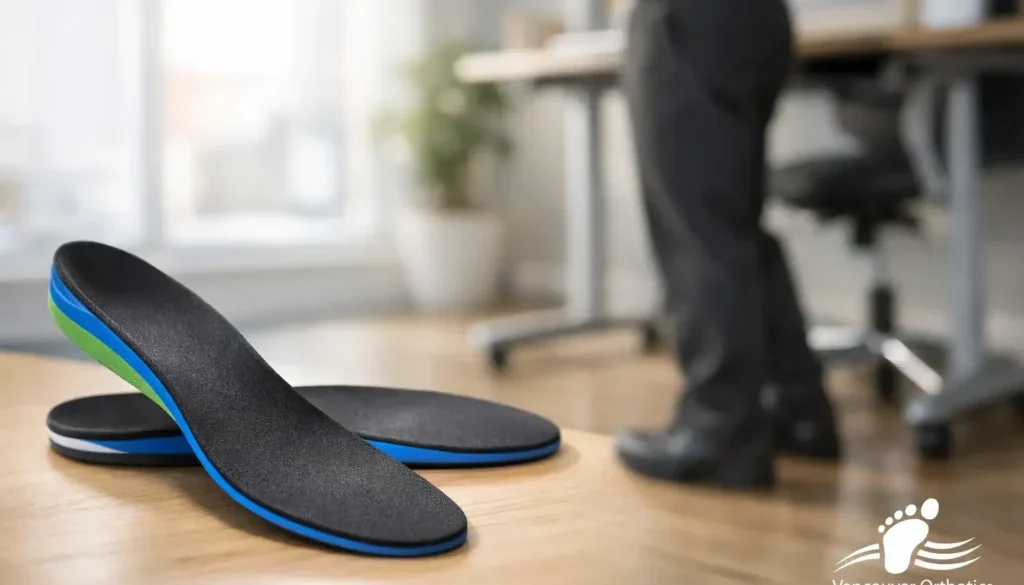
Effective orthotics are not simply extra cushioning. Cushioning can be useful, especially on hard surfaces, but support and control are often what reduce repeated strain. A properly prescribed custom orthotic is designed to improve the way the foot functions inside a suitable shoe.
Depending on the assessment findings, an orthotic may help support the arch, redistribute pressure away from a painful heel or forefoot area, stabilize excessive motion, or improve alignment through the lower limb. The goal is not to force every foot into the same shape. It is to give that individual foot a more efficient base for standing and walking.
This is why two people with “arch pain” may need very different designs. Someone with plantar fasciitis may need a combination of arch support and heel accommodation. Someone with metatarsalgia may benefit from offloading pressure at the ball of the foot. A person with ankle, knee, or hip symptoms may need support that considers how the foot is influencing movement farther up the leg.
Orthotics also need to fit the shoes you actually wear. A supportive device placed in a shoe with a collapsed heel counter, a narrow toe box, or little depth may not perform as intended. Work boots, athletic shoes, dress shoes, and slip-resistant footwear each place different limits on the design.
When a Retail Insole May Be Enough
A quality non-custom insole can be a reasonable first step for mild, occasional fatigue, particularly if your shoes are still in good condition and symptoms settle quickly with rest. It may provide temporary cushioning and basic arch support for a busy week, a trip, or a new job that requires more standing than usual.
The trade-off is that retail insoles are made for a general foot shape and do not account for your specific gait, pressure areas, pain pattern, or joint motion. If you have recurring symptoms, pain on one side, morning heel pain, visible shoe wear on one edge, or discomfort that moves from the feet to the knees or back, a clinical assessment is more useful than continuing to test one generic insert after another.
Pain that is worsening, associated with swelling, numbness, tingling, or difficulty bearing weight deserves timely professional evaluation. The same applies when pain is keeping you from work, exercise, or normal daily walking.
A Clinical Assessment Finds the Reason for the Strain
At Vancouver Orthotic Clinics, Dr. Michael Horowitz & Associates use a five-step clinical process to look beyond the spot that hurts. The appointment includes a practitioner-led assessment, discussion of symptoms and footwear, evaluation of foot and lower-limb mechanics, and a 3D foot scan when custom orthotics are recommended.
That information helps identify whether the problem is mainly pressure-related, motion-related, or both. For example, a painful heel is not always caused by the same issue. One person may be overloading the heel due to a tight calf and limited ankle movement. Another may have arch strain from excessive pronation. Their orthotic prescription, shoe advice, and recovery plan should not be identical.
A diagnosis also helps set realistic expectations. Orthotics can reduce repeated stress, but irritated tissue may still need time to settle. Some patients benefit from a gradual break-in period, activity changes, calf or foot mobility work, or additional conservative care recommended by their practitioner.
Getting the Most From Your Orthotics at Work
Even a well-made orthotic needs the right environment. Bring the shoes you wear most often to your appointment when possible. Your practitioner can check whether the shoe has enough room, whether the heel is stable, and whether the sole has worn down unevenly.
Start wearing new custom orthotics according to the break-in instructions you receive. Many people can build up wear time over several days, allowing the feet and legs to adjust to a different position. If an orthotic causes persistent pressure, rubbing, or new pain, do not assume you need to push through it. A follow-up adjustment may be appropriate.
Small habits can also lower the load of a long shift. Alternate positions when your work allows it, take brief walking or stretching breaks, and avoid standing with all your weight shifted to one leg. Replace footwear once the midsole or heel has visibly compressed or worn unevenly. Compression socks may help some people manage lower-leg fatigue or swelling, but they do not replace support when poor foot mechanics are the main driver of pain.
Common Questions About Standing-Related Foot Pain
Will orthotics help knee, hip, or back pain?
They may help when foot mechanics are contributing to lower-limb alignment and loading. However, knee, hip, and back pain can have several causes. A clinical assessment is the right way to determine whether foot support belongs in your treatment plan rather than assuming it is the only answer.
How long do custom orthotics last?
It depends on the materials, your body weight, activity level, work demands, and the type of shoes used. Regular review is useful if symptoms return, the device shows wear, or your footwear and activity needs have changed.
Can extended-health benefits cover orthotics?
Many extended-health plans include orthotic coverage, but requirements differ. Some plans require a prescription, a practitioner assessment, specific documentation, or a particular renewal period. Review your plan before your appointment, and ask the clinic team what documentation is commonly needed for a claim.
You do not have to accept sore feet as part of earning a living. If standing leaves you with recurring heel, foot, knee, hip, or back pain, a clear assessment can show whether custom support is a practical next step. New patients are welcome to book online at a nearby Greater Vancouver, Victoria, or Langford clinic and get answers based on how their feet are actually working.