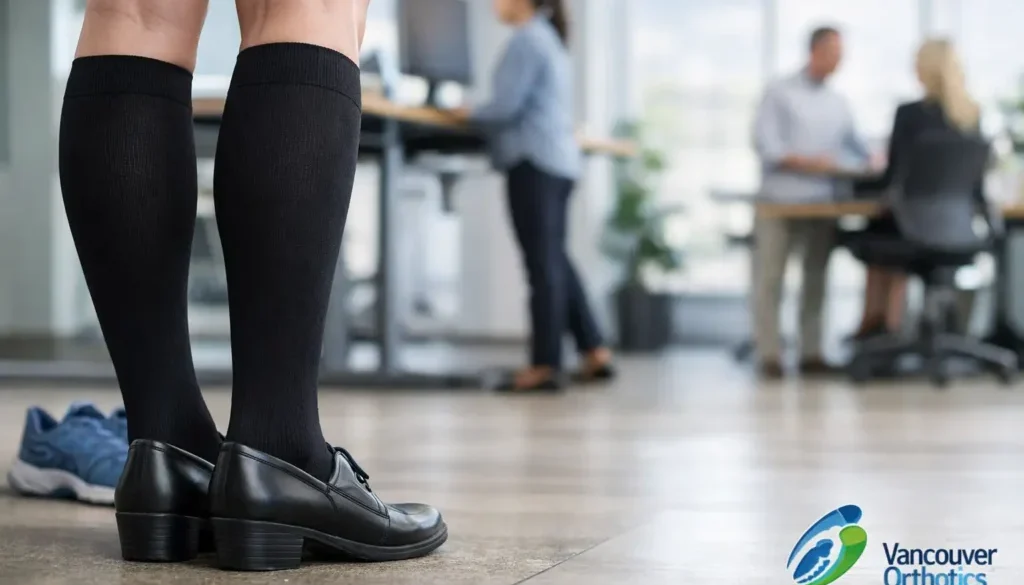
Do Compression Socks for Standing Help at Work?
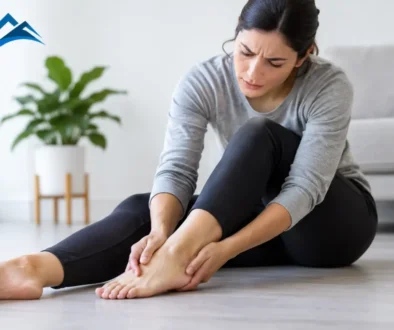
A retail shift, a hospital floor, or a full day moving between meetings can leave your calves tight, your feet heavy, and your ankles visibly puffy by evening. Compression socks for standing can be a useful part of managing that daily strain, particularly when leg fatigue and mild swelling are the main concerns. They are not, however, a cure for every kind of foot or leg pain.
The distinction matters. Compression can support circulation and reduce the feeling of tired legs, while foot pain may also come from plantar fasciitis, flat feet, poor shoe support, Achilles tendon irritation, or an alignment issue that needs a closer look. Choosing the right tool starts with understanding what compression can and cannot do.
What Compression Socks Do When You Stand All Day
Compression socks apply firm, graduated pressure to the leg. The pressure is greatest around the ankle and gradually decreases higher up the calf. This design helps encourage blood and fluid to move upward rather than collecting around the ankles and lower legs during long periods of standing.
For many people, the practical benefit is less end-of-day heaviness. Socks may help limit mild ankle swelling, reduce a tired or achy feeling in the calves, and make recovery after a shift more comfortable. They can be especially helpful for healthcare workers, retail staff, teachers, hospitality teams, tradespeople, and travelers who spend long hours upright with few chances to sit down.
Standing still is often harder on the lower legs than people expect. Walking activates the calf muscles, which help move blood back toward the heart. When you are mostly stationary at a counter, workstation, or assembly line, that muscle pump is less active. Compression provides external support during those long static periods.
That does not mean every sore foot needs a compression sock. A sharp heel pain on the first steps in the morning, pain under the ball of the foot, recurrent ankle rolling, or pain that travels into the knee, hip, or low back may point to a mechanical problem rather than simple leg fatigue.
Compression Socks for Standing Are Not the Same as Orthotics
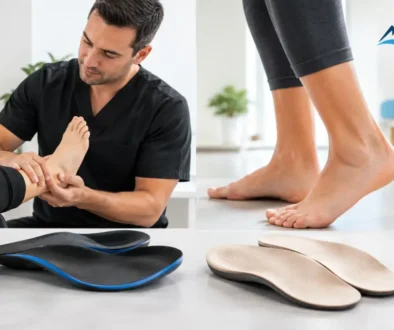
Compression socks and custom orthotics address different parts of the problem. Socks work on the lower leg and ankle by applying pressure. Orthotics sit inside the shoe to support foot function, redistribute pressure, and influence how the foot and lower limb move during walking and standing.
For example, someone with flat feet may feel tired through the arches and calves after a shift because the foot rolls inward excessively. Compression may make the legs feel fresher, but it does not control that motion or provide arch support. Someone with plantar fasciitis may appreciate less swelling after a long day, yet ongoing heel pain can still require treatment focused on the load placed on the plantar fascia.
Using both can make sense. A properly fitted compression sock may support comfort throughout the day, while a clinician-prescribed orthotic addresses the mechanics contributing to repeated foot, ankle, knee, hip, or back symptoms. The right combination depends on the diagnosis, footwear, work demands, and what your body is telling you.
How Much Compression Is Right?
Compression is commonly described in millimeters of mercury, or mmHg. A lower level, often around 15-20 mmHg, is frequently chosen for general daily comfort, long shifts, and mild fatigue. Moderate compression, often 20-30 mmHg, may be appropriate for more noticeable swelling or recurrent leg heaviness, but fit and individual health history become more important at this level.
More pressure is not automatically better. A sock that is too tight, bunches behind the knee, digs into the top of the calf, or causes numbness is not doing its job well. It may be uncomfortable enough that you stop wearing it, and it can create pressure points rather than relief.
If you have known circulation concerns, reduced sensation in your feet, unusual skin color changes, a non-healing wound, sudden one-sided swelling, or significant heart or vascular health concerns, get medical guidance before using compression. Sudden calf pain, warmth, redness, or swelling deserves prompt medical attention rather than a new pair of socks.
Choosing a Pair That You Will Actually Wear
The best compression sock is one that fits accurately and suits your workday. Measure your ankle and calf when swelling is lowest, usually early in the morning, and use the manufacturer’s size chart rather than choosing based only on shoe size. Calf circumference matters as much as foot length.
A knee-high style is a practical choice for most standing jobs because it covers the ankle and calf without interfering with work pants or shoes. Look for a smooth toe seam if you are prone to rubbing, and choose a fabric that matches your environment. Merino blends can be comfortable in cooler weather, while lighter moisture-managing materials may suit busy indoor shifts or warmer Vancouver summers.
Put compression socks on before your shift, not after swelling has already developed. Smooth the fabric from the ankle upward and avoid folding or rolling the top band down. A rolled cuff can concentrate pressure in one area. Wash them according to the care instructions and replace them when the fabric loses its ability to spring back, since worn-out socks provide less consistent compression.
Make Your Workday Easier on Your Feet and Legs
Compression works best alongside small changes that reduce continuous strain. If your workplace allows it, shift your weight regularly, take short walking breaks, and perform a few calf raises when you are standing in one spot. Even a minute of ankle movement can help after a long period at a desk, checkout, or treatment table.
Footwear is equally relevant. A supportive shoe with adequate room through the toe box and a stable heel can make a substantial difference. Shoes that are overly flexible, worn down on one side, or too narrow can increase foot pressure and alter lower-limb alignment. Compression socks cannot compensate for shoes that no longer provide a stable base.
At home, elevate your legs briefly if they feel swollen, and avoid treating pain as something you simply have to push through. Persistent symptoms are useful information. They may indicate that your tissues are being loaded beyond what they can comfortably tolerate day after day.
When Standing Pain Needs a Clinical Assessment
Consider an assessment when your symptoms are recurring, worsening, or limiting work, walking, or exercise. This is particularly true if you have morning heel pain, pain along the arch, burning under the forefoot, Achilles soreness, shin pain, frequent ankle discomfort, or knee and hip pain that seems connected to being on your feet.
At Vancouver Orthotics Clinics by Dr. Michael Horowitz, an evaluation looks beyond a generic insole recommendation. The clinical process includes practitioner assessment, diagnosis, and 3D foot scanning to understand how your feet function under load. That information can help determine whether custom orthotics, targeted support, footwear changes, recovery strategies, or a combination of approaches is appropriate.
For people in Greater Vancouver, Greater Victoria, and Langford who stand for work, an appointment can also clarify whether compression is a sensible addition to a broader care plan. If you are using extended health benefits for custom orthotics, ask about the documentation and claim requirements before ordering.
Compression socks can make a long shift feel more manageable, especially when ankle swelling and calf fatigue build through the day. But when pain keeps returning, the most helpful next step is to identify why your feet and legs are under strain – then choose support that matches the cause.