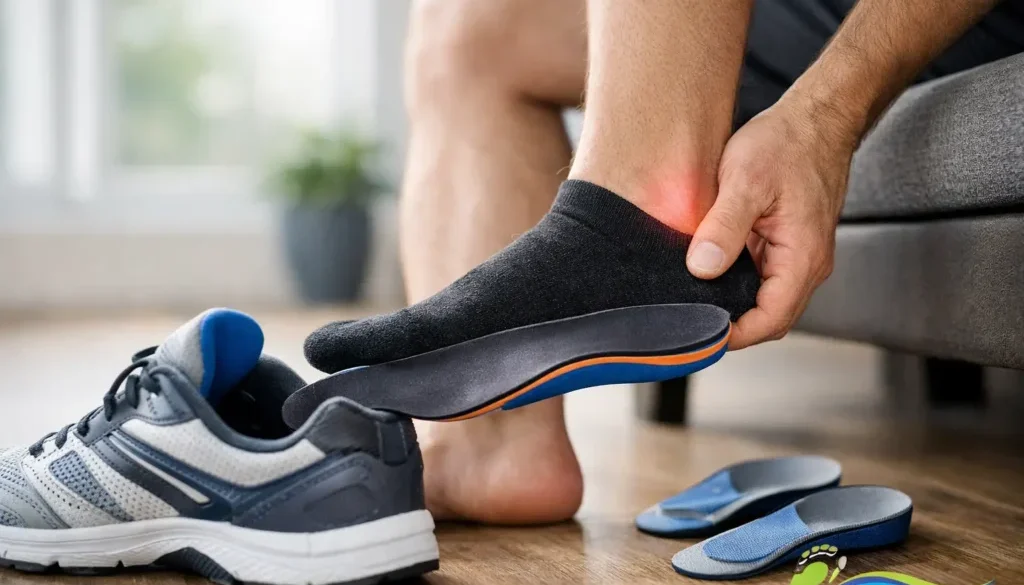
Achilles Tendonitis Orthotic Support That Fits
That first painful step out of bed, a tight pull at the back of the heel after a walk, or soreness that builds during a shift can all point to an overloaded Achilles tendon. Achilles tendonitis orthotic support is not simply about putting a soft insole in your shoe. The goal is to change the foot mechanics and tendon load that may be keeping the area irritated.
The Achilles tendon connects the calf muscles to the heel bone. It works every time you walk, climb stairs, rise onto your toes, or push off to run. Because it carries repeated force throughout the day, even a small change in foot position, training volume, footwear, or calf flexibility can become significant over time.
Why Achilles Tendon Pain Can Keep Returning
People often use the term Achilles tendonitis to describe pain at the back of the heel or above it. Clinically, ongoing tendon pain may involve irritation and changes in the tendon caused by repeated overload. The exact source and location of pain matter. Discomfort directly where the tendon meets the heel can behave differently from pain several centimeters above the heel.
A sudden increase in walking, running, hill work, or standing hours is a common trigger. So is returning to activity after a quieter period. But activity is only one part of the picture. Flat feet, feet that roll inward excessively, limited ankle motion, high arches, calf tightness, and shoes with worn-out or unstable soles can alter how force moves through the lower leg.
This is why rest alone may settle symptoms temporarily but not always prevent a recurrence. Once you resume the same workload in the same footwear with the same mechanics, the tendon may again be asked to absorb more force than it can comfortably manage.
How Orthotic Support Affects the Achilles Tendon
Proper Achilles tendonitis orthotic support aims to make each step less demanding on the tendon. For some people, that means helping control excessive pronation, the inward rolling of the foot that can rotate the lower leg and increase strain through the Achilles. For others, it means creating a more stable platform under a high-arched or rigid foot that does not absorb force well.
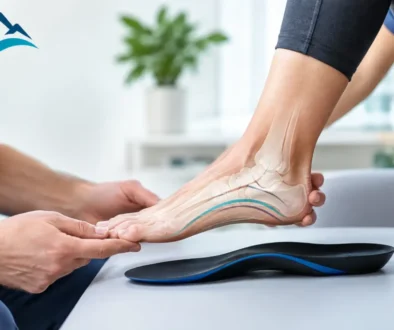
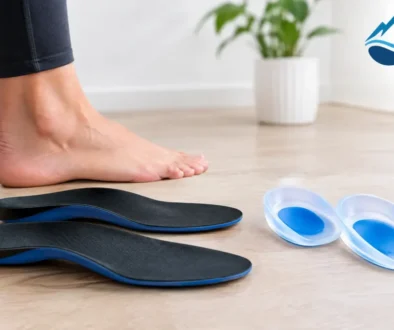
A custom orthotic may include contouring around the heel, arch support selected for the individual foot, and materials designed to balance stability with cushioning. Depending on the assessment, a clinician may also recommend a temporary heel lift. Slightly elevating the heel can reduce the amount the tendon is stretched during walking, which can be useful when symptoms are sensitive. It is not appropriate for every person or every stage of care, and it should not be treated as a permanent shortcut without reassessment.
Orthotics do not strengthen a tendon by themselves. They are one part of a conservative treatment plan that may also include activity modification, gradual calf and tendon loading, footwear changes, and strategies for managing pain after long days on your feet. The right combination depends on how irritable the tendon is, where the pain is located, and what your regular day requires.
Why Generic Insoles Are Sometimes Not Enough
A retail insole can add comfort, and that can be worthwhile for mild or short-lived symptoms. However, a generic insert is made for an average foot, not for the way your feet, ankles, knees, and hips move together. A soft insole may feel good initially while offering little control for someone whose heel is moving excessively. Conversely, an overly firm insert may feel uncomfortable if it does not match the foot shape or the shoe.
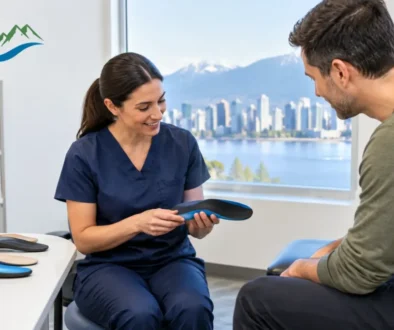
Custom orthotics are prescribed after an examination rather than selected from a shelf. At Vancouver Orthotic Clinics, Dr. Michael Horowitz & Associates use a practitioner-led process that includes evaluation, diagnosis, 3D foot scanning, and custom orthotic recommendations based on the patient’s biomechanics and symptoms. The purpose is not to make every foot look the same. It is to identify the support and correction that may reduce unnecessary stress while remaining practical for daily footwear.
That distinction matters for a runner who needs an orthotic to fit securely inside training shoes, a healthcare worker standing for twelve-hour shifts, and a commuter whose pain flares during long walks around Downtown Vancouver. Their activity demands are different, even if all three describe “Achilles pain.”
What a Clinical Assessment Should Look At
Achilles tendon pain should be assessed beyond the painful spot. A clinician may look at your standing posture, foot shape, heel alignment, ankle range of motion, calf flexibility, gait, footwear wear pattern, and the activities that trigger symptoms. They will also ask whether pain is worse in the morning, after exercise, on hills, or after sitting.
This broader assessment helps distinguish whether the tendon is likely being affected by foot mechanics, a training change, a footwear issue, or several factors at once. It also helps identify situations where an orthotic may need to be paired with a different intervention rather than used as the only answer.
Be specific about your symptoms. Mention swelling, warmth, a visible bump near the heel, sudden onset, a popping sensation, or an inability to push off normally. These symptoms warrant prompt clinical attention. Do not try to push through sharp or escalating tendon pain in the hope that it will loosen up.
Footwear Still Matters
Even well-made custom orthotics need a compatible shoe. A shoe with a firm heel counter, enough depth to accommodate the orthotic, and a stable sole generally gives the device a better foundation. A severely worn heel, a flexible shoe that twists easily, or a shoe that presses on the tender back of the heel can limit the benefit of otherwise appropriate support.
For many patients, rotating between supportive shoes is more realistic than buying one pair and wearing it until it breaks down. Work shoes, walking shoes, and running shoes may each need a different approach. Bring the shoes you wear most often to your appointment when possible. Seeing the shoe and its wear pattern can provide useful clinical information.
Avoid making several major changes at once. New orthotics, new shoes, a sudden stretching routine, and a rapid return to running can make it difficult to know what is helping or what is aggravating the tendon. A gradual plan allows the body time to adapt.
Pair Orthotics With Sensible Activity Changes
When the Achilles is painful, reducing the specific activity that repeatedly provokes it is often more useful than stopping all movement. For example, a runner may temporarily reduce hills and speed sessions, while someone whose symptoms flare on long shifts may schedule brief movement breaks and wear more supportive work footwear. The appropriate adjustment depends on pain levels and clinical findings.
Progressive calf and tendon exercises are often part of recovery, but the timing and type of exercise matter. A tendon that is highly sensitive may not tolerate aggressive stretching or heavy loading immediately. Exercises should be selected and progressed according to symptoms, not copied from a generic online routine.
Pain that settles quickly and does not worsen the next morning may suggest that the current activity level is manageable. Pain that increases during activity, changes your walking pattern, or is clearly worse the next day is a sign that the load may be too high. This is where a practical plan can protect both your mobility and your long-term goals.
When to Consider Custom Achilles Tendon Support
Consider an assessment if Achilles pain has lasted more than a short period, keeps returning, limits walking or exercise, or appears alongside flat feet, ankle pain, shin splints, knee pain, hip pain, or low back pain. These patterns can indicate that the issue is not isolated to the tendon itself.
New patients are welcome at clinics across Greater Vancouver and Greater Victoria, including Vancouver, Burnaby, Richmond, the North Shore, Coquitlam, Langley, Victoria, and Langford. If you have extended health benefits, ask about the documentation commonly needed for orthotic claims before your appointment so you can understand your options clearly.
The most useful orthotic is not the one with the most cushioning or the highest arch. It is the one prescribed for your foot mechanics, your shoes, and the life you need to get back to. A careful assessment can turn recurring heel pain into a clear, manageable plan for your next steps.