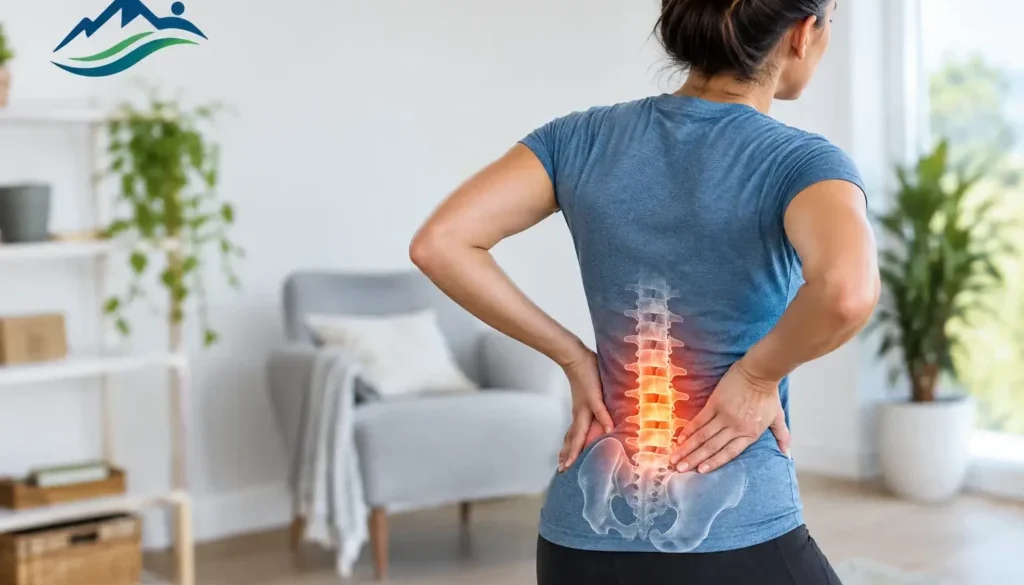
Low Back Biomechanics Guide for Everyday Pain
A low back biomechanics guide should start below the waist. If your back aches after standing at work, walking through Vancouver, running, or getting up from a chair, the source is not always the low back alone. The way your feet contact the ground, your ankles move, and your hips control each step can change the forces that travel upward through your legs and spine.
Back pain is common, but recurring discomfort deserves more than a generic insole or the assumption that you simply need to stretch more. A clinical assessment can identify whether foot mechanics, lower-limb alignment, activity demands, or another contributing factor is affecting how you move.
Low Back Biomechanics Guide: The Kinetic Chain
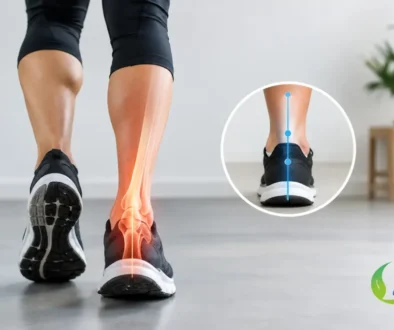
Your body works as a kinetic chain. During walking, the foot accepts load, the ankle moves over the foot, the knee bends and straightens, the hip stabilizes the pelvis, and the trunk responds. These areas are connected, but that does not mean every case of back pain begins in the feet. It means the feet are one clinically relevant place to assess when pain repeatedly appears with standing, walking, or exercise.
A typical walking day involves thousands of steps. Small movement changes can become meaningful when they are repeated over long shifts, regular runs, or weekend hikes. For example, a foot that rolls inward more than the rest of the leg can comfortably control may be associated with inward rotation at the shin and thigh. The hip may then have to work harder to keep the pelvis steady. In some people, that extra demand is felt as hip, knee, or low back discomfort.
The opposite pattern can also matter. A foot that is relatively rigid may absorb less shock or have difficulty adapting to uneven ground. Neither high arches nor flat feet automatically cause pain. The relevant question is whether your foot structure and movement pattern are appropriate for your body, footwear, workload, and symptoms.
How Foot Mechanics Can Affect the Low Back
Foot mechanics are not a diagnosis by themselves. They are part of the movement picture. At Vancouver Orthotics Clinics by Dr. Michael Horowitz, practitioners consider how the foot functions during weight-bearing, along with symptoms, previous injuries, footwear, and daily activity.
Excessive or poorly controlled pronation
Pronation is the natural inward motion of the foot after it contacts the ground. It helps absorb force and adapt to surfaces. The concern is not pronation itself, but motion that is excessive for the individual or not well controlled over repeated loading.
When the arch drops significantly during stance, the shin and thigh may rotate inward. Some people compensate without symptoms. Others notice fatigue in the feet, shin splints, knee pain, hip tightness, or a low back that feels sore after a long day. This is particularly common in people who stand on hard surfaces, including retail, healthcare, and hospitality workers.
Limited ankle motion
The ankle needs adequate forward movement as you walk, squat, climb stairs, and descend hills. When this motion is limited, the body often finds it elsewhere. The foot may flatten more, the knee may move differently, or the trunk may lean or rotate to complete the movement.
Calf tightness can contribute, but it is not the only reason ankle movement is restricted. Prior ankle sprains, footwear, training volume, and individual anatomy can all play a role. A useful assessment looks at the motion itself rather than assuming one stretch will solve every pattern.
Hip and pelvic control
The hip muscles help control the pelvis while one leg supports your body. If pelvic control is reduced, the low back may be asked to provide stability during walking, stair climbing, or single-leg activity. This can be especially noticeable in runners, people returning to exercise, and anyone whose pain appears after longer distances rather than immediately.
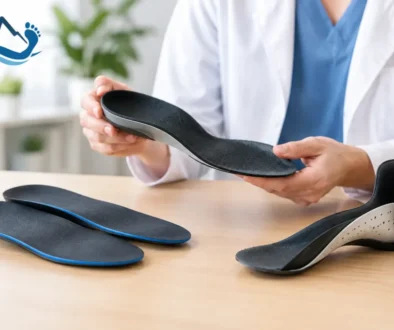
Orthotics do not replace strength, mobility, or sensible training progression. When clinically appropriate, they can provide a more stable foundation for the foot, reducing a mechanical demand that may be contributing to the overall pattern. The best plan may also include targeted exercises, activity adjustments, and a review of footwear.
Symptoms That Suggest a Biomechanics Assessment May Help
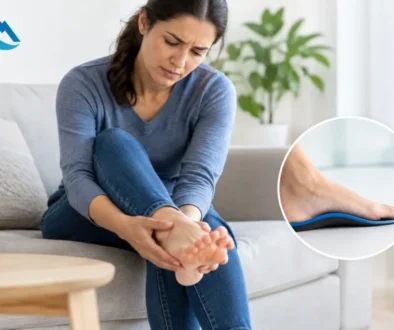
The location of pain does not always reveal its driver. A person may have low back discomfort with no obvious foot pain, while another may notice heel pain, arch fatigue, and back stiffness together. Consider an assessment if symptoms reliably worsen after standing, walking, or exercise, especially when they improve with rest but return with the same activity.
Patterns worth discussing include morning heel pain combined with a sore back later in the day, back stiffness after long shifts, discomfort that develops when walking in worn shoes, or recurring pain on one side of the back, hip, knee, or ankle. Flat feet, a history of ankle sprains, and shoes that wear down more on one edge can also provide useful clues.
If you also have numbness, progressive leg weakness, unexplained fever, major trauma, or changes in bladder or bowel control, seek urgent medical evaluation rather than relying on an orthotic assessment alone.
What a Clinical Orthotic Assessment Looks For
A useful biomechanical assessment is more than standing on a scanner. A 3D foot scan provides measurable information about foot shape and arch structure, but it is interpreted alongside a practitioner examination.
The process should begin with your history: where the pain is, when it occurs, what makes it worse or better, the activities you want to return to, and relevant injury history. Your practitioner may observe standing alignment, foot motion, ankle range, gait, and the wear pattern on your shoes. This helps distinguish between a structural feature, such as a lower arch, and a functional issue, such as poor control during walking.
At Vancouver Orthotics Clinics, the clinical process combines practitioner evaluation, diagnostic testing, 3D scanning, a treatment recommendation, and fitting guidance when custom orthotics are indicated. The prescription should be specific to the person, not based solely on a foot type label.
For some patients, an orthotic is appropriate because it can improve support, guide foot motion, and distribute pressure more comfortably. For others, the main recommendation may be footwear changes, mobility work, strengthening, a gradual return to activity, or referral for additional care. That distinction matters. An orthotic should have a clear clinical purpose, not be treated as a universal answer to low back pain.
Daily Changes That Reduce Unnecessary Load
Small adjustments often support a treatment plan. Rotate shoes before one pair becomes visibly compressed or unevenly worn. Choose footwear with a stable heel counter and enough room for your foot, rather than relying on a soft sole alone. If you stand for work, change position regularly and avoid locking your knees for long periods.
For desk work, frequent movement breaks are usually more helpful than searching for one perfect seated posture. A short walk, a few comfortable hip movements, or simply changing positions can reduce the sustained loading that makes many backs feel stiff. If you are increasing walking, running, or gym activity, raise volume gradually. Pain that appears only after a sudden jump in mileage or shifts often reflects a workload issue as much as a biomechanics issue.
It can also help to track patterns for one to two weeks. Note the shoes worn, time spent standing, walking distance, and where symptoms begin. This gives your practitioner practical information and makes it easier to see whether a change is actually helping.
When Orthotics May Be Part of the Plan
Custom orthotics are most useful when the examination shows that foot function is likely contributing to symptoms or inefficient loading. They may be considered for people with flat-foot-related strain, recurring plantar fasciitis, Achilles tendon discomfort, metatarsalgia, shin splints, or linked knee, hip, and low back symptoms.
They are generally worn inside suitable supportive footwear and should feel purposeful, not painful. There can be an adjustment period as your body adapts to a change in support. Persistent pressure, new pain, or a poor fit should be reviewed rather than ignored.
Patients using extended health benefits should also confirm their plan’s documentation and practitioner requirements before proceeding. A clinic team can explain the assessment and claim paperwork, but each insurer determines its own coverage rules.
For related symptom education, review the clinic’s pages on plantar fasciitis, flat feet, ankle pain, knee pain, hip pain, and low back pain. These conditions can overlap, yet each needs to be assessed in the context of your own movement and daily demands.
The encouraging part of low back biomechanics is that movement patterns are assessable and often modifiable. If your back pain keeps returning after walks, work shifts, or exercise, book an assessment with a qualified practitioner. A clearer picture of how you stand, walk, and load your feet can turn a frustrating recurring pattern into a practical plan for moving more comfortably.