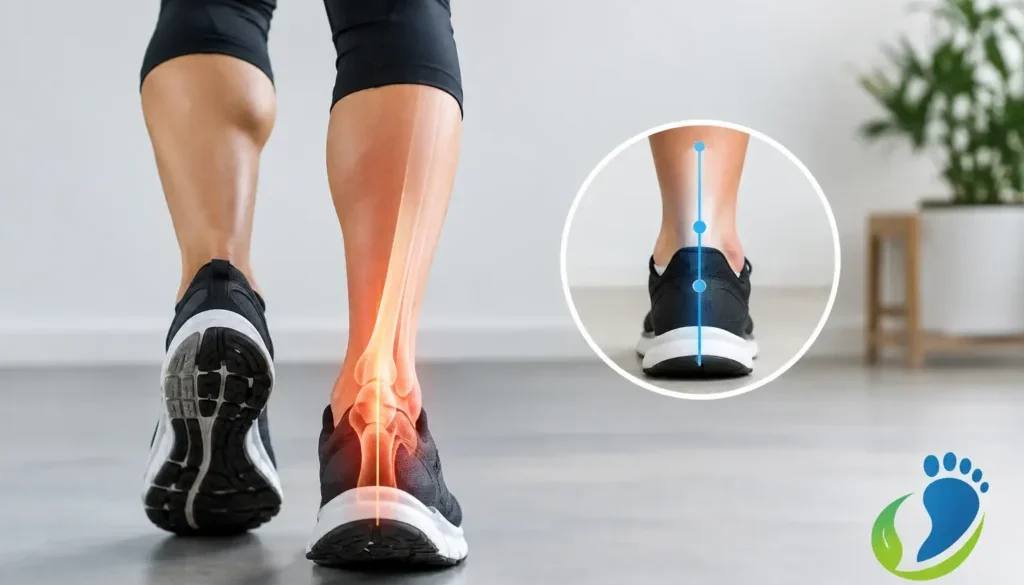
How to Prevent Shin Splints From Overpronation
Shin pain that starts as a dull ache along the inside of the lower leg can quickly make a run, long walk, or work shift feel like a negotiation. To prevent shin splints from overpronation, the goal is not simply to add more cushioning or push through discomfort. It is to identify why the foot and lower leg are absorbing load poorly, then adjust the support, training, and movement factors that keep irritating the shin.
Overpronation is common and not automatically a problem. The concern is when the foot rolls inward more or for longer than your body can comfortably control, especially during repeated impact. For runners, walkers, healthcare workers, retail staff, and anyone spending long hours on hard Vancouver-area sidewalks or floors, that repeated strain can travel from the foot into the shin, knee, hip, and lower back.
Why overpronation can lead to shin splints
Pronation is the natural inward motion of the foot after it contacts the ground. It helps the body absorb impact and adapt to uneven surfaces. With overpronation, the arch may drop excessively or the heel may roll inward too far during standing, walking, or running.
As the foot continues to roll inward, the lower leg often rotates inward with it. The muscles and tissues along the inside of the shin must work harder to control that motion. When training volume, standing time, hills, hard surfaces, or worn footwear are added to the picture, irritation can develop along the tibia. This pattern is often called medial tibial stress syndrome, commonly known as shin splints.
Flat feet can contribute, but they are not the only cause. A person can have a low arch without pain, while someone with a higher arch can develop shin symptoms for entirely different reasons. Calf tightness, reduced ankle mobility, weak foot or hip control, a sudden jump in activity, and shoes that no longer provide stable support can all matter. That is why a meaningful assessment looks at the whole lower-limb pattern rather than blaming the arch alone.
Recognize the signs before shin pain escalates
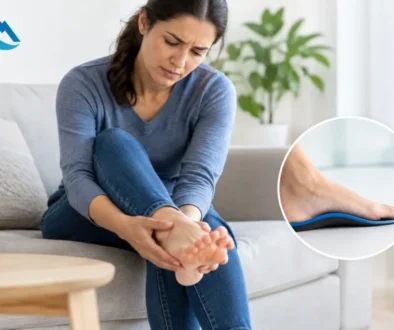
Shin splints usually create a tender, diffuse ache along a broader area of the inner shin. It may begin during activity, settle after warming up, and return afterward or the following morning. As irritation builds, pain can start earlier in a workout or show up during ordinary walking.
A small, sharply defined spot of bone pain, pain at rest, visible swelling, or pain that becomes progressively worse deserves prompt clinical attention. These symptoms can indicate a more significant bone stress issue rather than routine shin splints. Do not use an online article to self-diagnose persistent or severe lower-leg pain.
Reduce the load that is irritating your shin
The first step is often a temporary reduction in the activity that triggers symptoms. This does not always mean stopping all movement. It means changing the dose. A runner may need to shorten runs, avoid hills and speed work, or alternate running with lower-impact conditioning. A person whose pain comes from long work shifts may benefit from more supportive footwear, scheduled movement breaks, and avoiding extra high-impact exercise while symptoms are active.
A useful rule is to avoid activities that make pain progressively worse during the session or leave you noticeably more sore the next day. Return to higher-impact activity gradually once daily walking is comfortable and tenderness has settled.
Training errors are frequently part of the problem. A rapid increase in distance, pace, frequency, or hill training asks the shin to adapt faster than it can. Even a positive lifestyle change, such as starting a daily walking routine, can cause trouble when the jump in volume is too abrupt. Build one variable at a time and give your tissues time to respond.
Choose footwear for stability, not just softness
Very soft shoes can feel comfortable in the store while allowing more foot motion than your legs tolerate during a long shift or run. On the other hand, an overly firm or restrictive shoe can also feel uncomfortable. The right choice depends on your foot shape, activity, gait pattern, and the demands of your day.
Check the condition of shoes you use most often. If the midsole is compressed, the sole is unevenly worn, or the heel counter has lost structure, the shoe may no longer provide the support it once did. Rotating between appropriate pairs can be helpful for people who walk or stand for many hours each week.
Footwear alone does not correct every biomechanical issue. If your heel rolls inward substantially or your arch collapses under load, a generic store-bought insert may not match where and how your foot needs support. That is where a clinician-guided orthotic assessment can make a practical difference.
Use strength and mobility to improve control
Orthotics and supportive footwear can reduce strain, but they work best alongside a body that can manage load. The focus is not on chasing a perfect-looking foot position. It is on improving your ability to control motion comfortably over repeated steps.
Start with calf mobility if your ankle feels stiff, especially when the knee moves forward over the toes. Tight calves can limit ankle motion and encourage compensation through the foot. Gentle calf stretching and controlled ankle mobility work may help, provided they do not increase shin pain.
Strength work should include the muscles of the foot, calf, and hips. Slow calf raises, performed with good heel alignment, can build capacity in the lower leg. Controlled single-leg balance work and simple foot-strengthening exercises can improve stability during stance. Hip strength also matters because poor control higher up the leg can allow the knee and shin to drift inward with each step.
If you are already sore, begin conservatively. A challenging exercise is not automatically a useful exercise if it aggravates symptoms for the rest of the day. A clinician can help determine whether weakness, stiffness, poor balance, or training load is the more relevant limiting factor.
How custom orthotics can help prevent shin splints from overpronation
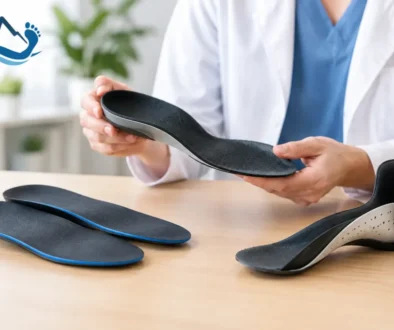
Custom orthotics are not a shortcut around training mistakes, but they can be valuable when overpronation is repeatedly contributing to shin pain. Their purpose is to support foot function, improve how pressure is distributed, and reduce excessive motion that places repeated stress on the lower leg.
A properly prescribed device is based on an assessment, not a guess from shoe size or arch height. At Vancouver Orthotics Clinics by Dr. Michael Horowitz, the clinical process includes practitioner evaluation, a 3D foot scan, and an assessment of symptoms and lower-limb mechanics. This helps determine whether custom orthotics are appropriate and how they should be designed for your activity, footwear, and comfort needs.
Some patients need more control for running or long standing shifts. Others need a more accommodating design because they have sensitive feet, heel pain, forefoot discomfort, or difficulty tolerating a rigid device. The best orthotic is not necessarily the firmest one. It is the one that addresses the identified mechanical problem while fitting your real daily footwear and being comfortable enough to wear consistently.
For first-time orthotic users, an adjustment period is normal. Wear time is often increased gradually so the body can adapt. If the device creates new pain, persistent pressure, or worsening symptoms, it should be reviewed rather than ignored.
When a clinical assessment is worth booking
Consider an assessment when shin splints recur each time you increase activity, one side is consistently worse, pain has not improved after reducing load, or you also notice ankle, knee, hip, heel, or back discomfort. These connected symptoms can point to a movement pattern that is not being addressed by rest alone.
A clinical evaluation can examine foot posture, gait, ankle mobility, footwear wear patterns, leg alignment, and the location of tenderness. For active adults, it can also clarify whether a return-to-running plan, targeted exercises, footwear changes, or custom orthotics should be the priority. For people who stand all day, the discussion may focus more on work shoes, floor surfaces, fatigue patterns, and support during long shifts.
Extended health plans may cover prescribed custom orthotics, depending on the details of your plan. Before an appointment, it is sensible to review your benefit requirements, including whether a practitioner assessment and receipt documentation are needed for a claim.
Shin splints are frustrating because the pain often feels far away from the original cause. Treat the symptom seriously, but look below the knee as well: better load management, appropriate support, and a clear understanding of your gait can make every step feel more sustainable.