

Gait Assessment for Foot, Knee, and Back Pain
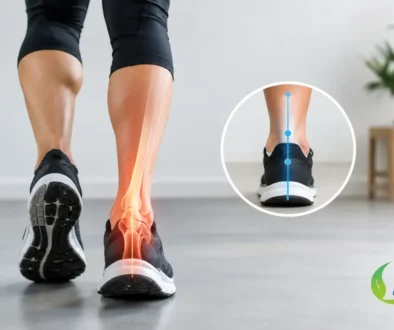
A sore heel is not always just a heel problem. The same is true when knee pain appears after a long shift, an ankle keeps rolling, or low back discomfort builds during a walk around the neighborhood. A gait assessment looks at how your body moves from the ground up, helping identify walking patterns that may be contributing to recurring pain.
For many people, the issue is not one dramatic injury. It is the repeated load of thousands of steps each day. A foot that rolls inward too far, a stiff big toe, limited ankle motion, or one side taking more load than the other can change how the feet, legs, hips, and back work together. Understanding that pattern gives treatment a clearer starting point than choosing an insole off a retail shelf.
What Is a Gait Assessment?
A gait assessment is a clinical evaluation of how you walk. It considers more than whether your feet look flat or whether your shoes wear down on one edge. A practitioner observes your walking pattern, reviews symptoms and activity demands, examines foot and lower-limb function, and considers how those findings may relate to pain.
Walking is a cycle. Your heel contacts the ground, your body moves over the foot, and your toes help push you forward. Small changes at any point in that cycle can alter how force travels through the body. Some movement variation is normal and does not need treatment. The question is whether a particular pattern is linked with symptoms, reduced comfort, repeated flare-ups, or difficulty staying active.
A gait assessment is not a pass-fail test, and there is no single perfect walking style. The most useful assessment is individual. It accounts for your age, footwear, work surface, exercise routine, past injuries, and the specific activity that causes pain.
What a Clinician Looks For During Gait Assessment
The assessment begins with your story. Morning heel pain, aching arches after standing, pain at the ball of the foot, tight calves, shin discomfort during running, or knee pain on stairs each point toward different possibilities. Your practitioner may ask when symptoms began, what makes them worse, what footwear you use, and whether pain affects work, walking, sport, or sleep.
They then examine how the feet and lower limbs function while standing and moving. This may include checking joint motion, calf flexibility, foot posture, balance, areas of tenderness, and how the ankle, knee, and hip align through a step. The goal is not to isolate one body part. It is to understand the relationship between symptoms and movement.
At Vancouver Orthotic Clinics by Dr. Michael Horowitz, the clinical process also uses 3D foot scanning to capture the shape and contours of each foot. That information can be useful when a practitioner recommends custom orthotics. A scan is valuable data, but it is only one part of care. It should be interpreted alongside the clinical examination, your walking pattern, and the activities you need to return to.
Common patterns that may matter
A foot that pronates, or rolls inward, is not automatically a problem. In many cases, it is a normal part of shock absorption. It may become relevant when the motion is excessive for the individual, poorly controlled, or paired with pain such as plantar fasciitis, Achilles tendon irritation, shin splints, or inner-knee discomfort.
A more rigid foot can create a different issue. If the foot does not absorb force well or the ankle has limited forward movement, pressure may shift to the forefoot, heel, knees, hips, or low back. People with this pattern may notice calluses, ball-of-foot pain, repeated ankle discomfort, or discomfort when walking on hard floors.
Clinicians also watch for signs of asymmetry. One foot may turn out more, one knee may move inward, or one side may spend less time bearing weight because of pain or stiffness. These findings do not always identify the original cause, but they can show where the body is compensating.
Symptoms That Can Justify an Assessment
You do not need to be a runner to benefit from an evaluation. Gait-related stress often develops in people who stand at work, walk their dog daily, commute on foot, care for children, or spend most of the day on hard surfaces. It can also affect active adults whose symptoms only appear after longer runs, hikes, tennis, or gym workouts.
Consider booking an assessment if you have recurring heel pain, arch pain, flat-foot discomfort, bunion irritation, metatarsalgia, Achilles tendon pain, shin splints, ankle pain, or pain that travels into the knee, hip, or lower back. Repeatedly replacing shoes because one side wears down quickly can also be a useful clue.
Pain that is sudden, severe, associated with significant swelling, numbness, loss of strength, fever, or an inability to bear weight needs prompt medical attention. For persistent but non-urgent symptoms, a clinician-led biomechanical assessment can help clarify practical next steps.
How Findings Can Guide Treatment
The value of gait assessment is in what happens after the findings are reviewed. Treatment may include changes in activity load, mobility or strengthening recommendations, footwear guidance, and support designed around the way your feet function. The right plan depends on the diagnosis and your goals.
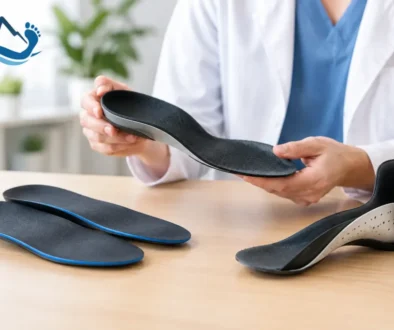
Custom orthotics are often considered when foot mechanics are contributing to ongoing symptoms. Unlike generic insoles, they are prescribed after an examination and made from measurements of your feet. Their purpose is not to force every foot into the same position. A well-designed device may redistribute pressure, improve support under a collapsing arch, cushion sensitive areas, or help guide motion where control is needed.
There are trade-offs. Some people need a more structured orthotic for long standing or higher-impact activity, while others may be more comfortable with a lower-profile option for dress footwear. An orthotic also needs an adjustment period. Mild awareness of a new support can be expected at first, but increasing pain or new symptoms should be reviewed rather than ignored.
Treatment may also include a discussion of shoes. The best choice depends on your foot shape, activity, workplace requirements, and how the shoe works with an orthotic. A supportive running shoe may be appropriate for one person and unnecessary for another. The assessment helps move the conversation beyond broad labels such as neutral or stability.
Why a Walking Video Alone Is Not Enough
Phone videos can be helpful for noticing obvious changes in movement, especially when pain only occurs during an activity. However, they cannot replace an in-person examination. Camera angle, speed, footwear, and the short distance available at home can all affect what appears on screen.
More importantly, a visible movement pattern does not explain whether there is tenderness, reduced joint motion, a pressure-sensitive area, or a history of repeated overload. A clinician combines observation with hands-on testing and symptom history before recommending treatment.
Preparing for Your Appointment
Bring the footwear you use most often, including work shoes or running shoes if those are connected to your symptoms. If you already use orthotics, bring those too. Wear clothing that allows your lower legs to be assessed comfortably, and be ready to describe where pain occurs, how long it lasts, and what activities bring it on.
It can also help to note whether pain is worse with the first steps in the morning, after sitting, toward the end of a shift, or only after a certain distance. These details often matter more than people expect. If you plan to use extended health benefits for prescribed orthotics, ask about the documentation your plan requires before proceeding.
A walking pattern can change gradually, but pain does not have to become your normal. If your feet, knees, hips, or back are limiting the way you work, exercise, or move through your day, a local clinical assessment can provide a more useful path forward than continued guesswork. New patients are welcome to book online and discuss what their symptoms may be telling them.