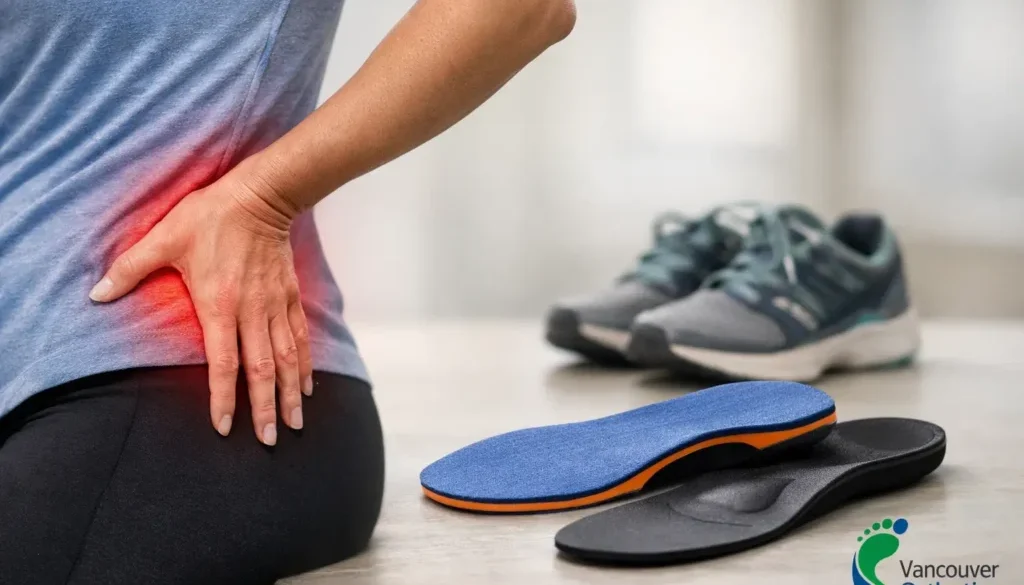
Can Orthotics Help Hip Pain? What to Know
Hip pain is not always a hip-only problem. If discomfort starts after long shifts, walking, running, or standing on hard floors, the way your feet contact the ground may be part of the picture. Can orthotics help hip pain? For some people, yes – particularly when poor foot mechanics are contributing to extra stress through the ankles, knees, and hips.
That does not mean every sore hip requires orthotics. Hip pain can have several causes, and the most useful treatment depends on a proper assessment. But when pain is connected to flat feet, excessive inward rolling of the feet, uneven weight distribution, or a noticeable change in walking pattern, custom orthotics may be a practical part of conservative care.
How foot mechanics can affect the hips
Every step begins at the foot. When the foot lands, it absorbs force and helps guide the position of the ankle, lower leg, knee, and hip. If the foot moves too far inward, remains too rigid, or does not provide stable support during walking, the rest of the leg may compensate.
A common example is excessive pronation, often seen with flexible flat feet. As the arch lowers and the foot rolls inward, the shin may rotate inward as well. That rotation can influence knee tracking and hip movement over thousands of steps. The result is not always immediate pain. It may show up gradually as aching around the outside of the hip, discomfort after activity, fatigue while standing, or a feeling that one side of the body is working harder.
The opposite pattern can also matter. A high, rigid arch may absorb impact less effectively, sending more force upward with each step. People who walk or run frequently on pavement may notice that the hips, knees, or low back become sore even when the feet themselves do not hurt.
Hip symptoms can also develop when one foot is functioning differently from the other. An old ankle injury, persistent heel pain, a bunion, or pain under the ball of one foot can cause a person to shift their weight without realizing it. That protective pattern may help in the short term but can overload the opposite hip or lower back over time.
Can orthotics help hip pain caused by alignment issues?
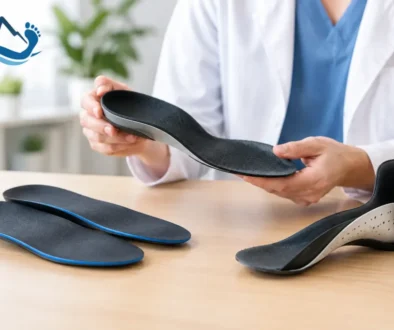
Orthotics are designed to improve how the foot functions inside a supportive shoe. A custom device can support an arch that collapses too much, redistribute pressure away from a painful area, improve stability, or help control motion that is affecting the lower limb.
For hip pain related to foot alignment, the goal is not to force the body into a perfectly fixed position. It is to reduce avoidable strain and create a more comfortable, efficient base of support. When the feet move more consistently, the knees and hips may not need to compensate as much during daily activity.
This is why generic drugstore inserts are not always enough. They can provide cushioning or mild arch support, which may be useful for temporary comfort. However, they are not made from an assessment of your gait, foot shape, joint motion, symptoms, and activity demands. A runner with recurring outer-hip discomfort may need a different approach than a healthcare worker standing for 10 hours a day, or an older adult who feels unsteady while walking.
At Vancouver Orthotics Clinics by Dr. Michael Horowitz, the assessment process considers the whole lower-limb chain. A practitioner evaluates symptoms, foot posture, movement, footwear, and relevant history, then uses 3D foot scanning as part of a structured five-step clinical process. This helps determine whether custom orthotics are appropriate and what type of support may be useful.
Signs your hip pain may be connected to your feet
Hip pain is worth assessing when it persists, limits activity, or changes the way you walk. Foot mechanics may be more likely to play a role when hip discomfort occurs alongside lower-limb symptoms such as ongoing heel pain, ankle pain, shin discomfort, knee pain, or frequent calf tightness.
You may also benefit from a biomechanical assessment if your hip pain is worse after standing or walking, if one shoe wears down much faster than the other, or if you notice your arches flattening when you bear weight. Some people report that their pain increases after switching to less supportive footwear, returning to exercise, or spending more time on concrete floors.
Pay attention to timing as well. Pain that develops during a run may have different contributing factors than pain that appears after getting out of a chair or when lying on one side at night. Orthotics can be helpful when walking mechanics are involved, but they are not intended to address every source of hip pain.
What a clinical orthotic assessment looks for
A good orthotic recommendation should begin with more than a footprint. The clinician needs to understand where you hurt, what activities trigger symptoms, how long the problem has been present, and whether there have been changes in work, exercise, footwear, or prior injuries.
The physical assessment commonly looks at standing alignment, arch behavior, ankle mobility, leg and knee position, and how the foot moves through a step. Your practitioner may ask you to walk, perform simple movements, or show the shoes you wear most often. Shoe wear patterns can offer useful clues about how force is being distributed.
A 3D scan captures the contours and position of the foot for the orthotic design. The prescription should account for your symptoms and footwear, since an orthotic that works well in a walking shoe may not fit appropriately in a narrow work shoe or athletic cleat.
This process also helps identify situations where another type of care may be needed alongside orthotics. Hip pain may respond best to a combination of foot support, activity modification, targeted strengthening, mobility work, and guidance from an appropriate healthcare provider. Orthotics are one tool, not a stand-alone answer for every person.
What to expect after starting orthotics
The first days in orthotics can feel different. Your feet and lower limbs are adapting to a change in support and pressure distribution. Mild awareness of the device or temporary muscle fatigue can occur, especially if you have been walking with the same compensation pattern for a long time.
Most people are advised to build wear time gradually rather than wearing new orthotics all day immediately. Start with shorter periods, then increase use as comfort allows. Follow the instructions provided by your practitioner, and bring the orthotics to follow-up appointments if adjustments are needed.
Improvement in hip symptoms is not always instant. Some people notice better comfort during standing or walking within a few weeks. Others need more time, particularly when pain has been present for months or when strength and movement patterns also need attention. The most meaningful change is often functional: walking farther, finishing a shift with less discomfort, or returning to a regular exercise routine with fewer flare-ups.
Support your hips from the ground up
Orthotics work best inside shoes that are in good condition and suited to your activity. A worn-out sole, stretched heel counter, or overly flexible shoe can limit the support an orthotic provides. If you are unsure whether your footwear is working with your orthotics, bring it to your appointment for a practical review.
It also helps to avoid making sudden, major changes in activity. If hip pain began after increasing running mileage, taking on longer shifts, or starting a new fitness routine, reducing the load temporarily can give irritated tissues time to settle. Gentle strengthening for the hips and legs may also be recommended when appropriate, because foot support and muscle control work together.
If you have ongoing hip pain with flat feet, recurring heel pain, uneven shoe wear, or a walking pattern that no longer feels natural, a clinical assessment can clarify whether your feet are contributing. Booking an evaluation is a useful next step toward finding support that matches how you move, work, and live.