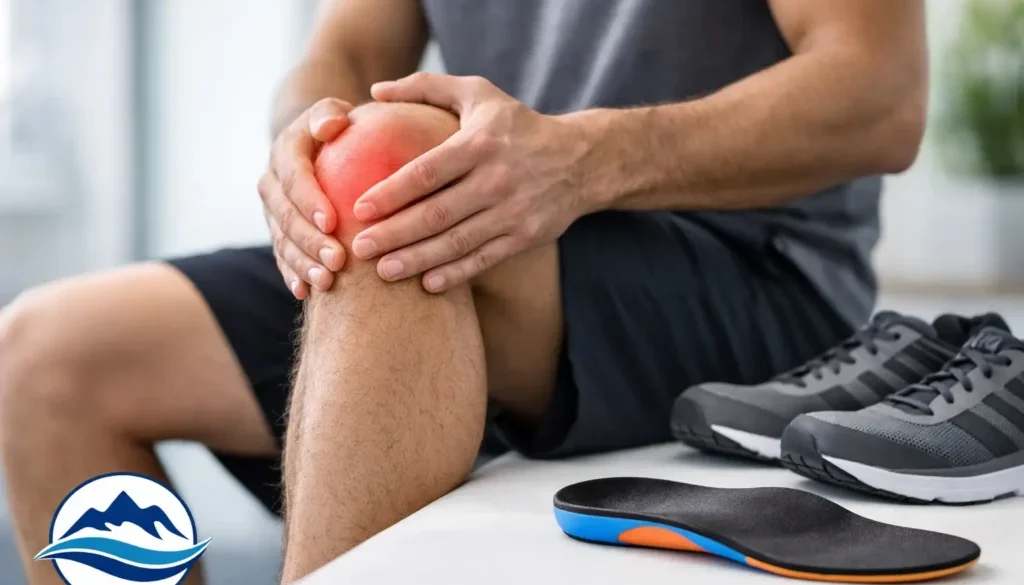
When Knee Pain Orthotics Can Actually Help
A sore knee after a long shift, a run, or a walk around the neighborhood is not always a knee-only problem. Knee pain orthotics may help when the way your feet contact the ground is contributing to stress higher up the leg. The key is identifying whether foot function, lower-limb alignment, workload, or a combination of factors is affecting your knee.
For many people, the pain shows up during familiar moments: going down stairs, standing at work, getting up after sitting, or increasing mileage too quickly. A generic insole may feel comfortable for a few days, but comfort alone does not confirm that it is changing the movement pattern behind recurring symptoms. A clinical assessment can provide clearer answers.
How Foot Function Can Affect Knee Pain
Every step starts at the foot. As your foot accepts body weight, it naturally moves and adapts to the surface beneath it. If that movement is excessive, poorly controlled, or limited, the forces traveling through the ankle, shin, knee, hip, and low back can change.
For example, a foot that rolls inward significantly during walking or running may contribute to inward rotation through the lower leg. In some people, that can increase demand on the knee, particularly around the kneecap or along the inside of the joint. A very rigid foot can create a different issue: it may not absorb impact efficiently, leaving the knee to manage more repetitive loading.
This does not mean flat feet automatically cause knee pain, or that every knee condition starts at the feet. Knee symptoms can be influenced by training volume, muscle strength, footwear, prior injuries, work demands, and the surfaces you walk or run on. Orthotics are most useful when a practitioner finds a measurable biomechanical reason to support the foot differently.
When Knee Pain Orthotics May Be Worth Considering
Orthotics may be part of a conservative care plan when knee discomfort occurs alongside signs that foot mechanics are involved. People often notice a pattern rather than one isolated symptom. Their knees may ache after standing for hours, while their feet also feel tired or unstable. They may have recurring shin discomfort, Achilles irritation, heel pain, or pain that increases when worn-out shoes are the only support available.
A clinician may also look more closely at foot mechanics when knee pain is associated with flat feet, high arches, uneven shoe wear, frequent ankle rolling, or an obvious change in walking pattern. Runners may notice symptoms after adding hills, speed work, or distance. Retail workers, healthcare workers, and people who stand on concrete may feel the problem build late in the day.
Children and teens can also develop lower-limb discomfort during periods of rapid growth or high activity. Their assessment should consider age, sport participation, footwear, and how symptoms affect daily movement rather than relying on adult assumptions.
The practical question is not, “Do I need an insole?” It is, “What is driving the load on my knee, and can foot support change it?”
Symptoms that deserve an assessment
Book an assessment when knee pain keeps returning, changes how you walk, limits work or exercise, or appears with persistent foot, ankle, shin, hip, or back symptoms. New swelling, a knee that gives way, an inability to bear weight, marked redness or warmth, fever, or pain after a significant injury should be assessed promptly by the appropriate medical provider.
Orthotics are not an emergency solution and should not be used to push through severe or worsening pain. They are one part of a plan for improving comfort and movement where biomechanics are a contributing factor.
What Custom Orthotics Do Differently
A custom orthotic is designed around your feet, your movement pattern, your symptoms, and the shoes you actually wear. Its role is not to force the foot into one “perfect” position. The goal is to guide motion, redistribute pressure, improve support where needed, and reduce unwanted strain through the lower limb.
That may involve supporting an arch that drops excessively, improving stability at the heel, cushioning high-impact areas, or accommodating a foot shape that does not sit comfortably in standard footwear. The best design depends on the person. A flexible orthotic may suit one patient’s work shoes, while a firmer device may be appropriate for another person’s walking or athletic footwear.
Retail insoles can be reasonable for short-term comfort or mild fatigue. They are available quickly and cost less upfront. Their limitation is that they are not based on an examination of your gait, joint motion, or lower-limb alignment. If knee pain is recurring, that trial-and-error approach can become expensive and frustrating.
Custom orthotics also require an adjustment period. Some people feel a difference quickly, while others need a gradual break-in schedule as their body adapts to a new support pattern. If an orthotic causes ongoing discomfort, it should be reviewed rather than ignored. A proper fit and follow-up matter.
A Clinical Assessment Looks Beyond the Knee
At Vancouver Orthotics Clinics by Dr. Michael Horowitz, the assessment starts with your symptoms and daily demands. Are you walking a large dog twice a day? Working eight hours on hard floors? Training for a race? Experiencing pain on stairs, after sitting, or only after a certain distance? These details help connect symptoms to real-life loading.
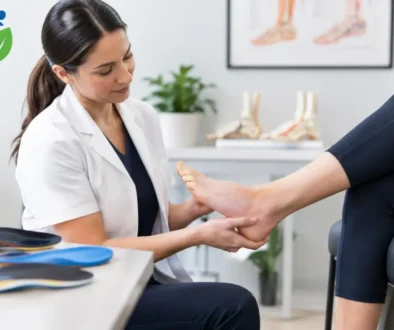
The clinic’s five-step clinical process combines practitioner evaluation, a 3D foot scan, and custom orthotic recommendations when appropriate. A Doctor of Chiropractic or physiotherapist assesses foot posture, joint movement, gait, and the relationship between the foot and lower limb. The 3D scan captures the contours of the foot to support an orthotic prescription built for the individual rather than a generic foot type.
A useful assessment also considers footwear. An orthotic can only work as intended if the shoe has enough depth, a stable base, and a suitable fit. A supportive device may not sit well in a narrow dress shoe, while a bulky soft insole can take up too much space in a running shoe. Bringing your most frequently worn shoes to an appointment can help guide the recommendation.
Orthotics Work Best With the Right Habits
If biomechanics are contributing to knee pain, orthotics can reduce a source of repeated stress. They do not replace gradual activity progression, appropriate footwear, or strength and mobility work when those are needed.
For a runner, that may mean reducing mileage temporarily and avoiding a sudden jump in hill training. For someone on their feet at work, it may mean rotating shoes, taking movement breaks where possible, and replacing footwear before the outsole and midsole break down. For an active adult returning to exercise, it may mean choosing a manageable walking volume before adding longer hikes or higher-impact activity.
Targeted exercises can also help improve capacity in the calves, hips, thighs, and feet. The right exercise plan varies. Knee pain around the kneecap may require a different approach than pain associated with an old ankle injury or a rigid high-arched foot. That is why an individualized assessment is more useful than copying a routine that worked for someone else.
Questions to Ask Before Choosing Orthotics
Before investing in orthotics for knee pain, ask whether your provider has assessed your walking pattern and footwear, whether the device is prescribed for your specific symptoms, and how adjustments or follow-up are handled. Ask how long the break-in period should be and what changes would warrant a reassessment.
If you use extended-health benefits, confirm your plan’s requirements before your appointment. Coverage rules differ between plans and may require particular provider documentation or a prescription. Keeping receipts and the required clinical paperwork organized can make submitting a claim easier.
People in Vancouver, Burnaby, Richmond, the North Shore, and Greater Victoria often have different activity demands, from long transit commutes to trail walking and standing-based work. The most effective orthotic plan is one you can realistically wear in your regular shoes and daily routine.
Recurring knee pain is worth taking seriously, especially when it starts narrowing the activities you enjoy. A thoughtful foot and lower-limb assessment can clarify whether orthotics belong in your care plan and provide a practical next step toward moving with more confidence.