Managing Chronic Bunion Pressure Without Guesswork
A bunion can become painful long before it looks dramatic. Managing chronic bunion pressure means reducing the repeated rubbing, compression, and joint loading that makes the area at the base of the big toe feel sore by the end of a workday, walk, or run. The goal is not to simply pad over the problem. It is to identify what is pressing on the joint and why that pressure keeps returning.
For many people, symptoms fluctuate. A narrow dress shoe may trigger a sharp hot spot, while a long shift on hard floors creates a deeper ache across the forefoot. Others notice swelling after walking hills, tenderness when their toe pushes off, or pain that makes them shift weight to the outside of the foot. Those patterns offer useful clues for treatment.
Why chronic bunion pressure keeps coming back
A bunion is a bony prominence at the big toe joint, often accompanied by a change in the toe’s alignment. Pressure is rarely caused by one factor alone. The joint may rub against the inside of a shoe, while foot mechanics repeatedly load the area during each step. If the foot rolls inward excessively, the arch collapses under load, or the big toe is not moving efficiently, the joint can be asked to do more work than it tolerates.
Foot shape and family history can influence bunion development, but daily demands affect symptoms. Retail staff, healthcare workers, commuters, runners, and people who stand for long periods may all feel more discomfort when the joint is repeatedly compressed. A shoe that feels acceptable for a quick errand may be a poor match for eight hours of standing.
The skin over the bunion can also become irritated from friction. When the area is red, swollen, or warm, it may be reacting to repeated contact rather than a single injury. Trying to force the foot into a tight shoe after that irritation begins usually prolongs the cycle.
Start by reducing direct pressure from footwear
The simplest place to begin is the toe box. Your shoe needs enough width and depth for the front of your foot when you are standing, not just when you first try it on. The upper should sit around the bunion without pressing into it. Soft, flexible material can reduce rubbing, but flexibility alone is not enough if the shoe remains too narrow.
Look at the shoe after a typical day. A stretched or worn spot over the bunion is evidence that the shoe and foot are competing for the same space. Choose footwear with a stable heel counter, a supportive sole, and room across the forefoot. For walking and standing, a shoe that bends primarily near the ball of the foot, rather than twisting easily through the middle, often provides a more dependable base.
This does not mean every shoe must feel stiff or medical-looking. It means matching the shoe to the activity. A roomier walking shoe may be appropriate for work and longer distances, while a narrower casual option may be tolerable for a short occasion if it does not provoke symptoms. If pain starts during wear, treat that as information rather than something to push through.
A soft bunion sleeve or pad may help reduce rubbing against the shoe. It is a comfort measure, not a correction for the underlying load. Avoid pads that make the shoe tighter overall, since extra bulk can sometimes increase pressure on the joint.
Managing chronic bunion pressure through foot mechanics
When direct shoe pressure is addressed but pain continues, foot function deserves a closer look. The bunion joint experiences force every time you transfer weight forward and push off. If the arch lowers excessively, the heel and forefoot may rotate in ways that increase strain at the big toe joint. Limited ankle motion, calf tightness, and weakness or poor control through the lower leg can contribute as well.
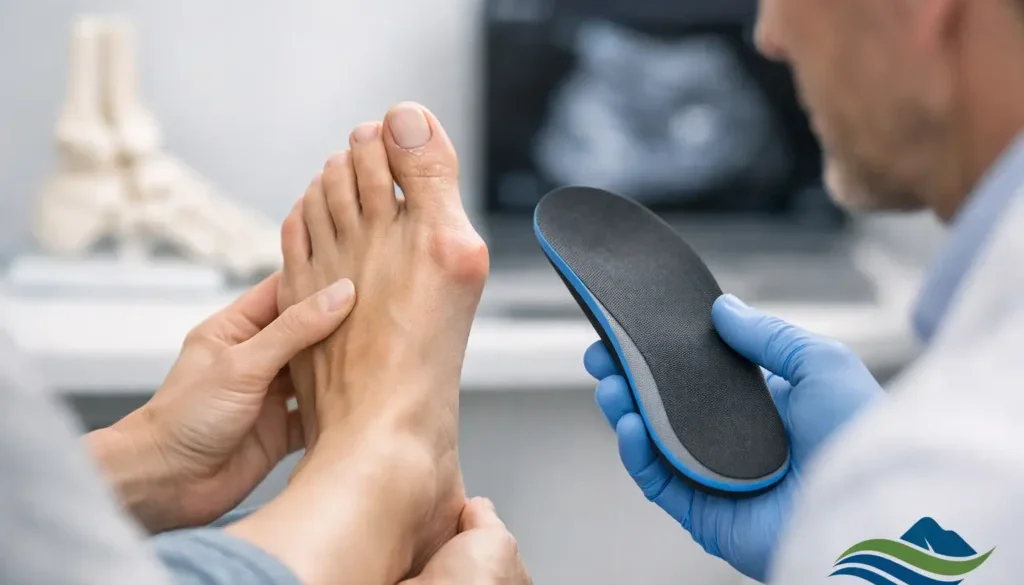
This is where a clinical assessment is more useful than choosing an insole from a retail shelf based on shoe size alone. A practitioner can assess your standing alignment, gait, areas of tenderness, joint motion, footwear wear pattern, and the relationship between the foot, ankle, knee, and hip. The finding may be straightforward, such as a shoe-width issue, or it may show that repeated pronation and forefoot overload are maintaining the pain.
Custom orthotics are not intended to squeeze the bunion back into place. Their role is to support a more efficient pattern of foot loading and help reduce stress through irritated structures. The design matters. An orthotic that is too bulky, too rigid for your tolerance, or poorly matched to the shoe can create new pressure points. A properly prescribed device should account for your arch shape, activity level, footwear, and the way your foot moves under load.
At Vancouver Orthotics Clinics by Dr. Michael Horowitz, the assessment process combines practitioner evaluation with 3D foot scanning and a structured five-step approach. That information helps determine whether custom orthotics are appropriate and what support features may help reduce recurring bunion pressure without compromising comfort in your everyday footwear.
Keep activity moving, but adjust the load
Complete rest is not always necessary for bunion discomfort, but continuing the exact activity that triggers pain is rarely productive. Adjust the variable most likely to be aggravating the joint: distance, pace, terrain, footwear, or time spent standing. For example, someone training for a walk may benefit from shorter, more frequent walks in supportive shoes while symptoms settle, rather than one long outing that leaves the joint swollen.
After a demanding day, a brief period of elevation and a cold pack wrapped in a cloth can calm localized soreness. Gentle calf stretching may help if ankle tightness is contributing to early heel lift and extra forefoot loading. However, stretching should feel controlled, not painful through the bunion joint.
Pay attention to compensation. If you begin rolling to the outside of your foot, limping, or avoiding push-off through the big toe, the issue can spread beyond the bunion. Forefoot pain, ankle discomfort, knee strain, and even hip or low back symptoms can develop when your walking pattern changes for weeks or months.
When an assessment is worth booking
A clinical assessment is particularly useful when bunion pain is recurring, limiting your work or exercise, or continuing despite wider shoes and basic cushioning. It is also sensible if you are unsure whether the pain is coming from the bunion itself, the joint beneath it, the ball of the foot, or another structure nearby. Several conditions can cause similar forefoot symptoms, and the right treatment depends on an accurate assessment.
Arrange prompt care if you have substantial swelling, sudden severe pain, numbness, skin breakdown, signs of infection, or pain after an injury. These symptoms need individual evaluation rather than trial-and-error self-treatment.
For people using extended health benefits, documentation requirements can vary by plan. Ask about coverage before your appointment so you understand whether a practitioner assessment, prescription, receipt, or other paperwork is needed for an orthotic claim.
Small changes can make a meaningful difference
Chronic bunion pressure often improves when treatment focuses on the pressures that occur thousands of times each week, not only on the sore spot you can see. A better-fitting shoe, thoughtful cushioning, a measured assessment of gait and alignment, and properly matched orthotic support can all reduce the daily irritation that keeps the joint sensitive.
Your feet do not need to be pain-free only on days when you avoid walking. If bunion pressure is changing how you work, exercise, or move around Greater Vancouver, a practitioner-led assessment can give you a clearer plan for staying active with more comfort.