
A Clinical Orthotic Assessment Review for Foot Pain
Morning heel pain can make the first few steps of the day feel far harder than they should. A clinical orthotic assessment review looks beyond the sore spot to identify how your feet, ankles, legs, and walking pattern may be contributing to ongoing strain. For many people, that means getting clarity on recurring plantar fasciitis, fatigue while standing at work, knee discomfort during walks, or back pain that seems to return no matter how often they rest.
A proper assessment is not a quick retail fitting or a guess based on shoe size. It is a clinician-led process designed to understand your symptoms, foot function, alignment, activity demands, and the support your body may need.
What Happens During a Clinical Orthotic Assessment Review?
The purpose of an orthotic assessment is to connect what you feel with what your body is doing during standing, walking, and daily activity. Pain can begin in one area but be influenced by movement higher or lower in the body. For example, a foot that rolls inward excessively may increase stress through the arch, Achilles tendon, shin, knee, hip, or low back. The same symptom can have different causes in different people, which is why assessment matters.
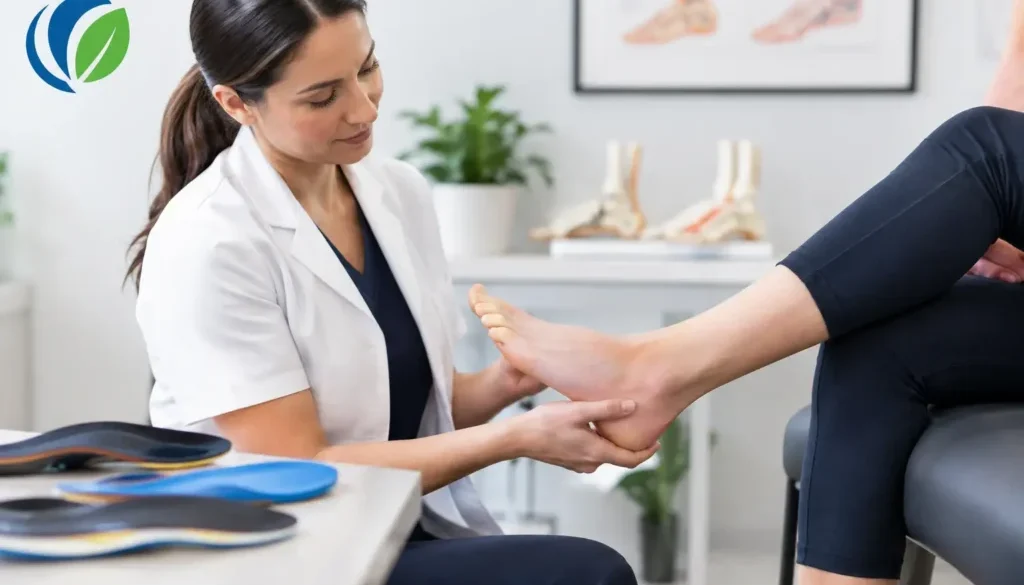
At Vancouver Orthotic Clinics by Dr. Michael Horowitz, the process follows five clinical steps. The appointment begins with a conversation about your symptoms and goals. A practitioner will ask when the pain started, what makes it worse, whether it is present first thing in the morning or after activity, and how it affects work, exercise, sleep, or walking.
This history is followed by a clinical examination of the feet and lower limbs. The practitioner may observe posture, joint movement, muscle tightness, arch shape, areas of tenderness, and how your body responds under load. Your footwear can also provide useful information. Uneven wear patterns may suggest that pressure is repeatedly being directed to one part of the foot or lower limb.
The next stage includes a gait and biomechanical review. Walking is a coordinated motion, not simply a series of steps. The clinician considers how your heel contacts the ground, how the foot moves through mid-stance, and how you push off. This helps identify patterns such as excessive pronation, limited motion, instability, or compensation caused by pain.
Why 3D Foot Scanning Adds Useful Detail
A 3D foot scan captures the contours and functional shape of your feet with far more detail than tracing an outline or selecting an over-the-counter insole from a shelf. It provides measurable information that supports the orthotic prescription and manufacturing process.
The scan is only one part of the appointment. A precise scan cannot replace clinical judgment, symptom history, or gait findings. But when it is combined with a hands-on assessment, it helps create an orthotic designed around your individual foot structure and treatment needs.
The final steps are the treatment recommendation and, if appropriate, the prescription and fitting of custom orthotics. Your practitioner explains what the orthotics are intended to address, how they should feel, how to introduce them gradually, and when to return for a review. This is also the right time to discuss whether a brace, compression socks, supportive footwear habits, or a change in training volume may be useful alongside orthotic care.
Symptoms That May Call for an Orthotic Review
You do not need to wait until pain becomes constant to seek an assessment. Recurring symptoms are often the clearest sign that the current approach is not resolving the mechanical load on the body.
A clinical evaluation may be helpful for persistent heel pain, arch pain, flat feet, bunion irritation, forefoot pain, Achilles tendon discomfort, shin splints, ankle pain, or pain that reaches the knees, hips, or lower back. It can also be valuable for runners whose discomfort returns as mileage increases, retail and healthcare workers who stand through long shifts, and office workers who find that walking after a sedentary day is unexpectedly painful.
Children and teens may also benefit when foot fatigue, frequent tripping, noticeable in-toeing or out-toeing, or activity-related discomfort is affecting daily movement. The appropriate recommendation depends on growth, symptoms, activity level, and the examination findings. Orthotics are not automatically the answer for every foot shape or every ache.
What Custom Orthotics Can and Cannot Do
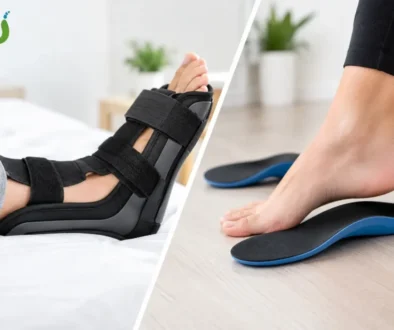
Custom orthotics are prescribed devices that fit inside footwear to support, cushion, redistribute pressure, or guide foot function in a specific way. Depending on the diagnosis, an orthotic may help reduce tension on the plantar fascia, improve comfort around sensitive forefoot areas, support a collapsing arch, or reduce repeated stress associated with poor alignment.
They are most effective when they are part of a practical treatment plan. For someone with plantar fasciitis, that plan may include activity modification, calf and foot mobility work, and attention to footwear. For a runner with shin pain, it may also involve reviewing training progression and recovery. For someone standing all day, the key issue may be how their work shoes, flooring, and foot mechanics interact over many hours.
There is also an adjustment period. New orthotics can feel noticeable at first because they are changing where pressure and support are applied. Most people are advised to increase wear time gradually rather than wearing them all day immediately. If discomfort persists, a follow-up review is valuable. A custom device should be assessed in the real shoes you wear most often, not treated as a one-time purchase with no ongoing care.
Preparing for Your Appointment
Bring the shoes you wear for work, walking, exercise, or the activity that brings on symptoms. This gives the practitioner a better view of fit, wear patterns, heel stability, and the available space for an orthotic. If you already use insoles or older orthotics, bring those as well.
It also helps to describe your pain clearly. Think about location, intensity, timing, and triggers. Is the pain sharp when you first stand up, dull after a long shift, or worse when walking uphill? Does it improve with rest but return each time you resume activity? These details help distinguish patterns that may otherwise sound similar.
If you have extended health benefits, check your plan requirements before the appointment. Some providers require a prescription, a receipt with particular information, or documentation from a qualified practitioner. Clinic staff can help explain the paperwork typically provided for orthotic claims, but the final reimbursement decision rests with your individual plan.
When a Follow-Up Assessment Matters
An orthotic review is not only for first-time patients. Feet and daily demands change. Weight changes, new work duties, pregnancy, a return to running, changes in footwear, and the natural wear of an existing device can all affect how well an orthotic is performing.
Consider booking a review if an older pair no longer feels supportive, if pain has moved to a new area, or if you have changed the shoes you wear most often. Orthotics may need an adjustment, a replacement, or a different approach altogether. The goal is not to force every symptom into the same solution. It is to reassess the mechanics and make a recommendation that fits your current needs.
For patients in Greater Vancouver, Greater Victoria, and Langford, a clinician-led assessment offers a practical starting point when foot or lower-limb pain is limiting daily life. Book Online when recurring symptoms are getting in the way, bring the shoes that matter most to your routine, and come prepared to ask questions. Clear answers and a measurable treatment plan can make the next step feel more manageable.