
When Do Flat Feet Need a Clinical Assessment?
A low arch is not automatically a problem. Many people with flat feet walk, work, run, and exercise without discomfort. The question is not whether your feet look flat when you stand. It is whether the way they move and bear weight is contributing to recurring pain, fatigue, or changes higher up the leg.
If heel pain greets you on the first steps of the morning, your ankles roll inward in worn-out shoes, or your knees ache after a long shift, your foot mechanics may deserve a closer look. A clinical assessment can identify whether your arch shape, walking pattern, footwear, and activity demands are working well together.
What flat feet actually mean
Flat feet, also called fallen arches, describe feet with a low or reduced visible arch while standing. For many people, the arch appears when sitting or rising onto the toes, then lowers as body weight moves through the foot. This is often called a flexible flat foot.
A flexible foot can still function very well. But if the arch drops substantially and the heel rolls inward, the foot may stay in a more pronated position for too long during each step. Pronation is a normal motion that helps absorb shock. The concern is not pronation itself, but excessive or poorly controlled motion that places repeated strain on tissues in the foot, ankle, and lower leg.
Some people have a more rigid low arch, meaning the foot remains flat even without weight on it. Others develop a flatter-looking foot over time after an injury, changes in activity, weight changes, or gradual stress on supporting structures. New, one-sided, or rapidly worsening changes should be assessed rather than treated as a simple footwear issue.
Why flat feet can lead to pain
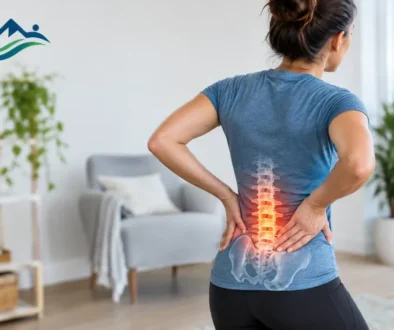
The feet are the base of every standing and walking movement. When that base is not distributing pressure efficiently, the effects can be felt locally or travel upward through the kinetic chain. One person may feel soreness along the inside of the ankle. Another may notice pain at the ball of the foot, tight calves, shin discomfort, knee pain, hip pain, or low back pain.
Common concerns associated with flat feet include:
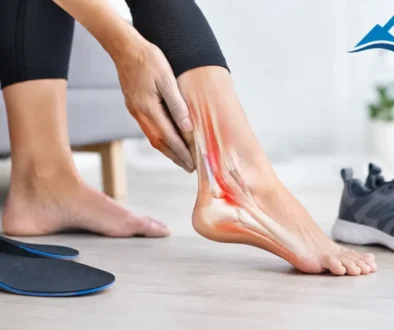
- Heel pain and plantar fasciitis, particularly pain with first steps after rest
- Achilles tendon irritation or calf tightness
- Pain along the inside of the ankle or lower leg
- Metatarsalgia, or aching and burning beneath the forefoot
- Bunions that become more irritated as the front of the foot spreads
- Shin splints during increased walking or running
The connection is not always direct. Knee pain, for example, has many possible causes, and a flat arch alone does not explain every case. A useful assessment looks at how the whole lower limb functions, not just the outline of the foot on the floor.
Symptoms worth paying attention to
Occasional tired feet after a full day in Vancouver, on a retail floor, or on a long seawall walk are common. More persistent symptoms are different. Consider an assessment if pain keeps returning, limits your usual activity, causes you to change how you walk, or does not settle after reasonable rest and supportive footwear.
Pain that is localized, severe, follows an injury, or comes with noticeable swelling or a sudden change in foot shape should be evaluated promptly. Children can also have low arches, and many have flexible flat feet without pain. In children, the key signs are discomfort, unusual fatigue, frequent tripping, or a reluctance to participate in normal play and activity.
Why generic arch supports do not work for everyone
A store-bought insole can be a reasonable short-term option for mild discomfort. It may add cushioning or make a work shoe feel more comfortable. However, it is made for an average foot and cannot account for the specific relationship between your heel, arch, forefoot, ankle motion, and walking pattern.
For some people with flat feet, an off-the-shelf arch is simply too high or placed in the wrong spot. Instead of improving support, it can create pressure beneath the arch or shift discomfort elsewhere. A soft insert may feel pleasant at first but compress quickly under the demands of a long shift, regular running, or daily walking.
Custom orthotics are not intended to force every foot into a high arch. Their job is to improve how forces are managed during standing and movement. Depending on the findings, that may mean supporting the arch, helping guide heel motion, redistributing forefoot pressure, accommodating a sensitive area, or combining several of these functions. The right approach depends on the person, the diagnosis, and the footwear being worn.
What a clinical assessment for flat feet should include
A meaningful assessment goes beyond stepping on a pressure mat or selecting an insert from a shelf. At Vancouver Orthotic Clinics by Dr. Michael Horowitz, the clinical process begins with a practitioner evaluation of your symptoms, health history, activity level, shoes, and functional goals.
Your practitioner then examines foot posture, joint motion, areas of tenderness, and lower-limb alignment. Watching you stand and walk can reveal patterns that a static footprint cannot, such as how quickly the arch lowers, whether one side moves differently, or whether the knee rotates inward as weight transfers over the foot.
A 3D foot scan provides precise measurements of your foot shape. Those measurements, together with the clinical findings, are used to prescribe custom orthotics when they are appropriate. The final fitting matters as well. Orthotics should fit the intended shoes, feel stable, and be reviewed in the context of your actual symptoms and daily routine.
Your shoes are part of the treatment plan
Even a well-designed orthotic needs a suitable shoe. Shoes that are overly worn, twisted through the midsole, too narrow in the toe box, or too shallow to accommodate an orthotic can reduce comfort and performance. That does not mean everyone needs the same type of shoe. A runner, a healthcare worker, and someone who spends the day at a desk have different demands.
Bring the shoes you wear most often to your appointment when possible. This helps the practitioner consider fit, available depth, heel stability, and whether the shoe matches your work or activity needs. In some cases, changing a worn pair of shoes and adding a targeted home exercise routine may be just as relevant as the orthotic itself.
Conservative care often works best as a combination
Flat-foot-related pain is rarely solved by one product alone. The best plan usually combines support with manageable changes to daily loading. If a sudden jump in steps, hill walking, or training volume triggered symptoms, temporarily reducing that load can give irritated tissue time to settle. Gradual return is generally more productive than pushing through worsening pain.
Mobility and strength can also matter. Tight calves may increase strain through the heel and arch, while reduced strength in the foot, ankle, hip, or trunk can affect how the leg controls movement. A practitioner may recommend specific exercises or coordinate care when another musculoskeletal concern needs attention.
Body weight, occupation, age, prior injuries, and the surfaces you walk on all influence the plan. There is no single “correct” arch height and no universal timeline for improvement. The goal is practical: less pain, better tolerance for the activities that matter to you, and a support strategy you can realistically use.
Planning around extended health benefits
Many extended health plans include some coverage for custom orthotics, but plan requirements vary. Some policies require a prescription or supporting clinical documentation, while others have specific provider, submission, or renewal rules. Checking your plan before an appointment can prevent surprises.
Keep copies of receipts and clinical documents required for your claim. If you are unsure what your benefits include, ask questions before proceeding so you understand the expected out-of-pocket cost and the paperwork your insurer may request.
If flat feet are changing the way you work, walk, train, or enjoy time with family, you do not need to guess whether a generic insert is enough. A practitioner-led assessment can clarify what is driving the discomfort and provide a practical path forward. New patients are welcome to book online at a convenient Greater Vancouver, Victoria, or Langford location.